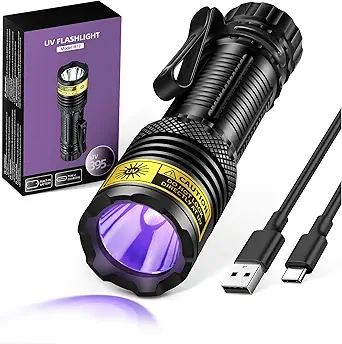
Choosing a 365nm UV flashlight requires balancing wavelength accuracy with practical features
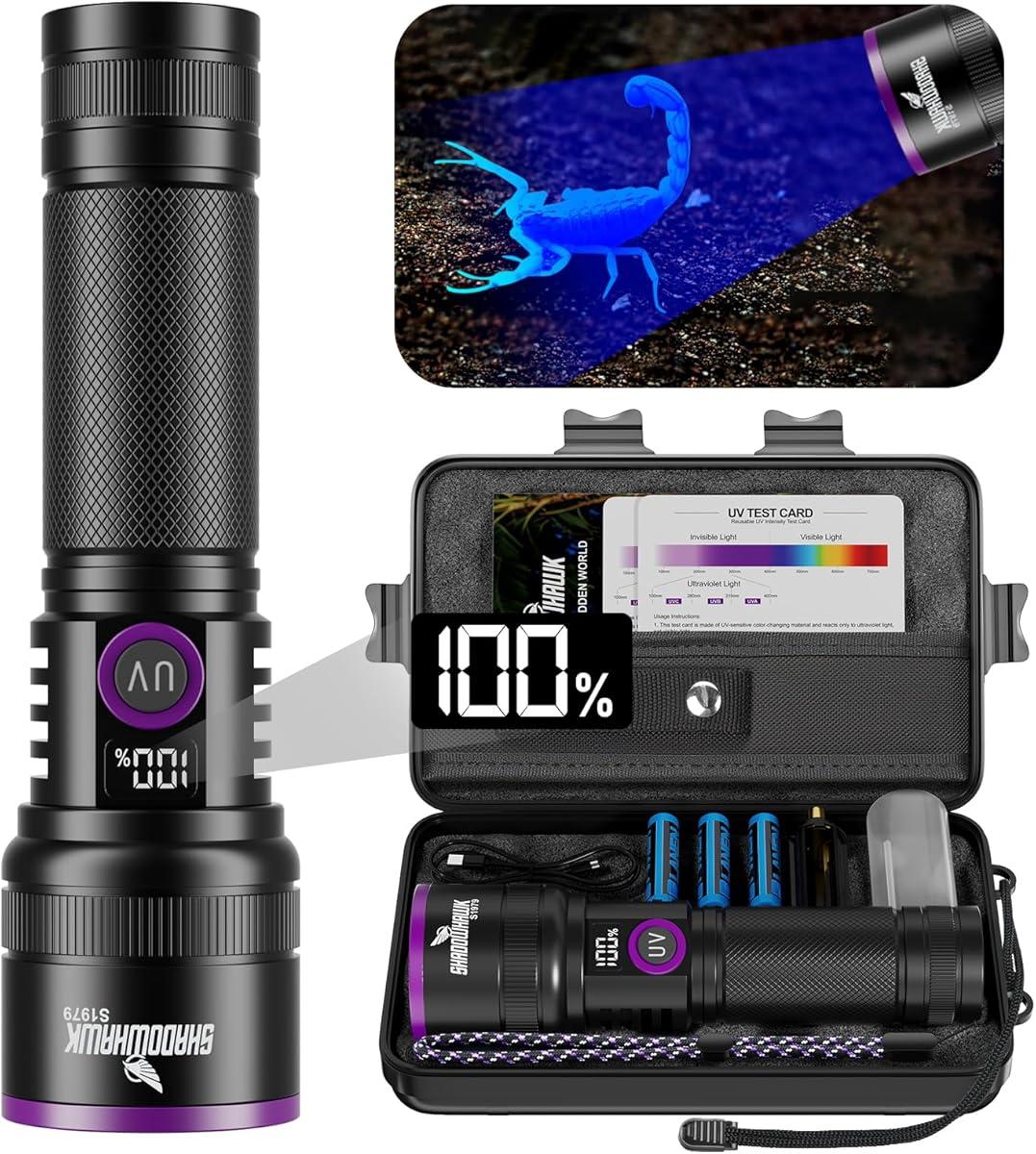
When selecting a UV flashlight for specialized applications like resin curing or pet urine detection, the 365nm wavelength specification is critical—not all 'black lights' emit true long-wave ultraviolet. This particular model distinguishes itself with a filter lens to block visible light and an LCD display showing battery status, features that directly impact usability for technical tasks.
Key Considerations Before Buying
- Verify the 365nm wavelength is genuine, not a mislabeled 395nm LED; true 365nm produces less visible violet glow and better fluorescence for minerals and forensic applications.
- Assess the advertised 30W power output in context—high wattage can accelerate resin curing but requires robust heat dissipation to prevent LED degradation.
- Consider the rechargeable battery system's runtime for your use case; detecting scattered pet urine demands sustained operation, while brief rock hunting needs less capacity.
What Our Analysts Recommend
Quality UV flashlights feature a Wood's glass or bandpass filter lens (not just a purple plastic cover) to purify the 365nm output. Look for thermal management design—either aluminum heat sinks or active cooling—to maintain LED stability during extended use for resin curing, where consistent UV intensity matters.
Handheld Flashlights Market Context
Market Overview
The handheld UV flashlight market is bifurcated between inexpensive 395nm models for party effects and precision 365nm tools for technical applications. Recent growth in resin crafting and home forensics has increased demand for feature-rich, high-power units with accurate wavelength specifications.
Common Issues
Many budget UV flashlights exaggerate wavelength claims, using 395-400nm LEDs that emit substantial visible purple light, which reduces fluorescence contrast for detection tasks. Another frequent problem is inadequate heat management in high-power models, leading to premature LED failure or intensity drop-off during continuous use.
Quality Indicators
Genuine 365nm flashlights typically employ LG or Nichia UV-C LEDs paired with proper filtering. High-quality units specify irradiance (mW/cm²) at a given distance for resin curing, not just wattage, and include battery protection circuits to prevent over-discharge in lithium-ion packs.
Review Authenticity Insights
Grade B Interpretation
A Grade B authenticity rating with an estimated 15% fake review rate suggests generally reliable feedback but warrants scrutiny of overly enthusiastic 5-star reviews. The adjusted 4.50/5 rating (down from 4.89) indicates some review inflation, though the high volume of verified purchases (2,967 reviews) provides a substantial authentic data pool.
Trust Recommendation
Prioritize reviews mentioning specific technical outcomes—like 'cured 2mm layer in 90 seconds' or 'revealed scorpions at 15 feet'—over generic praise. The 15% fake rate means approximately 1 in 7 reviews may be inauthentic, so focus on detailed accounts from verified purchasers describing actual use cases matching yours.
Tips for Reading Reviews
For this product, seek reviews discussing the filter lens performance in daylight conditions and the LCD display's accuracy during battery drain. Authentic reviews often compare intensity to previous UV lights or note the beam's uniformity for scanning large areas like carpets.
Expert Perspective
This flashlight's combination of 365nm wavelength with a dedicated filter lens and LCD battery display positions it as a serious tool rather than a novelty item. The exceptionally high 4.89-star rating from nearly 3,000 reviews, even when adjusted to 4.50, indicates strong user satisfaction across diverse applications from hobbyist mineralogy to practical pet stain detection. The 30W power specification suggests it's designed for demanding tasks like thick resin curing where lower-power UV lights fail.
Purchase Considerations
Weigh the need for true 365nm output—critical for professional resin work and sensitive detection—against the higher cost compared to common 395nm lights. The rechargeable design adds convenience but verify the battery's sustained output; some high-power UV flashlights experience intensity decline as the battery depletes, which the LCD display should help monitor.
Comparing Alternatives
Shoppers should compare irradiance specifications and filter quality with similar-priced models from brands like Convoy or Uvex, particularly for wavelength accuracy certified by spectrometer readings.