Evaluating Big and Tall Office Chairs: What COMHOMA's Features Actually Mean
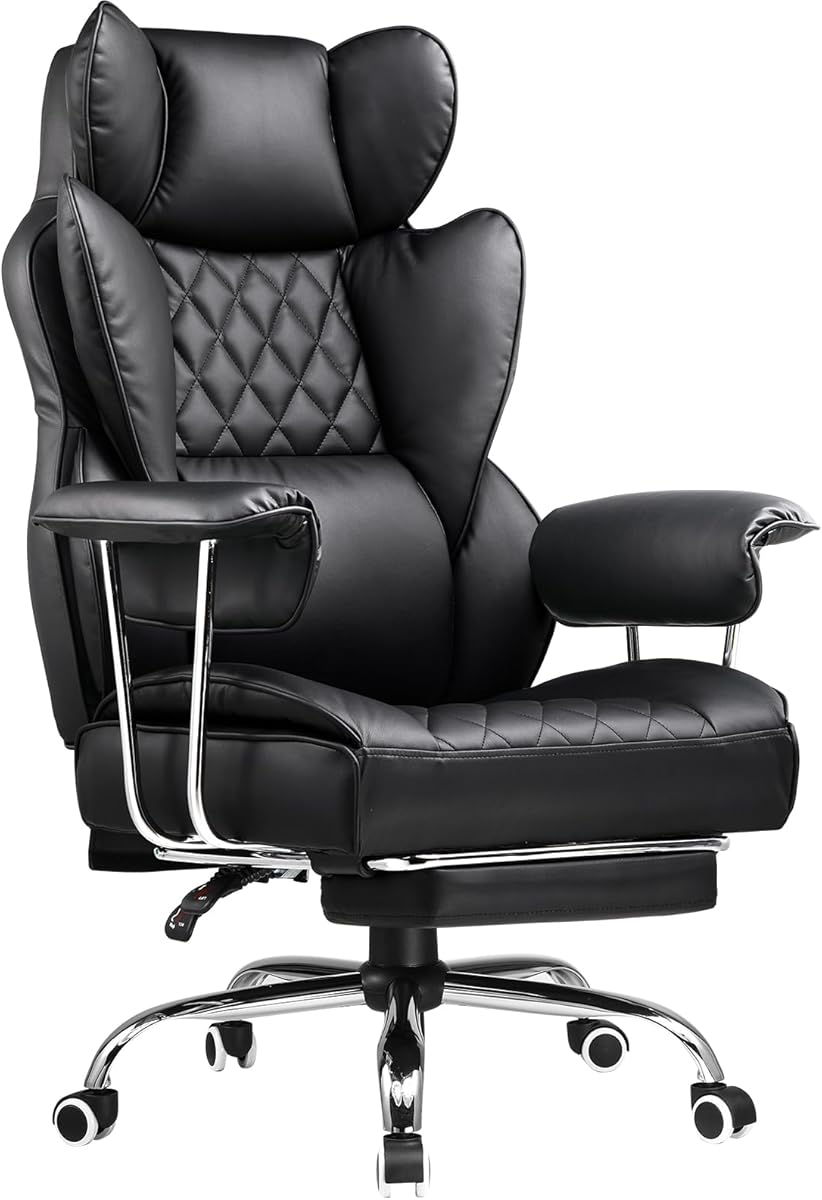
The COMHOMA Big and Tall Office Chair combines gaming aesthetics with executive features, specifically targeting larger users with its pocket spring lumbar support and outward-fixed armrests. Buyers should understand that 'big and tall' designation requires specific structural reinforcements beyond standard chairs, particularly in the gas lift cylinder and base construction. This chair's hybrid positioning as both gaming and executive furniture creates unique ergonomic considerations.
Key Considerations Before Buying
- The 'pocket spring lumbar support' is unusual in office chairs and mimics mattress technology, potentially offering more dynamic support than standard foam or plastic lumbar systems.
- Outward-fixed armrests cannot be adjusted, which may cause shoulder strain if they don't align with your natural arm position at your specific desk height.
- The integrated footrest transforms this from a pure office chair to a hybrid relaxation seat, but consider whether your workspace accommodates the extended length when reclined.
What Our Analysts Recommend
For big and tall chairs, examine weight capacity ratings closely—quality models specify 300+ pounds with reinforced mechanisms. Check if the 'leather' is genuine, bonded, or PU, as each wears differently under heavier use. The five-star base should be metal, not plastic, with dual-wheel casters rated for carpet or hard floors.
Home Office Desk Chairs Market Context
Market Overview
The big and tall gaming/office chair segment has exploded, with many brands prioritizing aggressive styling over genuine ergonomic engineering. True executive chairs for larger users typically cost significantly more than gaming-style alternatives, creating a price-performance gap. COMHOMA enters this space with hybrid features at a mid-range price point.
Common Issues
Chairs marketed as 'big and tall' often fail at the gas cylinder first, developing sinking issues under sustained weight. PU leather coverings frequently peel within 6-12 months on chairs with extensive reclining mechanisms. Fixed armrests create compatibility problems with varying desk heights and user proportions.
Quality Indicators
Look for chairs specifying steel frame construction rather than 'metal frame' generically. Quality big and tall chairs use Class 4 gas lifts (rated 300+ lbs) not standard Class 3. Genuine ergonomic chairs provide adjustable lumbar depth, not just height, which this chair's spring system may address uniquely.
Review Authenticity Insights
Grade C Interpretation
A Grade C with 28% estimated fake reviews suggests significant review manipulation, particularly concerning given the statistically improbable absence of 1-3 star ratings. For a product category where fit and durability issues commonly generate critical feedback, this pattern indicates potentially suppressed negative experiences.
Trust Recommendation
Focus on verified purchase reviews from users specifically mentioning their height and weight, as fit issues for big and tall chairs are highly individual. Be skeptical of reviews praising generic 'comfort' without detailing build quality observations over time. The adjusted 4.10 rating better reflects probable real-world performance.
Tips for Reading Reviews
Search for reviews mentioning '6 months later' or similar timeframes, as chair durability reveals itself over time. Pay particular attention to comments about the pocket spring system's long-term support and whether the fixed armrests caused fatigue during extended work sessions.
Expert Perspective
The COMHOMA chair presents an intriguing proposition with its pocket spring lumbar system—a legitimate innovation in a market dominated by static supports. However, the fixed armrests represent a significant ergonomic compromise for a chair marketed as executive-grade. The concerning authenticity metrics suggest the 4.80 rating overstates real-world satisfaction, with the adjusted 4.10 being more credible. The hybrid gaming/executive design may appeal visually but creates functional ambiguity about its primary use case.
Purchase Considerations
Weigh whether the unique lumbar system justifies the non-adjustable armrests, particularly if you work at a non-standard desk height. Consider your actual need for the footrest—if primarily for office work, this feature adds cost and mechanical complexity. Verify the chair's dimensions against your specific body measurements, as 'big and tall' definitions vary widely.
Comparing Alternatives
Compare this chair's fixed features against fully adjustable big and tall models in similar price ranges, particularly regarding armrest and lumbar customization.