
Step-Down Converter Buying Guide: Power, Protection, and Practicality
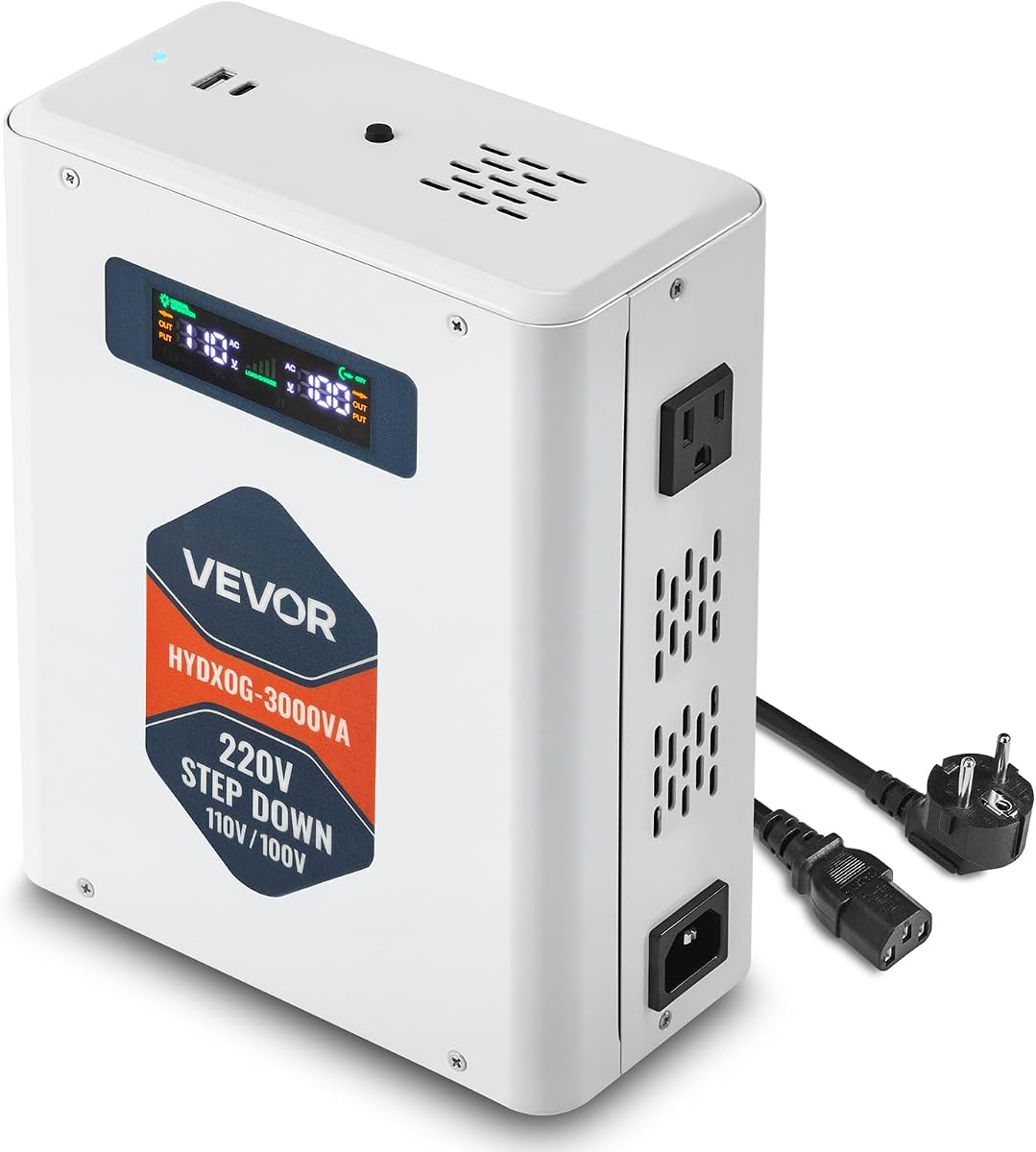
When you need to run 110V appliances on 220V power, a step-down voltage converter like the VEVOR 3000VA is essential. This heavy-duty transformer offers two US outlets, a USB port, LCD display, and temperature protection, making it a versatile option for international use or specialized equipment.
Key Considerations Before Buying
- Power capacity: Match the converter's VA rating to your appliance's wattage. The 3000VA unit can handle devices up to 3000 watts, but for motor-driven appliances, consider a converter with at least 2-3 times the appliance's rated wattage to accommodate startup surges.
- Outlet compatibility: Ensure the converter's outlets match your appliances' plugs. This model has two US-style outlets and a USB output, suitable for standard 110V plugs, but verify that your devices don't require a different plug type.
- Protection features: Look for safety mechanisms like temperature protection, which this VEVOR model includes. Overheating is a common risk with high-power converters, so thermal cutoffs and cooling fans are valuable additions.
What Our Analysts Recommend
Quality converters should have robust construction, clear power ratings, and safety certifications. Check for a metal casing, adequate ventilation, and user reviews mentioning reliability under load. The LCD display on this model provides real-time voltage monitoring, a helpful feature for ensuring stable output.
Power Converters Market Context
Market Overview
The voltage converter market is driven by international travel, overseas appliance use, and industrial needs. With a mix of budget and premium brands, consumers can find units from 100VA to over 5000VA, but quality varies widely, and cheaply made converters may lack proper safety features.
Common Issues
Common problems include inaccurate power ratings, overheating, and noise from cooling fans. Some converters produce modified sine wave output, which can damage sensitive electronics; pure sine wave models are safer but cost more. Additionally, many users report that converters fail prematurely when continuously run near their maximum capacity.
Quality Indicators
Look for converters with copper windings, thermal protection, and a sturdy metal case. Certifications like CE or UL indicate compliance with safety standards. Reviews that mention long-term use and performance with specific appliances (e.g., refrigerators, power tools) are particularly telling.
Review Authenticity Insights
Grade B Interpretation
A Grade B authenticity rating with an estimated 15% fake reviews suggests that while most reviews are genuine, some may be incentivized or exaggerated. The adjusted rating of 3.90/5 (down from 4.22) reflects a more realistic user satisfaction level, indicating that the product is generally well-received but not without flaws.
Trust Recommendation
Focus on reviews with detailed technical feedback and verified purchase badges. Be cautious of overly positive reviews that lack specifics or mention features not listed. Given the 15% fake rate, cross-reference multiple sources and consider the adjusted rating as a more reliable indicator of performance.
Tips for Reading Reviews
When reading reviews for voltage converters, pay attention to comments about power output under load, heat generation, and compatibility with specific devices. Look for patterns in negative reviews—if multiple users mention the same issue (e.g., fan noise, failure after months), it's likely a real concern.
Expert Perspective
The VEVOR 3000VA step-down converter offers a solid feature set at a competitive price, with practical additions like USB output and an LCD display. However, the adjusted rating of 3.90/5 and 15% fake review percentage suggest that while many users are satisfied, some experience reliability issues or unmet expectations. It's a capable unit for moderate use but may not withstand continuous heavy loads.
Purchase Considerations
Before buying, calculate your appliance's power needs and ensure the 3000VA capacity is sufficient, especially for devices with high startup surges. Consider whether you need pure sine wave output for sensitive electronics, as this model may produce modified sine wave. Also, assess the warranty and return policy, as converter failures can be costly.
Comparing Alternatives
Shoppers should compare this VEVOR model with similar converters from brands like Rockstone Power or Simran, which may offer pure sine wave output or higher continuous ratings for a similar price. Reading expert reviews and user forums can help identify the best fit for your specific application.


