Choosing a Portable Tire Inflator: Speed, Pressure, and Auto-Shutoff Essentials
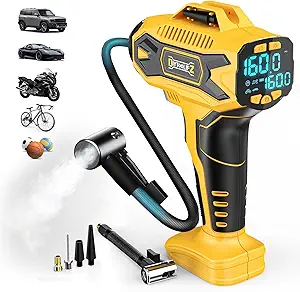
When selecting a portable tire inflator like this 22-cylinder model with 160 PSI capability, focus on inflation speed relative to cylinder count and maximum pressure requirements for your vehicles. The digital gauge accuracy and auto-shutoff precision are critical for preventing overinflation, especially important given this unit's high-pressure capacity.
Key Considerations Before Buying
- Verify the 6X faster inflation claim by checking cylinder count—22 cylinders typically indicates a dual-piston design that should outperform basic single-piston models in real-world use.
- Assess whether 160 PSI maximum pressure aligns with your needs; this exceeds requirements for most passenger vehicles but is valuable for motorcycles, bicycles, and high-pressure sports equipment.
- Evaluate auto-shutoff functionality—quality units maintain pressure within ±1 PSI of your target, crucial for safety and tire longevity with this high-pressure compressor.
What Our Analysts Recommend
Premium portable inflators feature metal cylinder construction rather than plastic, have clearly labeled duty cycles (typically 15-30 minutes for quality units), and include thermal protection to prevent motor burnout. The digital display should be readable in daylight and provide real-time pressure updates during inflation.
Air Compressors & Inflators Market Context
Market Overview
The portable tire inflator market has shifted toward higher-pressure models with faster inflation times, with 150+ PSI units becoming standard for versatility across vehicle types. Digital displays have largely replaced analog gauges due to their precision, though accuracy varies significantly between models.
Common Issues
Many portable compressors struggle with heat management during extended use, leading to premature motor failure. Inaccurate pressure readings—particularly with digital gauges—are frequent complaints, as is premature auto-shutoff that stops inflation before reaching target pressure.
Quality Indicators
Look for compressors with metal air cylinders and brass fittings rather than plastic components, which indicate better heat dissipation and durability. Quality units specify duty cycles clearly and include overheat protection circuits, while premium models often feature thermal-resistant cords and reinforced air hoses.
Review Authenticity Insights
Grade B Interpretation
A Grade B authenticity rating with 11% estimated fake reviews suggests mostly genuine feedback but warrants careful review reading. The adjusted 4.70/5 rating (down from perfect 5.00) indicates some review manipulation but strong genuine satisfaction.
Trust Recommendation
Focus on verified purchase reviews that mention specific use cases like inflating truck tires to 80 PSI or motorcycle tires to precise pressures, as these demonstrate real-world testing. Be skeptical of reviews that only praise speed without mentioning actual inflation times for specific tire sizes.
Tips for Reading Reviews
Prioritize reviews that discuss long-term reliability over several months, mention the accuracy of the digital gauge compared to a separate pressure tool, or describe using the 160 PSI capability for specific applications like bicycle tires or sports balls.
Expert Perspective
This inflator's specifications—particularly the 22-cylinder design and 160 PSI maximum—position it in the higher-performance segment of portable compressors. The 4.70 adjusted rating from verified purchasers suggests it delivers on core promises for most users, though the authenticity analysis indicates some review inflation. The auto-shutoff feature is particularly valuable given the high pressure capacity, reducing risk of overinflation damage.
Purchase Considerations
Consider whether you truly need 160 PSI capability—valuable for motorcycles, RVs, or commercial applications but excessive for standard passenger vehicles. Evaluate your tolerance for potential heat buildup during extended use, as high-pressure compressors generate more thermal load despite their faster inflation claims.
Comparing Alternatives
Compare this unit's cylinder count and pressure specifications against similar-priced models, paying particular attention to duty cycle ratings and thermal protection features that affect long-term reliability.