Choosing a Portable Power Station: What the Anker SOLIX C1000 Gen 2 Reveals About Key Specs
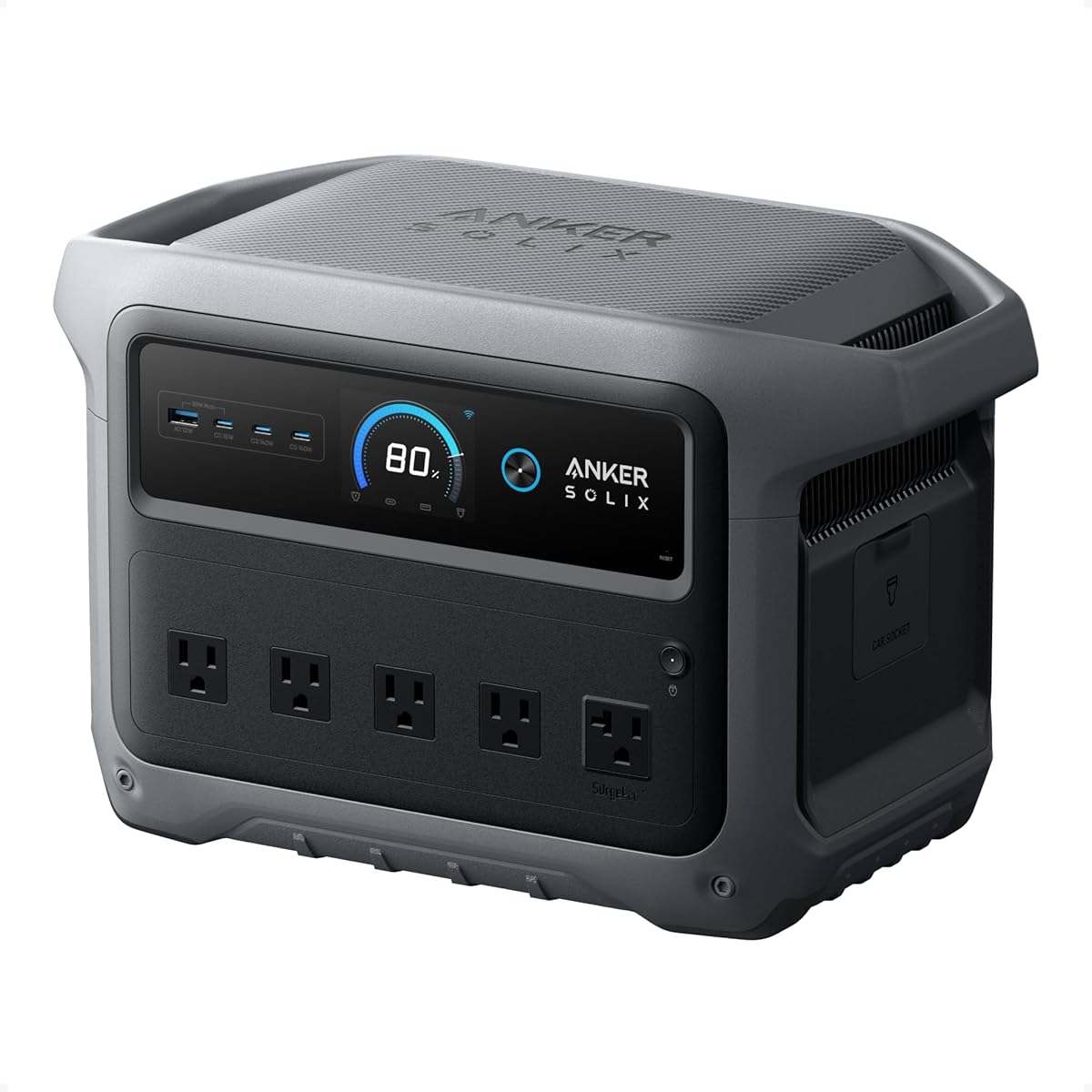
When evaluating a portable power station like the Anker SOLIX C1000 Gen 2, focus on the interplay between its 1,024Wh capacity, 2,000W continuous output, and the 49-minute full-charge claim. These specs define its practical use for home backup or camping, dictating what devices it can run and for how long. The optional solar panel compatibility adds a critical dimension for off-grid scenarios.
Key Considerations Before Buying
- Assess the LiFePO4 battery chemistry, which Anker uses here; it offers greater longevity and safety (3,000+ cycles) compared to standard lithium-ion, crucial for a long-term investment.
- Match the 2,000W continuous/3,000W surge power to your needs: this can run a refrigerator or power tools, but verify the startup surge of your specific appliances.
- The ultra-fast 49-minute AC charge is a standout feature, but requires a compatible high-wattage wall charger (likely sold separately), impacting true convenience and cost.
What Our Analysts Recommend
Beyond watt-hours, examine the number and type of ports (AC, USB-C, car outlet) and their simultaneous output limits. A quality unit like this Anker will clearly state its management of total load across all ports. Also, scrutinize the warranty and stated battery cycle life, as these indicate confidence in the LiFePO4 battery's durability.
Generators Market Context
Market Overview
The portable power station market is rapidly evolving, with brands like Anker pushing capabilities once reserved for bulky gas generators into compact, silent units. The current trend emphasizes faster charging, longer-lasting LiFePO4 batteries, and higher pure sine wave inverter outputs for sensitive electronics.
Common Issues
Buyers often misunderstand the difference between battery capacity (Wh) and output power (W), leading to mismatched expectations. Other frequent complaints involve slow recharging times without solar, fan noise under high load, and vague instructions for daisy-chaining optional solar panels.
Quality Indicators
Look for clear specifications on battery chemistry (LiFePO4 is premium), inverter type (pure sine wave is essential for electronics), and cooling system design. Reputable brands provide detailed cycle life data and robust warranties. A high number of verified purchase reviews, as seen with this Anker, is also a strong market signal.
Review Authenticity Insights
Grade B Interpretation
An 'A' authenticity grade and 0.00% estimated fake reviews for the Anker SOLIX C1000 Gen 2 mean the nearly perfect 4.9/5 rating is exceptionally reliable. This high score from verified purchasers suggests real-world performance closely matches marketing claims.
Trust Recommendation
You can place significant trust in the overall rating pattern. Focus your review analysis on how users describe specific use cases—like powering a CPAP machine during an outage or recharging via solar while camping—to gauge fit for your needs.
Tips for Reading Reviews
For technical products like this, prioritize reviews that detail runtime tests with specific devices (e.g., 'ran my 50W fridge for 14 hours') and note any quirks with the solar input or app connectivity. The verified purchase badge adds crucial weight.
Expert Perspective
The Anker SOLIX C1000 Gen 2 represents a compelling mid-capacity option that prioritizes recharge speed and modern LiFePO4 battery tech. Its 4.9/5 rating from hundreds of verified buyers is a powerful endorsement rarely seen in this category, strongly indicating it delivers on its core promises of fast charging and reliable output. The combination of 1,024Wh and 2,000W positions it well for serious camping, tailgating, or as a critical home backup for essential circuits during short outages.
Purchase Considerations
Weigh the premium for ultra-fast AC charging against your typical use case; if you'll often have grid access between uses, it's a major advantage. Conversely, if primarily using solar, investigate the required panel configuration and real-world recharge times. Consider the physical weight (around 24 lbs) for intended portability.
Comparing Alternatives
Shoppers should compare its price-per-watt-hour and charge speed directly against competitors like Jackery or Bluetti in the 1000Wh-1500Wh range.