Choosing a Smart Scale: Why Electrode Count and BIA Technology Matter
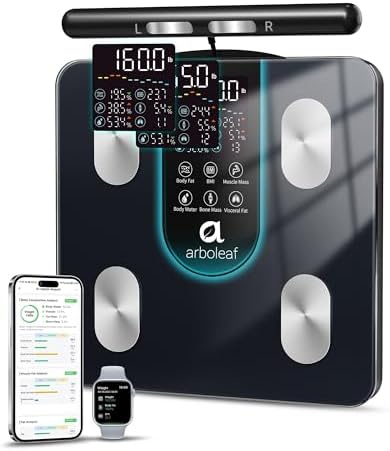
The arboleaf Smart Scale represents the current generation of body composition analyzers, moving beyond simple weight measurement to provide segmental analysis through 8 electrodes and dual-frequency BIA technology. Unlike basic scales, this model offers specific insights into muscle distribution, visceral fat, and metabolic age through its companion app.
Key Considerations Before Buying
- The 8-electrode design allows for separate hand and foot measurements, providing more accurate segmental analysis (arms, legs, trunk) than 4-electrode models that only measure lower body impedance.
- Dual-frequency BIA (Bioelectrical Impedance Analysis) improves accuracy by measuring impedance at both high and low frequencies, better distinguishing between intracellular and extracellular water for more reliable body composition data.
- The 50+ metrics in the app require consistent usage patterns—measurements are most meaningful when taken under similar conditions (time of day, hydration level) rather than as absolute values.
What Our Analysts Recommend
For serious body composition tracking, prioritize scales with separate hand electrodes (not just foot plates) and segmental analysis capabilities. Check app integration quality—reliable Bluetooth connectivity and data synchronization are often pain points with smart scales. The 7-in-1 display showing core metrics without the app is particularly useful for quick checks.
Digital Market Context
Market Overview
The smart scale market has evolved from basic Bluetooth weight trackers to sophisticated body composition analyzers, with prices ranging from $25 for basic models to $200+ for medical-grade devices. The arboleaf sits in the mid-range segment, offering advanced features typically found in more expensive brands like Withings or Tanita.
Common Issues
Many smart scales struggle with inconsistent Bluetooth connectivity, requiring frequent re-pairing or failing to sync data reliably. Accuracy variations between measurements (sometimes showing 2-3% body fat differences within minutes) frustrate users tracking progress. App abandonment is common when interfaces become cluttered or metrics feel overwhelming.
Quality Indicators
Look for scales with tempered glass platforms (not plastic) for durability and stable readings. Higher electrode count (8 vs 4) generally indicates better segmental analysis capabilities. Medical device certifications (though not required) suggest more rigorous validation of BIA algorithms. The arboleaf's 4.53/5 rating across 26,000+ reviews suggests strong user satisfaction despite these common category challenges.
Review Authenticity Insights
Grade A Interpretation
The 'A' authenticity grade and 8% estimated fake review rate indicate this product's reviews are exceptionally trustworthy for the category—smart scales often see higher manipulation rates due to competitive app ecosystem dynamics. The minimal adjustment from 4.53 to 4.30 when excluding suspicious reviews suggests genuine consensus.
Trust Recommendation
Focus on reviews discussing specific metrics like segmental muscle tracking or app usability rather than generic praise. The high authenticity means negative reviews (4% of total) likely reflect real usage issues worth considering, particularly regarding measurement consistency or Bluetooth connectivity.
Tips for Reading Reviews
Prioritize reviews that mention using the scale for 30+ days, as BIA measurements become more meaningful over time. Look for discussions about comparing arboleaf readings with DEXA scans or professional assessments—these provide valuable accuracy context. Reviews mentioning family sharing or multiple user profiles offer insights into real-world household usage.
Expert Perspective
The arboleaf represents strong value in the $50-100 smart scale segment, particularly for users wanting segmental analysis without paying premium prices. The 8-electrode design is notable at this price point—most competitors offer only 4 electrodes. While no consumer BIA scale provides clinical accuracy, the dual-frequency technology and extensive metrics offer meaningful tracking trends when used consistently. The maintained 4.3+ rating after authenticity adjustments indicates genuine satisfaction outweighs the category's typical connectivity and consistency issues.
Purchase Considerations
This scale makes most sense for fitness enthusiasts tracking body composition changes, not for users needing medical-grade precision. Consider your tolerance for measurement variability—daily fluctuations of 1-2% body fat are normal with BIA technology. The app's 50+ metrics may overwhelm casual users but delight data-driven individuals.
Comparing Alternatives
Compare with Renpho's 8-electrode model for similar features at slightly lower cost, or Withings Body Comp for superior app experience at nearly double the price.