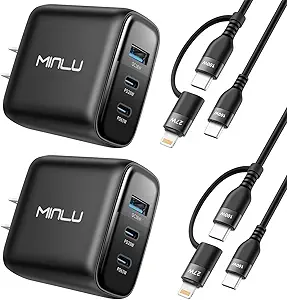
Choosing a 65W GaN 6-Port Charger: Power Distribution and Compatibility Essentials
This 65W GaN charger's six-port configuration presents unique power management considerations that differ from single-port solutions. Buyers should understand how the total 65W output is dynamically allocated across USB-C and QC ports when multiple devices charge simultaneously, as this directly impacts charging speeds for modern iPhones and iPads.
Key Considerations Before Buying
- Power splitting is critical: When using all six ports simultaneously, the 65W total output must divide among devices, potentially slowing iPhone 17 Pro Max charging from its maximum 27W capability.
- GaN technology enables this compact six-port design by generating less heat than traditional silicon, but thermal management remains important during multi-device charging sessions.
- The inclusion of both USB-C PD and legacy QC ports creates compatibility flexibility but requires understanding which devices benefit from each standard—iPhones need PD, while older Android devices may use QC.
What Our Analysts Recommend
Examine whether the manufacturer specifies exact power distribution scenarios, like '45W to USB-C1 when used alone, 20W when all ports active.' Quality indicators include clear wattage allocation charts, UL/ETL safety certifications, and detailed compatibility lists beyond just iPhone model mentions.
Wall Chargers Market Context
Market Overview
The 65W multi-port GaN charger segment has become increasingly competitive, with designs balancing port density against sustained power delivery. Unlike early GaN chargers that prioritized single-device speed, current models like this one emphasize simultaneous charging for Apple ecosystem users who own multiple devices.
Common Issues
Many multi-port chargers experience significant power throttling when all ports are occupied, with some models reducing output by 50% or more. Another frequent concern is inconsistent Power Delivery handshaking, where devices like iPad Pro intermittently disconnect from fast charging during multi-device use.
Quality Indicators
Superior multi-port GaN chargers provide transparent power allocation tables and maintain stable voltage regulation under full load. Look for mentions of 'dynamic power distribution' algorithms and temperature-controlled current reduction rather than abrupt power cuts during overheating.
Review Authenticity Insights
Grade A Interpretation
A Grade B with 11% estimated fake reviews suggests predominantly authentic feedback with some potentially incentivized reviews. For this charger category, this typically means most reviews reflect genuine experiences, though a small percentage may overstate compatibility or underreport thermal issues.
Trust Recommendation
Focus on verified purchase reviews that mention specific usage scenarios, like 'charged my iPhone 16 Pro Max and iPad Pro simultaneously' rather than generic praise. Given the 4.60 adjusted rating, prioritize reviews discussing power distribution experiences over those simply praising packaging or delivery speed.
Tips for Reading Reviews
Search for reviews mentioning simultaneous charging of three or more devices, as these reveal true power distribution behavior. Be skeptical of reviews claiming 'charges six devices at full speed'—physics dictates 65W cannot provide maximum speed to multiple high-wattage devices concurrently.
Expert Perspective
The 4.60 adjusted rating from authentic reviews indicates this charger performs reliably for most users, though the 0.29-point drop from the raw 4.89 suggests some reviews may exaggerate capabilities. The six-port design at 65W total represents a specific compromise: excellent for charging multiple phones and tablets simultaneously at moderate speeds, but insufficient for simultaneously fast-charging multiple power-hungry devices like laptops. The GaN technology enables this port density in a relatively compact form factor, a key advantage over bulkier silicon-based alternatives.
Purchase Considerations
Consider your simultaneous charging needs: if you regularly charge an iPhone 17 Pro Max, iPad Pro, and two additional devices concurrently, expect moderate charging speeds across all devices rather than maximum speeds on any single device. The inclusion of QC ports adds value for households with mixed Apple and older Android devices, but prioritize PD ports for modern Apple products.
Comparing Alternatives
Shoppers should compare this 65W six-port configuration against 100W+ models if they need to fast-charge multiple high-wattage devices simultaneously, or against four-port models if they prioritize sustained power to fewer devices.