
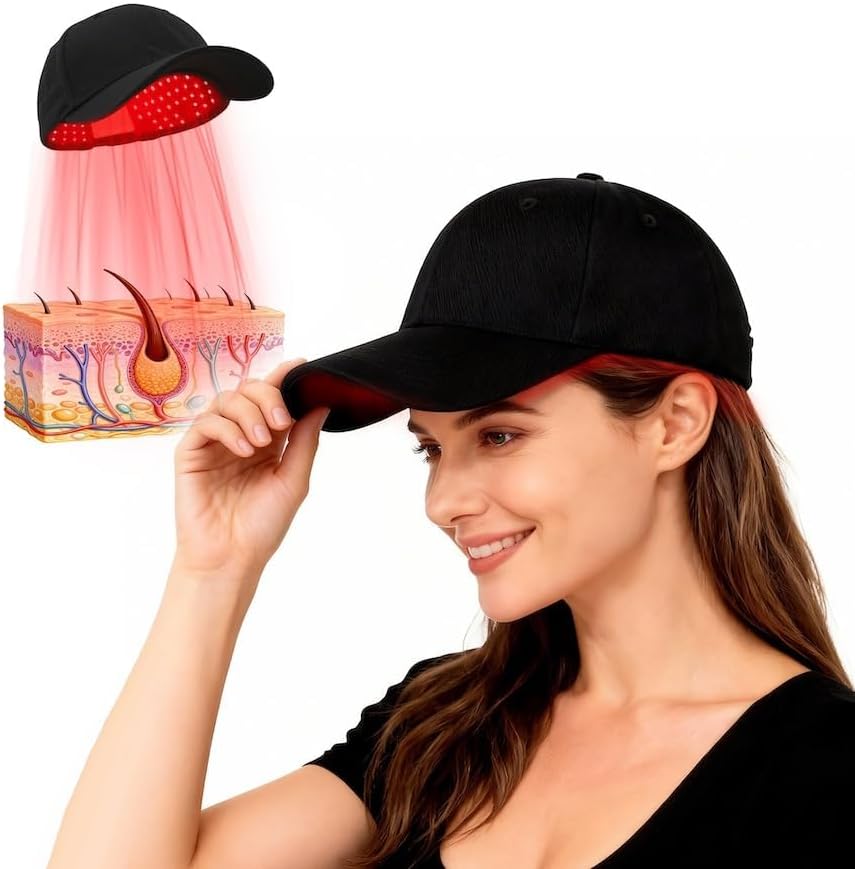
Red Light Hair Caps: What to Know Before You Buy
Red light therapy caps, like this one, use low-level laser or LED light to stimulate hair follicles and promote growth. Unlike many other hair loss products, these devices require consistent use over several months to see results, so it's important to understand what you're getting into before you purchase.
Key Considerations Before Buying
- Wavelength and Power: Look for devices that emit light in the 630-670nm range, as this is considered most effective for hair growth. The number of diodes and their power output (measured in milliwatts) also affect treatment efficacy, so check these specs before buying.
- Fit and Comfort: Since you'll be wearing the cap for 10-30 minutes per session, several times a week, ensure it fits comfortably and securely. Some caps are adjustable, while others come in specific sizes—measure your head to get the right fit.
- Treatment Time and Frequency: Most red light caps require daily or every-other-day use for at least 20 minutes per session. Consider your lifestyle and whether you can commit to this schedule for at least 6 months to see noticeable improvements.
What Our Analysts Recommend
Look for a cap that provides even light coverage across the scalp, not just concentrated spots. Check for FDA clearance or registration, as this indicates the device has been reviewed for safety and effectiveness. Also, consider the build quality—caps with flexible, lightweight materials and rechargeable batteries are more convenient for regular use.
Hair Regrowth Devices Market Context
Market Overview
The hair regrowth device market has grown significantly, with red light therapy caps becoming a popular at-home alternative to clinical treatments. These devices range from basic LED caps to more advanced laser combs, with prices varying from under $100 to over $500. The market is competitive, with many brands claiming similar results, making it essential to research before investing.
Common Issues
A common issue with red light caps is inconsistent results—some users see improvement while others don't, often due to improper use or unrealistic expectations. Another problem is durability; some caps have reported battery issues or diode failures after a few months of use. Additionally, many consumers underestimate the time commitment required, leading to disappointment when they don't see quick results.
Quality Indicators
High-quality red light caps typically have a higher number of diodes (usually 80 or more) and use medical-grade LEDs. Look for devices with a warranty (at least 1 year) and positive reviews that mention specific results after consistent use. FDA clearance and clinical studies backing the technology are also strong indicators of quality.
Review Authenticity Insights
Grade B Interpretation
The Grade B rating and 15% estimated fake review percentage suggest that while most reviews are genuine, a notable minority may be unreliable. This means you can trust the overall 5-star rating to a large extent, but you should be cautious of overly enthusiastic reviews that lack specific details. The adjusted rating of 4.60/5 gives a more conservative, realistic picture of user satisfaction.
Trust Recommendation
Given the 15% fake review rate, it's wise to focus on reviews that include personal usage context, such as photos of the cap in use or detailed timelines of their results. Verified purchase badges are a good sign, but they don't guarantee authenticity. Look for reviews that mention both pros and cons, as these are more likely to be genuine.
Tips for Reading Reviews
When reading reviews, prioritize those that describe the user's hair loss history, how they used the cap (frequency, duration), and what results they saw over time. Be wary of reviews that are overly brief or use generic language. Also, check for reviews that mention specific features like battery life or comfort, as these indicate real-world experience.
Expert Perspective
This red light therapy cap appears to be a legitimate product with a high user satisfaction rate, as reflected in its 5-star rating and the authenticity analysis showing most reviews are genuine. The 15% fake review rate is concerning but not disqualifying, and the adjusted rating of 4.60/5 still indicates strong performance. The product's design, with its wearable cap format, offers convenience for regular use, which is critical for effectiveness. However, as with any red light therapy device, results vary, and consistency is key.
Purchase Considerations
Before purchasing, consider whether you can commit to regular use for at least 6 months—this is essential for seeing results. Also, compare the cap's specifications (wavelength, diode count, coverage) with other products in a similar price range. If you have underlying health conditions or are on medication, consult a healthcare provider first, as red light therapy may interact with certain treatments.
Comparing Alternatives
Shoppers should also explore other red light devices like laser combs or helmets, which may offer different coverage or convenience. Some users prefer handheld devices for targeted treatment, while others find caps more hands-free. Comparing features and user reviews across brands will help you make an informed choice.


