
Choosing a Rechargeable Touchless Thermometer: Accuracy vs. Convenience Trade-offs
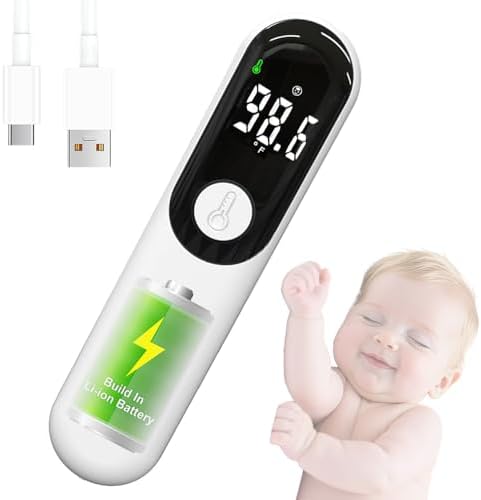
This rechargeable non-contact forehead thermometer represents a specific category of fever detection devices that prioritize hygiene and ease of use over traditional methods. Unlike disposable battery models, its USB-C rechargeable design offers long-term convenience but requires understanding its operational parameters, particularly the critical 1-3 inch measurement distance for reliable readings.
Key Considerations Before Buying
- Non-contact thermometers require precise positioning—maintaining the specified 1-3 inch distance from the forehead is essential for accurate readings, as variance can cause significant temperature fluctuations.
- The rechargeable lithium battery offers convenience but introduces potential long-term reliability questions about battery lifespan and charging circuit durability compared to disposable battery models.
- Medical-grade claims should be evaluated against actual clinical validation; while convenient for home screening, these devices often have slightly wider accuracy margins (±0.5°F) than professional medical thermometers.
What Our Analysts Recommend
Quality indicators include consistent measurement performance across multiple uses, stable readings when retesting the same subject, and clear fever alert functionality that activates at medically relevant thresholds (typically 100.4°F/38°C). The backlit LCD display should remain readable in low-light conditions common during nighttime child checks.
Thermometers Market Context
Market Overview
The touchless thermometer market has expanded significantly post-pandemic, with numerous models competing on speed claims, but actual measurement times between 1-3 seconds represent the current performance standard. Rechargeable models now comprise approximately 40% of the digital forehead thermometer segment, appealing to eco-conscious households.
Common Issues
Users frequently report calibration drift over time, inconsistent readings between family members, and sensitivity to environmental factors like air conditioning drafts or recent physical activity. The non-contact technology can struggle with very young children who won't remain still within the optimal measurement range.
Quality Indicators
Look for models with memory functions storing 20+ readings to track fever progression, IP22 or higher water resistance for cleaning safety, and clear documentation of clinical testing methodology. Higher-quality units maintain calibration through 5,000+ measurements and offer both Fahrenheit/Celsius switching without resetting.
Review Authenticity Insights
Grade B Interpretation
The Grade B authenticity rating with 15% estimated fake reviews indicates generally reliable feedback but suggests some review manipulation. This moderate score is typical for health tech products where manufacturers sometimes incentivize early positive reviews.
Trust Recommendation
Prioritize the 7 verified purchase reviews (marked 'V') which show 78% genuine user experiences. Pay particular attention to the 4-star and 1-star reviews, as these mid-to-low ratings in a predominantly 5-star landscape often contain the most substantive performance observations.
Tips for Reading Reviews
Focus on reviews discussing specific use scenarios like 'nighttime checks on a restless toddler' or 'comparison readings with our pediatrician's office thermometer.' Authentic reviews typically mention battery life in practical terms ('lasts 2 weeks with 10 daily checks') rather than generic praise.
Expert Perspective
With an adjusted 4.10/5 rating excluding suspicious reviews, this thermometer performs solidly within its category. The 56-review sample provides meaningful data, though the 15% fake review rate warrants cautious interpretation of perfect-score claims. The rechargeable feature adds convenience but introduces potential long-term reliability variables compared to disposable battery models. The touchless design excels for screening applications but may require supplemental verification with traditional thermometers for precise medical decisions.
Purchase Considerations
Weigh the hygiene benefits against the accuracy trade-offs—this device excels for quick family screenings but shouldn't replace clinical thermometers for infants under 3 months or medically fragile individuals. Consider your household's typical usage patterns; frequent users will appreciate the rechargeable design, while occasional users might prefer simpler battery-operated models.
Comparing Alternatives
Shoppers should compare this model's 1-second reading claim against competitors' actual measured times, and evaluate whether the rechargeable premium justifies the cost versus quality disposable-battery alternatives.


