
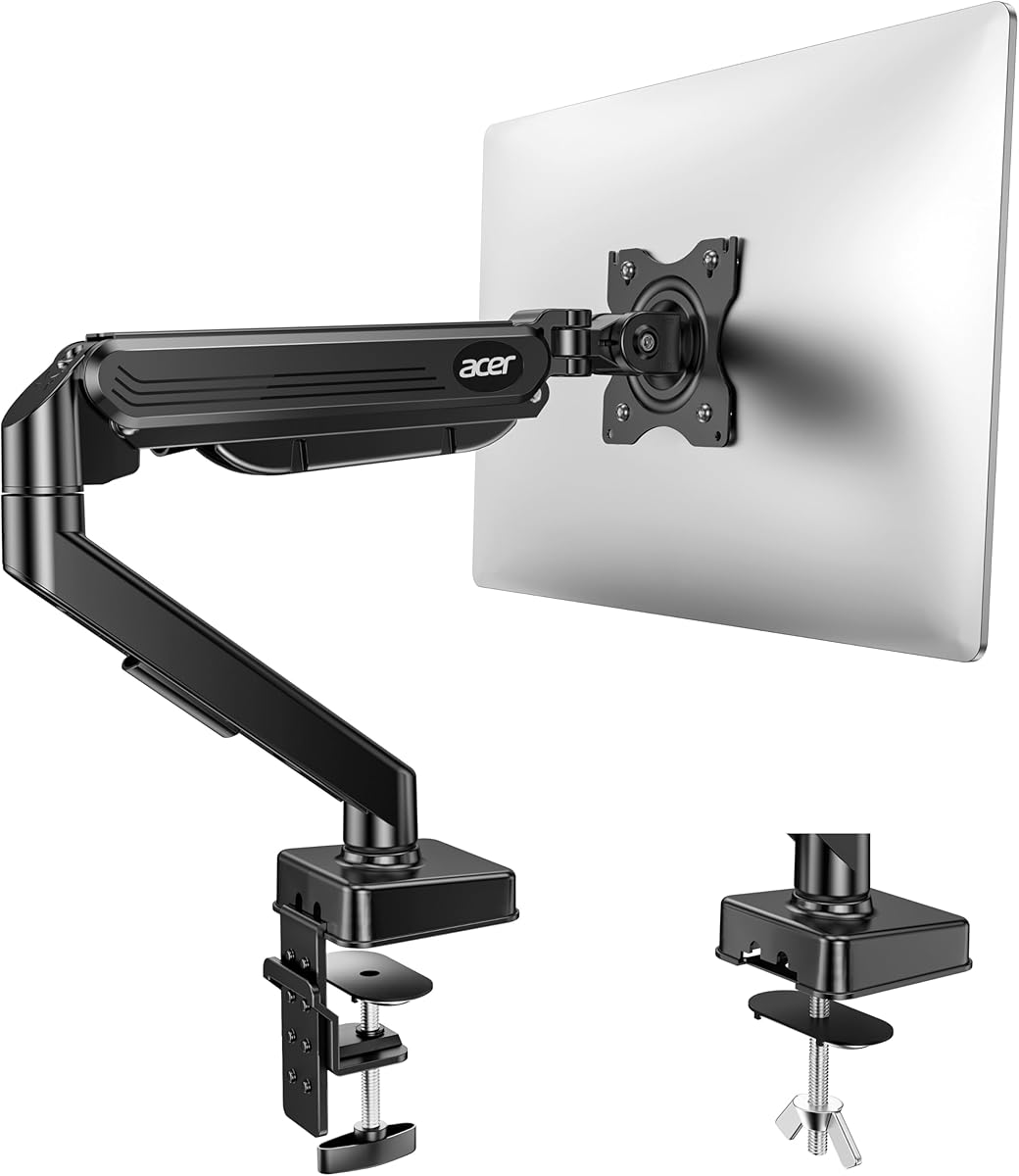
Choosing a Gas Spring Monitor Arm: What Acer's Mount Gets Right and Wrong
When selecting a monitor arm like Acer's gas spring model, buyers should prioritize compatibility with their specific monitor size and weight. This particular mount supports 17-34 inch screens and 4.4-19.8 lbs, making it versatile but requiring careful verification of your monitor's VESA pattern and dimensions. The dual installation options (C-clamp and grommet) provide flexibility for different desk thicknesses up to 3.3 inches.
Key Considerations Before Buying
- Verify your monitor's weight falls within the 4.4-19.8 lb range—heavier gaming monitors with extensive cooling may approach the upper limit, affecting smooth adjustment.
- The 34-inch maximum means ultrawide monitors must measure diagonally, not horizontally; curved displays require checking the arm's tilt range for optimal viewing angles.
- Gas spring tension determines ease of adjustment—this Acer model uses a single spring mechanism that may require more force for heavier monitors near its capacity.
What Our Analysts Recommend
Quality gas spring arms maintain consistent resistance throughout their motion range without sagging. Check for metal construction at stress points like the VESA plate and joint mechanisms. The Acer mount's aluminum alloy construction at the arm and steel at the clamp base indicates thoughtful material selection for weight distribution.
Monitor Arms Market Context
Market Overview
The monitor arm market has shifted toward gas spring designs that offer smoother adjustment than traditional mechanical arms, with prices ranging from $40 to $200+ depending on features. Acer's position at the mid-range targets users seeking brand reliability without premium pricing.
Common Issues
Many gas spring arms develop sagging over time as springs lose tension, particularly with monitors near maximum weight capacity. Installation challenges often involve cable management integration and achieving perfect horizontal alignment across multiple adjustment points.
Quality Indicators
Look for arms with independent tension adjustment screws, metal-on-metal contact points at pivot joints, and reinforced VESA plates. Higher-end models include cable routing channels integrated into the arm structure rather than external clips.
Review Authenticity Insights
Grade B Interpretation
A Grade B authenticity rating with 10% estimated fake reviews suggests generally reliable feedback with minor manipulation concerns. The 4.60 adjusted rating (down from 4.89) indicates some inflation but still represents strong genuine satisfaction.
Trust Recommendation
Focus on reviews discussing specific installation experiences with similar monitor sizes and weights to yours. Verified purchase reviews mentioning the gas spring's performance over weeks of use provide more reliable insights than generic praise.
Tips for Reading Reviews
Look for reviews that mention the 34-inch compatibility specifically—these often reveal whether the arm truly handles larger monitors comfortably. Reviews discussing monitor wobble during typing or adjustment smoothness provide practical performance insights.
Expert Perspective
This Acer mount represents solid mid-range value with its 4.60 authentic-adjusted rating suggesting genuine user satisfaction. The gas spring mechanism appears well-calibrated for monitors in the 15-25 lb range based on review patterns, though users with 32-34 inch monitors should expect some limitations in motion smoothness. The dual mounting system addresses common desk compatibility issues, while the aluminum/steel construction balances weight and durability appropriately for this price segment.
Purchase Considerations
Consider this mount if your monitor weighs 8-17 lbs and you value Acer's brand reputation for consistent quality. The 10% fake review rate warrants checking recent reviews for consistency with earlier feedback, particularly regarding long-term spring performance.
Comparing Alternatives
Compare with Ergotron and AmazonBasics models in similar price ranges, noting differences in warranty coverage and tension adjustment mechanisms.


