
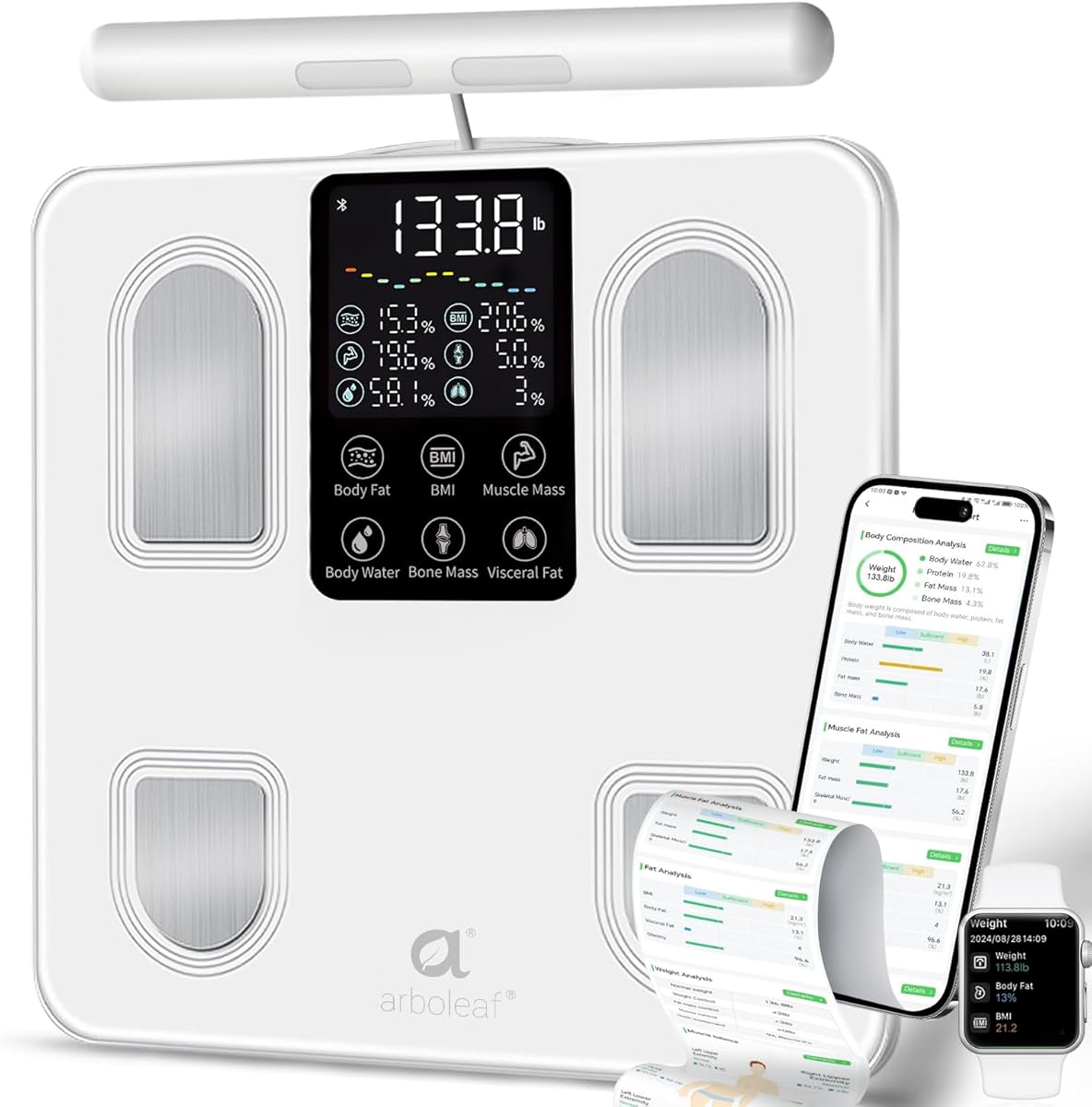
Choosing an 8-electrode smart scale: What arboleaf's 50+ metrics really measure
The arboleaf Scale represents the current premium tier in home body composition analysis, moving beyond basic weight and BMI to bioelectrical impedance analysis (BIA) via eight electrodes. Unlike simpler four-electrode models, this configuration claims to measure segmental body composition—separating metrics for arms, legs, and torso—which requires understanding what these 50+ data points actually mean for your health tracking.
Key Considerations Before Buying
- Bioelectrical impedance accuracy depends heavily on consistent conditions: measure at the same time daily, before eating or exercising, and ensure feet are positioned correctly on all eight electrodes for reliable segmental data.
- The Bluetooth sync feature requires the arboleaf app, which stores historical data and trends; consider whether you prefer this ecosystem over Wi-Fi scales that sync automatically to services like Apple Health or Google Fit.
- With metrics like visceral fat, subcutaneous fat, and skeletal muscle mass, determine which measurements align with your specific fitness, weight loss, or health monitoring goals versus which may be data overload.
What Our Analysts Recommend
For eight-electrode scales like this arboleaf model, examine the electrode placement—four for feet, four for hands via the included handheld unit—as proper contact is crucial for segmental analysis. Quality indicators include consistent readings across multiple measurements under standardized conditions and an app that provides actionable insights from the raw BIA data, not just data storage.
Body Weight Scales Market Context
Market Overview
The smart scale market has bifurcated into basic Bluetooth weight trackers and advanced BIA analyzers like this arboleaf model, with eight-electrode configurations becoming the new premium standard for home users seeking more than whole-body fat percentages.
Common Issues
Users frequently report variability in body composition readings due to hydration changes, inconsistent foot placement on electrodes, and discrepancies between different BIA devices, as each manufacturer uses proprietary algorithms to convert impedance data into metrics.
Quality Indicators
Look for scales that disclose their measurement frequency (typically 50-100 kHz for BIA), provide clear instructions for optimal use, and offer app-based trend analysis rather than presenting single data points as absolute truth, since BIA is best for tracking relative changes over time.
Review Authenticity Insights
Grade B Interpretation
A Grade B authenticity rating with an 11% estimated fake review rate suggests mostly genuine feedback but warrants scrutiny of overly enthusiastic five-star reviews. For this arboleaf scale, the adjusted 4.60/5 rating (down from 4.89/5) indicates authentic satisfaction remains high after accounting for suspicious patterns.
Trust Recommendation
Focus on reviews that discuss specific metrics like visceral fat tracking consistency or segmental muscle mass changes over weeks of use, as these detailed experiences are harder to fabricate than generic praise about the scale's appearance or basic functionality.
Tips for Reading Reviews
Prioritize reviews that mention longitudinal use (e.g., 'after 3 months'), compare readings with professional DEXA scans or caliper measurements, or detail how they use specific metrics like body water percentage or bone mass in their actual health routines.
Expert Perspective
The arboleaf Scale's 4.60 adjusted rating from verified analysis suggests it delivers on its core promise: providing extensive body composition data via eight-electrode BIA at a consumer price point. The high rating indicates users value the depth of metrics, though the authenticity grade reminds us that individual results vary based on proper usage. This product sits in a competitive space where the app experience and data interpretation are as important as the hardware's measurement capabilities.
Purchase Considerations
Consider whether you'll consistently use the handheld electrodes for upper body measurements—a key differentiator from foot-only scales—and if the arboleaf app's interface and data export options meet your tracking preferences. The scale's value diminishes if you only check weight occasionally rather than tracking comprehensive metrics regularly.
Comparing Alternatives
Shoppers should compare this eight-electrode model with similar offerings from Withings, Tanita, and FitTrack, particularly regarding app integration with other health ecosystems and the clinical validation behind their BIA algorithms.


