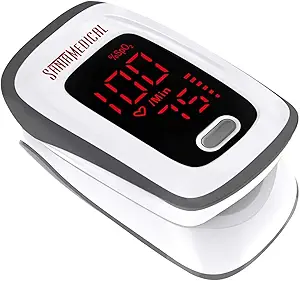
Choosing a Pulse Oximeter That Fits Small Fingers and Tracks Trends
The Alecaremed YM601 stands out in the crowded pulse oximeter market by addressing two common pain points: fit for smaller fingers and the ability to track readings over time with 20-reading memory. Whether you're monitoring a child, an elderly parent with slender fingers, or your own oxygen levels, understanding these features helps you decide if this model matches your needs.
Key Considerations Before Buying
- Finger fit matters more than you think: a loose or overly tight sensor can distort readings. The YM601's small-finger design and four color options aren't just cosmetic—they help ensure the device sits securely on narrower digits, which is especially important for children or adults with petite hands.
- Memory capacity affects trend monitoring: with 20 readings stored, you can review recent measurements without manually logging them. This is useful for spotting patterns over a day or week, but it's not a substitute for a continuous monitor if you need real-time tracking.
- Display clarity and ease of use: a pulse oximeter is only helpful if you can read it quickly. Look for a bright, multi-angle display and simple one-button operation—features that matter when you're checking oxygen levels in low light or during a health scare.
What Our Analysts Recommend
Quality pulse oximeters should have FDA clearance (or equivalent) and a display that shows both SpO2 and pulse rate clearly. Check for a perfusion index or signal quality indicator, which helps distinguish reliable readings from motion artifacts. Build quality also matters: a snug, comfortable clip and a screen that's easy to read at a glance are signs of a well-designed device.
Pulse Oximeters Market Context
Market Overview
Pulse oximeters have moved from clinical settings to home health essentials, with a surge in demand since 2020. The market is flooded with options ranging from $15 basic models to $100+ devices with Bluetooth and app integration. This abundance makes it harder to separate reliable devices from novelty gadgets.
Common Issues
A frequent complaint is inaccurate readings due to poor fit or movement, especially for users with small or cold fingers. Another issue is misleading marketing: some inexpensive models claim medical-grade accuracy without proper validation. Battery life and display visibility in different lighting are also common pain points.
Quality Indicators
Look for devices with clear FDA clearance numbers (not just 'FDA registered'), a display that shows waveform or perfusion index, and consistent readings across multiple attempts. Brands that provide transparent specifications and responsive customer support tend to be more reliable. User reviews that mention specific use cases (e.g., 'works well on my 5-year-old's finger') are more trustworthy than generic praise.
Review Authenticity Insights
Grade B Interpretation
An A authenticity grade with only 5% estimated fake reviews is exceptional for any Amazon product, especially in the health category where manipulation is common. This means the 4.78-star rating is likely a genuine reflection of user satisfaction, and the adjusted 4.70 rating still places it among the top-rated pulse oximeters.
Trust Recommendation
You can trust the overall rating, but still read a sample of reviews to see if the product matches your specific needs—particularly regarding fit for small fingers and memory functionality. The low fake-review percentage suggests the feedback is organic, so patterns in reviews (e.g., repeated mentions of accurate readings) are meaningful.
Tips for Reading Reviews
Focus on reviews that describe the user's finger size, age (if for a child), and how they used the memory feature. Look for comments about consistency across multiple readings and battery life. Ignore reviews that only say 'works great' without context; detailed experiences are more informative.
Expert Perspective
The Alecaremed YM601 appears to be a solid choice for anyone who needs a pulse oximeter that accommodates smaller fingers and offers basic trend tracking. Its high rating and authentic review base suggest reliable performance, and the 20-reading memory is a practical bonus for occasional monitoring. However, it lacks advanced features like Bluetooth or continuous monitoring, so it's best suited for spot checks rather than intensive tracking.
Purchase Considerations
Weigh whether the small-finger design is essential for you—if so, this is a rare find. Consider the memory capacity: 20 readings is enough for a few days of sporadic use but may be limiting if you need longer-term data. Also, check the warranty and return policy, as with any medical device.
Comparing Alternatives
Compare with other small-finger pulse oximeters like the Zacurate 500BL or Masimo MightySat, which offer different features and price points. Reading reviews for each will help you find the best fit for your specific monitoring needs.