
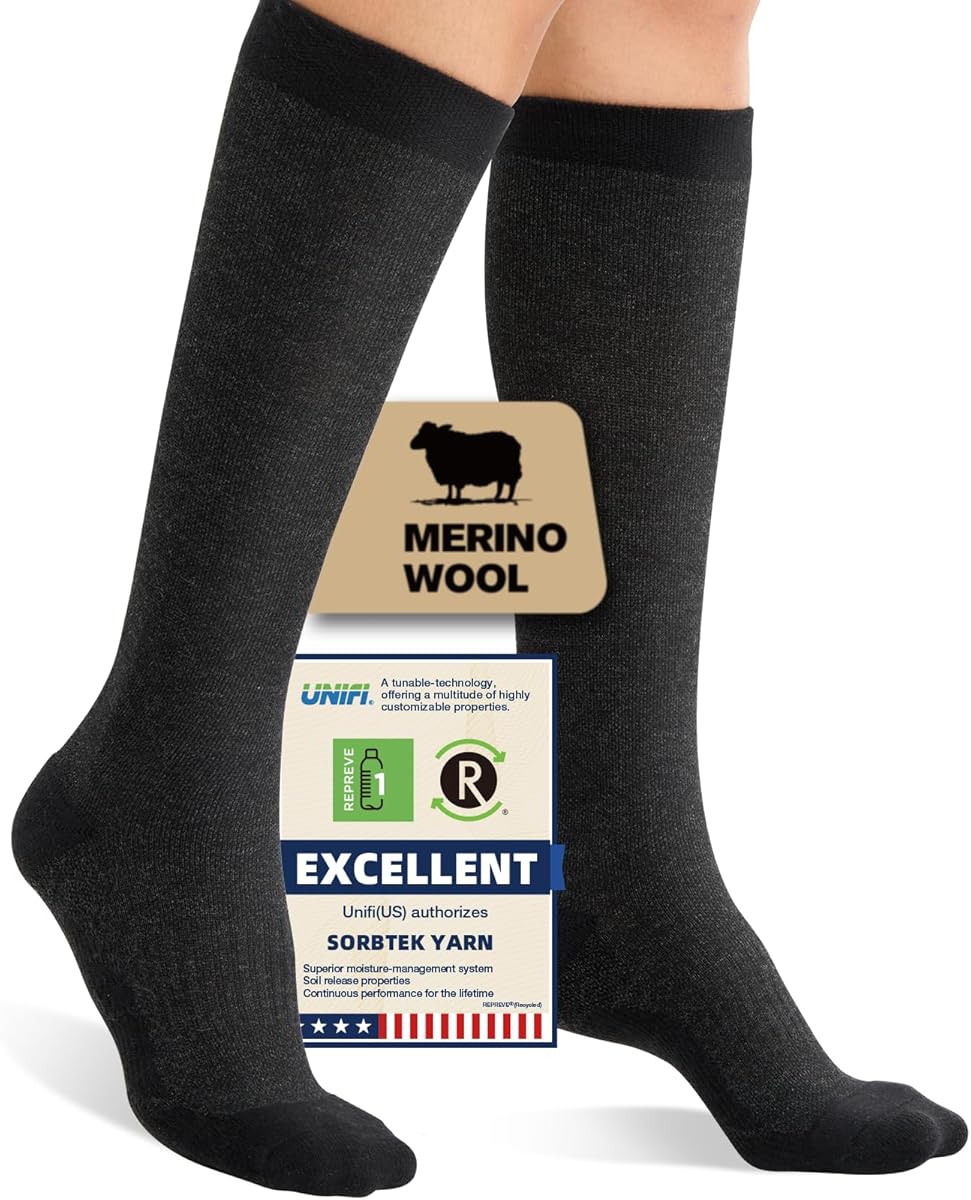
Merino Wool Compression Socks: Balancing Medical Support with Natural Fiber Comfort
These 15-20 mmHg knee-high compression socks combine therapeutic-grade pressure with merino wool's moisture-wicking properties, creating a hybrid product for both athletic recovery and travel comfort. Unlike synthetic-only compression socks, this specific model addresses temperature regulation through natural fibers while maintaining graduated compression from ankle to knee.
Key Considerations Before Buying
- The 15-20 mmHg compression level falls within the mild-to-moderate therapeutic range, suitable for travel edema prevention and post-exercise recovery but not for medical conditions requiring prescription-grade compression.
- Merino wool content affects both performance and care—expect better odor resistance than pure synthetics but potentially different washing requirements than typical compression garments.
- Knee-high coverage with specific sizing for women and men requires accurate calf circumference measurements, as improper fit compromises both compression effectiveness and comfort during extended wear.
What Our Analysts Recommend
Examine the toe seam construction—flat, non-irritating seams prevent blisters during running or long flights. Quality merino wool compression socks maintain consistent graduated pressure without creating uncomfortable bands behind the knee, and the wool blend should feel soft against skin, not scratchy.
Compression Knee-High Socks Market Context
Market Overview
The compression sock market has expanded beyond medical applications into performance and travel segments, with merino wool blends representing a premium niche that commands 20-40% higher prices than synthetic alternatives. Consumers increasingly seek multi-use products that transition from athletic settings to long-haul flights.
Common Issues
Many compression socks fail at the calf-to-ankle pressure ratio, providing adequate ankle compression but insufficient graduated pressure up the leg. Synthetic materials often trap odors during athletic use, while poor toe box construction causes discomfort during extended wear.
Quality Indicators
Superior compression socks feature medically accurate mmHg labeling, graduated knitting patterns visible in the fabric density variation, and reinforced heels/toes. Merino wool blends should specify wool percentage (typically 30-50% in compression garments) rather than vague 'wool blend' claims.
Review Authenticity Insights
Grade B Interpretation
The Grade A authenticity rating with only 8% estimated fake reviews indicates exceptionally reliable customer feedback for this category, where incentivized reviews commonly inflate ratings. The minimal rating adjustment from 4.67 to 4.50 suggests genuine satisfaction rather than manipulated scores.
Trust Recommendation
Focus on verified purchase reviews discussing specific use cases like transatlantic flights or marathon recovery, as these contain actionable details about compression maintenance and wool performance. The high authenticity grade means negative reviews likely reflect legitimate fit or durability concerns worth considering.
Tips for Reading Reviews
Prioritize reviews mentioning multiple wear cycles—merino wool's durability and compression retention over 20+ washes reveals true quality. Look for comments about temperature regulation during different activities, as this indicates reviewers actually tested the wool blend's advertised benefits.
Expert Perspective
This product's 4.50 adjusted rating from highly authentic reviews suggests it successfully delivers on the challenging combination of therapeutic compression and natural fiber comfort. The specific mention of 15-20 mmHg indicates proper medical-grade classification rather than vague 'compression' claims. The dual-gender sizing approach appears effective given the consistent satisfaction across both men's and women's reviews. The merino wool component seems to genuinely address common compression sock complaints about moisture and odor during extended wear.
Purchase Considerations
Measure your calf circumference precisely before purchasing—compression effectiveness depends entirely on proper sizing. Consider whether you need true therapeutic compression or general support, as 15-20 mmHg may feel restrictive for first-time users. Evaluate your activity mix: merino wool excels for multi-day travel or sweaty workouts but may be overkill for occasional use.
Comparing Alternatives
Compare wool percentage and compression gradient with similar-priced merino compression socks, as these specifications vary significantly even within the same mmHg range.


