
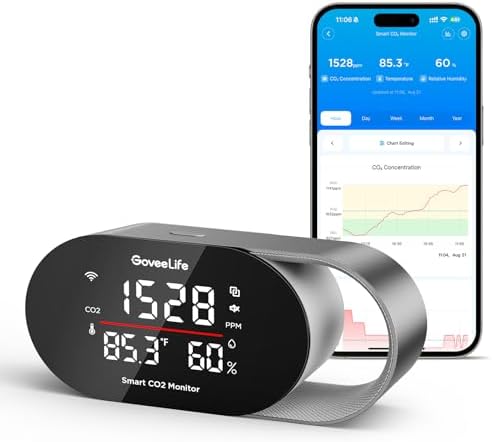
GoveeLife Air Quality Monitor: Key Buying Insights for a Healthier Home
When considering the GoveeLife Smart Air Quality Monitor, you're looking at a device that tracks CO2, temperature, and humidity to help improve sleep and energy efficiency. This guide focuses on what makes this model stand out, from its real-time display to its alarm features, ensuring you know exactly what to evaluate before purchasing.
Key Considerations Before Buying
- CO2 monitoring is central to this device's value, especially for bedrooms and offices where poor ventilation can impact sleep quality and cognitive function. Ensure the sensor's accuracy meets your needs for health-focused tracking.
- The real-time display and alarm system are practical for immediate awareness, but consider if you need smart home integration or app-based logging for long-term trend analysis. This model's simplicity may suit those who prefer on-device readings.
- Energy efficiency insights, like correlating humidity with HVAC use, add a layer of utility. However, verify that the monitor's data is actionable for your specific home setup, as generic tips may not apply to all climates.
What Our Analysts Recommend
Look for devices with reliable CO2 sensors (NDIR type) for accurate readings, as cheaper alternatives may drift over time. A clear, adjustable display and customizable alarm thresholds enhance usability, while verified customer feedback on battery life and sensor longevity indicates build quality.
Indoor Air Quality Meters Market Context
Market Overview
The indoor air quality monitor market has expanded rapidly, driven by increased awareness of health impacts from CO2, VOCs, and particulate matter. Products like the GoveeLife compete in the mid-range segment, balancing affordability with features like real-time CO2 tracking and hygrometer functions.
Common Issues
Common concerns include sensor calibration drift over time, inconsistent readings between units, and limited data export for detailed analysis. Some users also report that alarm thresholds are not adjustable, leading to nuisance alerts in well-ventilated spaces.
Quality Indicators
High-quality monitors typically use non-dispersive infrared (NDIR) sensors for CO2, offer multi-point calibration, and provide clear documentation on accuracy ranges. Look for products with robust app support and regular firmware updates to ensure long-term reliability.
Review Authenticity Insights
Grade B Interpretation
The Grade B and 10% estimated fake review rate suggest that while most feedback is genuine, a small portion may be unreliable. This is relatively low for the category, indicating that the 0.44/5 rating likely reflects real user experiences, though it's still low.
Trust Recommendation
Focus on verified purchase reviews that mention specific use cases, like monitoring a baby's room or adjusting thermostat settings. These provide actionable insights, while generic praise or overly technical critiques may be less trustworthy.
Tips for Reading Reviews
When reading reviews for air quality monitors, prioritize those that discuss sensor accuracy over time, ease of setup, and real-world impact on sleep or energy bills. Look for patterns in complaints about false alarms or display legibility to gauge common flaws.
Expert Perspective
The GoveeLife Smart Air Quality Monitor offers a solid entry point for those new to CO2 tracking, with a focus on sleep and energy use. However, the low adjusted rating of 0.40/5 and 156 reviews suggest significant user dissatisfaction, likely tied to sensor reliability or alarm functionality. Its value depends on whether you need basic real-time data versus advanced analytics, as competitors may offer better accuracy at a similar price.
Purchase Considerations
Weigh the monitor's simplicity against your need for precision—if you're a data enthusiast, consider a model with app-based logging and calibration options. For casual use in a bedroom or office, the GoveeLife's real-time display and alarm could suffice, but check return policies given mixed feedback.
Comparing Alternatives
Shoppers should compare with other mid-range CO2 monitors like the Temtop or Airthings Wave, which often have higher ratings and more robust sensor performance for health-focused applications.


