Choosing Acacia Wood Trays: Durability, Finish, and Handle Design Matter Most
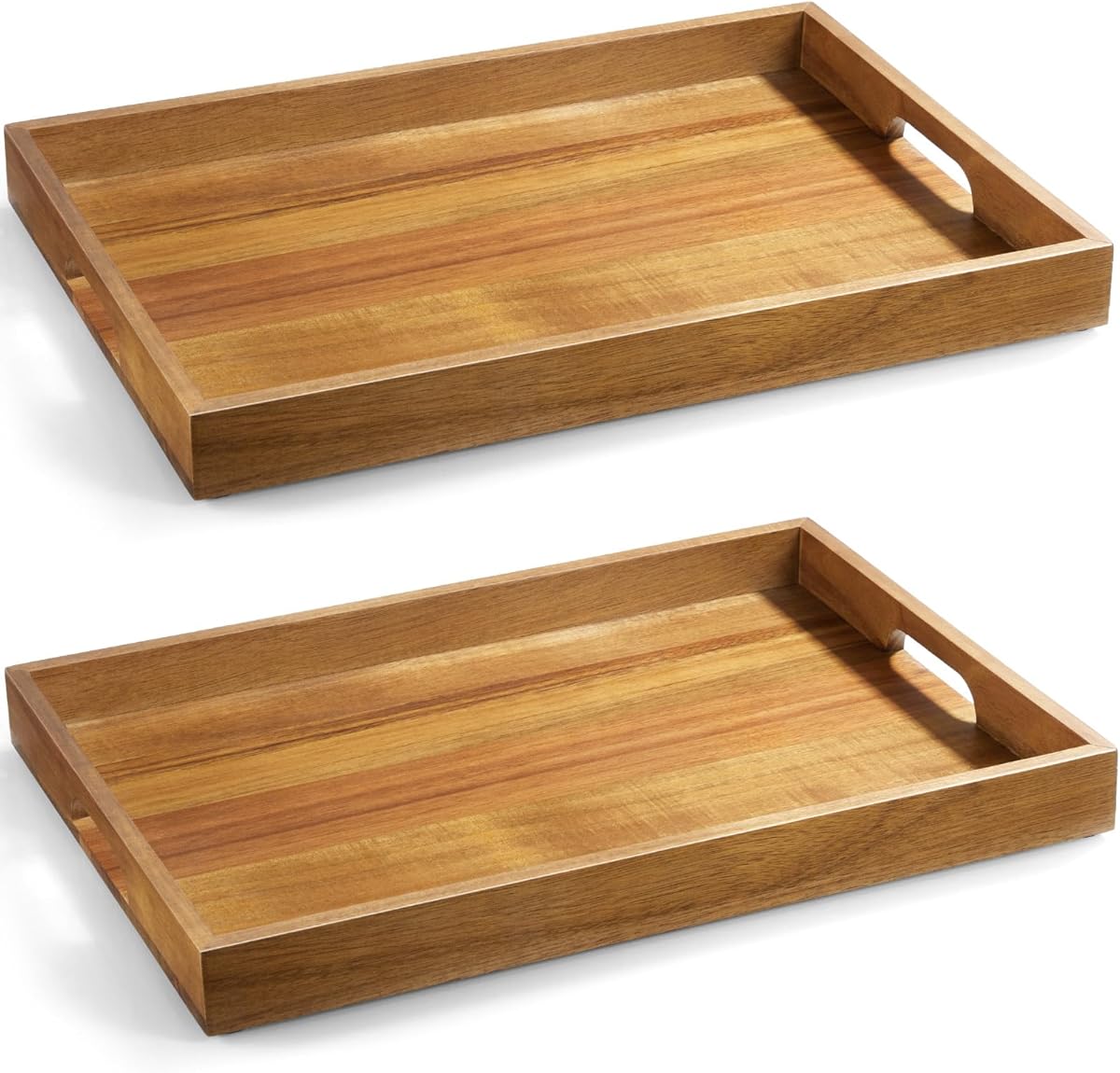
When selecting large wooden serving trays like this 17-inch acacia wood set, buyers should prioritize structural integrity over purely aesthetic features. This specific product's 2-pack configuration and substantial size make it suitable for both casual family use and occasional entertaining, but the wood's natural characteristics require specific consideration. The handles are particularly important for a tray this size when carrying heavier items.
Key Considerations Before Buying
- Acacia wood's natural grain variation means each tray will have unique character, but check for consistent finish quality across both trays in the set.
- The 17-inch length provides generous serving space but requires adequate storage; measure your ottoman or coffee table surface before purchasing.
- Handle placement and carving should allow for comfortable grip with both hands, especially when the tray is loaded with dishes or beverages.
What Our Analysts Recommend
Quality acacia wood trays should have smooth, rounded edges that prevent splintering and a food-safe finish that doesn't transfer odors. Examine product images for visible joinery at the handles—dovetail or mortise-and-tenon construction indicates better durability than simple glued attachments. The wood should have a consistent sealant application, particularly around the handles where moisture can accumulate.
Serving Trays Market Context
Market Overview
The wooden serving tray market has shifted toward sustainable hardwoods like acacia, which offers better moisture resistance than pine or bamboo at a mid-range price point. Large format trays (15+ inches) have grown in popularity for multi-purpose use beyond traditional serving, functioning as decorative organizers or stable surfaces for ottoman dining.
Common Issues
Thinner wooden trays often warp when exposed to moisture from condensation or cleaning, while poorly finished handles can develop rough spots over time. Many budget trays use surface stains that wear unevenly, revealing lighter wood beneath high-contact areas within months of regular use.
Quality Indicators
Superior wooden trays feature end-grain construction at stress points and use water-resistant sealants like food-grade mineral oil or beeswax blends. Quality manufacturers leave the underside unfinished or lightly sealed to allow wood movement without cracking, while maintaining a fully sealed food-contact surface.
Review Authenticity Insights
Grade B Interpretation
The Grade B authenticity rating indicates predominantly genuine feedback with moderate confidence, while the 10% estimated fake review rate suggests some potentially inflated positivity. For this specific product category, fake reviews often exaggerate durability claims or downplay natural wood variations.
Trust Recommendation
Focus on reviews mentioning specific use cases like 'breakfast in bed' or 'coffee table organization' rather than generic praise. Verified purchases discussing actual handling experience with both trays over several months provide the most reliable insights for this product type.
Tips for Reading Reviews
Prioritize reviews that mention the tray's weight capacity with specific items (like 'held three dinner plates') and note any finish changes after cleaning. Be skeptical of reviews claiming 'perfectly identical' grain patterns across both trays, as natural wood inherently varies.
Expert Perspective
With an adjusted 4.60/5 rating from verified purchases, this acacia wood tray set performs well within its category, particularly for consumers valuing rustic aesthetics and substantial serving surfaces. The high authentic rating suggests genuine satisfaction with the wood quality and functional design. The two-tray configuration adds practical value for households needing multiple serving surfaces or wishing to use one decoratively while reserving another for functional use.
Purchase Considerations
Consider whether the 17-inch size accommodates your primary use cases—it's excellent for ottoman dining but may overwhelm smaller coffee tables. The acacia wood's natural variations mean these trays develop unique patinas over time, which appeals to some buyers but may disappoint those seeking perfectly matched sets.
Comparing Alternatives
Shoppers should compare handle comfort and wood thickness with similar acacia trays, as these factors significantly impact long-term usability.