
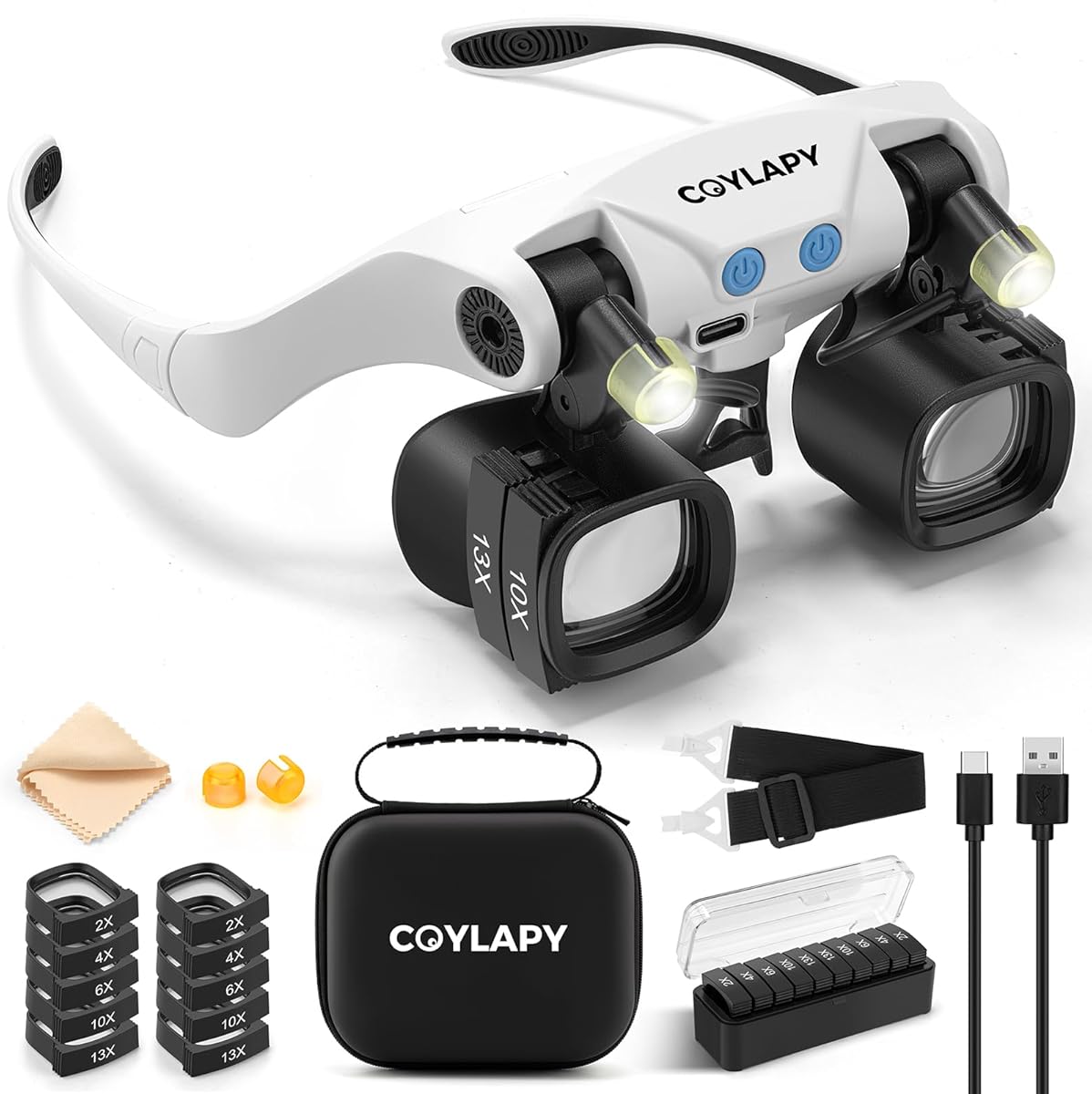
Choosing a Headband Magnifier: Lens Range, Light Quality, and Comfort Balance
This specific headband magnifier with five interchangeable lens pairs (2X to 13X) and integrated lighting represents a versatile tool for precision tasks. Buyers should understand that the wide magnification range is both its primary advantage and a potential source of complexity, requiring proper lens selection for different applications like watch repair versus general crafts.
Key Considerations Before Buying
- The 13X lens provides extreme detail for micro-soldering or inspecting jewel bearings, but has an extremely narrow field of view and short focal distance, demanding a steady hand and specific use cases.
- The headband design distributes weight but can cause pressure points during extended sessions; assess the padding material and adjustability based on your typical work duration.
- The integrated LED light's color temperature and battery life are critical—cool white LEDs reduce eye strain for metalwork, while warm light is better for organic materials like wood or textiles.
What Our Analysts Recommend
Quality indicators for this product type include lens clarity without distortion (especially at higher magnifications like 10X and 13X), secure lens-changing mechanisms that prevent accidental drops, and a light source with even illumination that doesn't create hotspots or shadows in your focal plane. The storage case should have designated, protective slots for each lens pair.
Magnifiers Market Context
Market Overview
The headband magnifier market is segmented between basic single-lens models and professional systems like this one with interchangeable optics. Products in this mid-range tier compete on lens quality, comfort engineering, and accessory inclusion, with the 'five lens pairs plus light' configuration becoming a popular standard for serious hobbyists.
Common Issues
Common problems include chromatic aberration in cheaper acrylic lenses, insufficient light brightness or uneven beam patterns, and headbands that slip or become uncomfortable after 30+ minutes of use. Users often struggle with correctly interpreting 'X' magnification values versus actual working distance and field of view.
Quality Indicators
Identify quality by examining the lens material (glass typically offers better clarity than plastic at higher magnifications), the presence of anti-reflective coatings, and the build of the lens cartridge system—metal or robust plastic frames last longer than flimsy clips. A good headband will have both vertical and circumferential adjustment points.
Review Authenticity Insights
Grade B Interpretation
A Grade B authenticity rating with an estimated 10% fake review rate suggests the majority of feedback is reliable, but shoppers should remain slightly cautious of overly effusive 5-star reviews. The adjusted rating of 4.00/5 (down from 4.22/5) after filtering indicates the genuine consensus is strong but not perfect.
Trust Recommendation
Focus on the verified purchase reviews that discuss specific use cases like 'watch repair' or 'circuit board work,' as these contain the most actionable details about lens performance and comfort. The one review flagged for potential manipulation should be viewed skeptically, but the overall pattern is trustworthy.
Tips for Reading Reviews
Pay particular attention to reviews mentioning long-term use (e.g., 'after 3 months') for insights into durability, and look for comments about the 6X vs. 10X lenses, as this mid-to-high range is where optical flaws often become apparent. Reviews discussing battery replacement or light dimming are valuable for assessing the LED system's real-world performance.
Expert Perspective
This product's data indicates a well-received tool that delivers on its core promise of versatile magnification, evidenced by the solid 4.00 adjusted rating from verified buyers. The five-lens system is notably comprehensive, covering everything from macro assembly (2X-4X) to extreme detail inspection (13X). The inclusion of a case suggests the manufacturer understands users need to protect these multiple optical components. The primary trade-off is between this versatility and the potential complexity of managing and switching between five separate lens pairs.
Purchase Considerations
Weigh whether you truly need the entire 2X to 13X range, or if a simpler 2-3 lens set would suffice for your primary tasks. Consider your workspace lighting; if you already have an excellent bench lamp, the built-in LED feature may be less critical. The headband format is ideal for tasks requiring both hands free, but if you primarily look down into a stationary magnifier, a different form factor might be more comfortable.
Comparing Alternatives
Shoppers should compare this system's lens quality and headband comfort directly against similar 5-lens kits from brands like Donegan or Fancii, as subtle differences in optical clarity and weight distribution significantly impact the user experience.


