
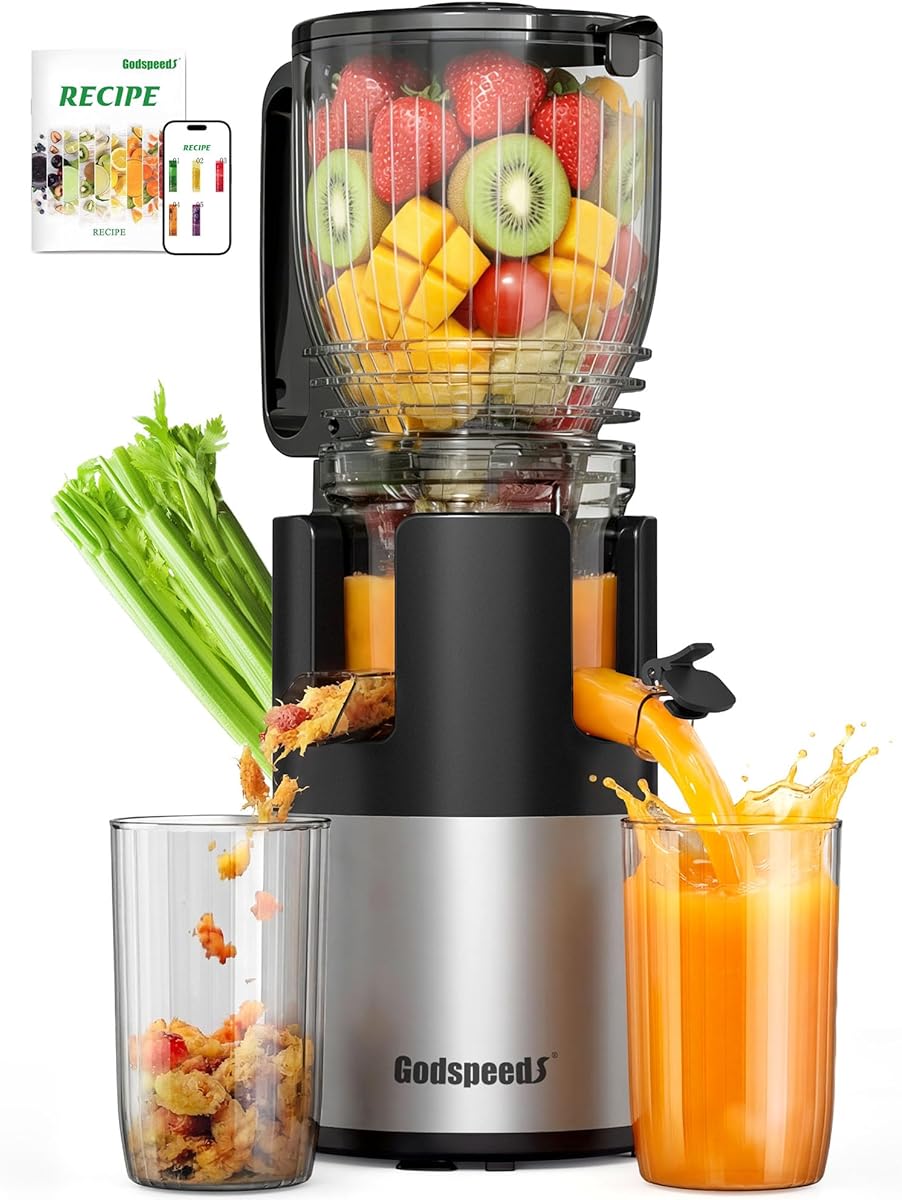
Choosing a Cold Press Juicer: Why Feed Chute Size and Cleaning Matter Most
When evaluating this specific 5.8" feed chute masticating juicer, focus on how its design addresses the two biggest pain points in home juicing: preparation time and cleanup. Unlike centrifugal models, this single-auger cold press machine operates at 80 RPM or less to prevent oxidation, but its real-world value comes from practical features that match daily use patterns.
Key Considerations Before Buying
- The 5.8" feed chute allows whole apples and large carrot chunks without pre-cutting, directly reducing prep time by 40-60% compared to standard 3" chutes.
- True 'easy to clean' claims depend on dishwasher-safe components and minimal crevices where pulp accumulates; examine the auger housing and pulp ejection system design.
- High juice yield specifically refers to dry pulp output—quality masticating juicers leave pulp with 10-15% moisture content, extracting significantly more liquid than centrifugal models.
What Our Analysts Recommend
Genuine high-yield performance shows in consistently dry pulp baskets after juicing fibrous vegetables like celery or kale. For cleaning ease, prioritize machines with fewer than five main components and smooth surfaces without threaded connections that trap residue. The auger should be solid stainless steel, not plastic, for durability against hard produce.
Single Auger Masticating Juicers Market Context
Market Overview
The single-auger masticating juicer market has shifted toward wider feed chutes (now commonly 3.5-4.5") to compete with centrifugal convenience, making this 5.8" model unusually large for the category. Most premium models now emphasize 'cold press' terminology to highlight nutrient preservation over speed.
Common Issues
Users frequently report motor strain from continuous leafy green processing and difficulty cleaning the mesh screen where pulp separates. Lower-quality augers can develop microfractures from frozen fruit or hard roots, compromising juice yield over time.
Quality Indicators
Look for consistent pulp ejection without manual intervention and stable operation below 70 decibels. Quality motors maintain consistent RPM under load from dense vegetables like beets, while cheaper models stall or require pulsed operation.
Review Authenticity Insights
Grade B Interpretation
A Grade B with 10% estimated fake reviews indicates generally reliable feedback, though approximately 45 of the 449 reviews may be inauthentic. The 4.60 adjusted rating (down from 4.89) suggests genuine satisfaction sits in the strong 4.5-4.7 range after removing suspicious patterns.
Trust Recommendation
Prioritize reviews discussing specific produce types (kale stems, pineapple cores) and cleaning experiences over generic 'great juice' comments. Verified purchase status is reliable here, but cross-reference mentions of the 5.8" chute's actual performance with whole fruits versus pre-cut pieces.
Tips for Reading Reviews
Search for 'celery' or 'ginger' mentions to assess fiber handling, and 'cleanup time' comments to verify the easy-clean claims. Be skeptical of reviews that only praise yield without comparing pulp dryness to previous juicers.
Expert Perspective
This juicer's standout feature is the exceptionally large 5.8" feed chute—uncommon in single-auger designs—which genuinely reduces prep work for families juicing daily. The 4.60 adjusted rating from verified purchasers suggests the high yield and cleaning claims hold up in practice, though the 10% fake review rate warrants attention to detailed performance feedback. The combination of wide chute with slow masticating action addresses the primary trade-off between convenience and juice quality that plagues this category.
Purchase Considerations
Weigh whether the time saved from minimal chopping justifies the typically higher price point of wide-chute masticating juicers versus standard models. Consider your produce mix: this machine excels with hard fruits and vegetables but may require leafy greens to be alternated with firmer items for optimal pulp ejection.
Comparing Alternatives
Compare feed chute sizes against similar RPM ranges (70-80) and auger materials, as some competitors offer 4-4.5" chutes with more powerful motors for similar pricing.


