
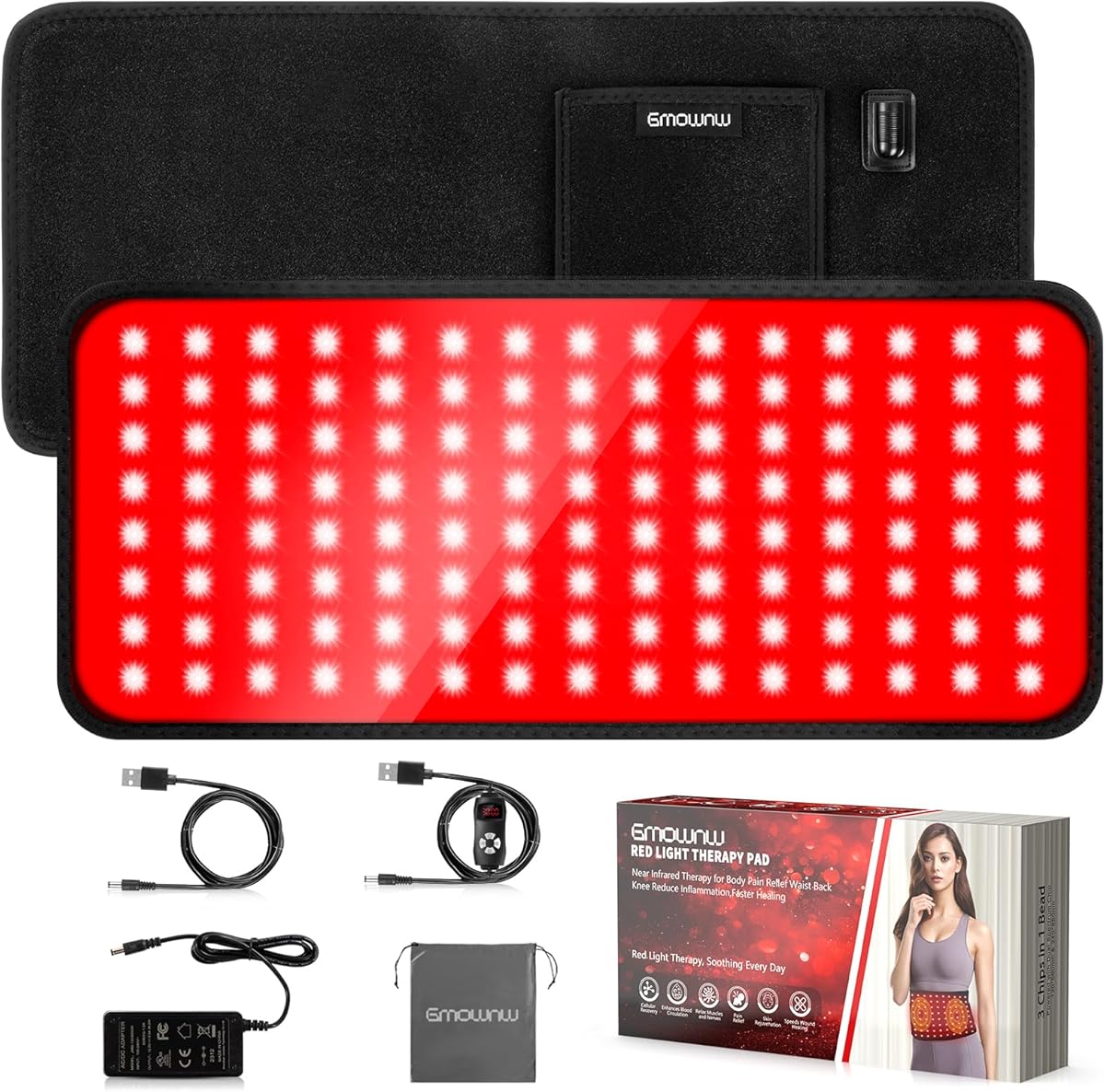
Choose the Right Red Light Therapy Pad for Muscle Relief
When considering a red light therapy pad like this 19.6'' x 8.6'' model with 660nm and 850nm wavelengths, it's essential to understand how the combination of red and near-infrared light targets muscle pain and recovery. These pads offer a convenient, wearable alternative to full-body panels, but their effectiveness hinges on factors like LED density, wavelength accuracy, and treatment area coverage. Before buying, focus on the specific features that align with your pain relief goals and usage habits.
Key Considerations Before Buying
- Wavelength combination matters: 660nm red light targets skin and surface tissue, while 850nm near-infrared penetrates deeper for muscle and joint relief. This pad's dual-wavelength setup is ideal for comprehensive therapy, but ensure the wavelengths are clinically validated for your condition.
- LED count and spacing affect coverage: With 120 LEDs on a 19.6'' x 8.6'' pad, you get a dense array that delivers consistent irradiance. However, verify that the LEDs are evenly distributed to avoid hot spots or under-treated areas, especially when wrapping around knees or shoulders.
- Timer and remote control add convenience: A remote with timer allows you to set sessions without fumbling, crucial for consistent use. Check that the timer range (e.g., 10-30 minutes) matches typical therapy protocols, and that the remote is intuitive enough for daily use.
What Our Analysts Recommend
Quality red light therapy pads should have a robust build with flexible fabric that maintains LED alignment when wrapped. Look for certifications like FDA registration or CE marking, which indicate safety and performance standards. Also, verify that the irradiance (power density) is specified—ideally above 50 mW/cm² at the treatment distance—to ensure therapeutic efficacy.
Light Therapy Market Context
Market Overview
The red light therapy market for home use has expanded rapidly, with wearable pads gaining popularity for targeted muscle and joint relief. These devices offer a cost-effective alternative to clinical sessions, but the market is flooded with varying quality, from basic LED strips to advanced multi-wavelength systems. Consumers increasingly seek portable, easy-to-use solutions that fit into daily routines.
Common Issues
A common problem is false wavelength claims, where some pads use lower-quality LEDs that don't emit the stated 660nm or 850nm light, reducing effectiveness. Another issue is inconsistent irradiance across the pad surface, leading to uneven treatment. Durability concerns also arise, with some pads failing after repeated bending or washing.
Quality Indicators
To identify quality, look for detailed specifications including LED type (e.g., 3-in-1 chip), irradiance measurements, and clinical backing. Verified buyer reviews with specific health outcomes (e.g., 'reduced knee pain after 2 weeks') are stronger indicators than generic praise. Also, a clear warranty and responsive customer support signal manufacturer confidence.
Review Authenticity Insights
Grade B Interpretation
A Grade B with 10% estimated fake reviews is relatively good for this category, where many products have higher fake review rates. This suggests the majority of the 1,872 reviews are genuine, but you should still approach with caution—about 187 reviews may be unreliable. The adjusted rating of 3.80/5, down from 4.00, indicates that removing suspicious reviews reveals a more accurate, slightly lower satisfaction level.
Trust Recommendation
You can trust the overall sentiment, but focus on reviews that describe specific usage patterns, such as 'used on my lower back for 20 minutes daily' or 'helped with post-workout soreness.' These detailed accounts are harder to fake and provide real-world insight. Be wary of reviews that are overly brief or lack personal context.
Tips for Reading Reviews
For red light therapy pads, prioritize reviews that mention the specific body part treated, session duration, and time to see results. Look for balanced feedback that notes both benefits (e.g., 'reduced stiffness') and drawbacks (e.g., 'pad shifts during use'). Also, check if the reviewer has used other therapy devices, as this indicates comparative experience.
Expert Perspective
This red light therapy pad offers a solid entry point for muscle pain relief, with a dual-wavelength design and convenient features like a timer and remote. The 120 LEDs on a moderately sized pad provide good coverage for areas like the back, knees, or shoulders, though users with larger body parts may need multiple sessions. The B-grade authenticity means you can rely on most reviews, but the adjusted 3.80 rating suggests some users found limitations, possibly in irradiance consistency or build quality. It's a practical choice for those wanting a wearable, targeted therapy option without the high cost of full-body panels.
Purchase Considerations
Weigh the convenience of a wearable pad against its coverage area—this size is best for localized treatment, not full-body use. If you need daily therapy for chronic pain, the remote and timer add value for consistency. However, if you're treating large areas like the entire back, a larger panel might be more efficient. Also, consider that near-infrared light can generate heat, so ensure the pad's fabric is breathable and comfortable for extended sessions.
Comparing Alternatives
Shoppers should compare this pad with other wearable options that offer similar wavelengths but different sizes or LED densities. Also, consider full-body panels if you want broader coverage, though they are less portable and typically more expensive.


