
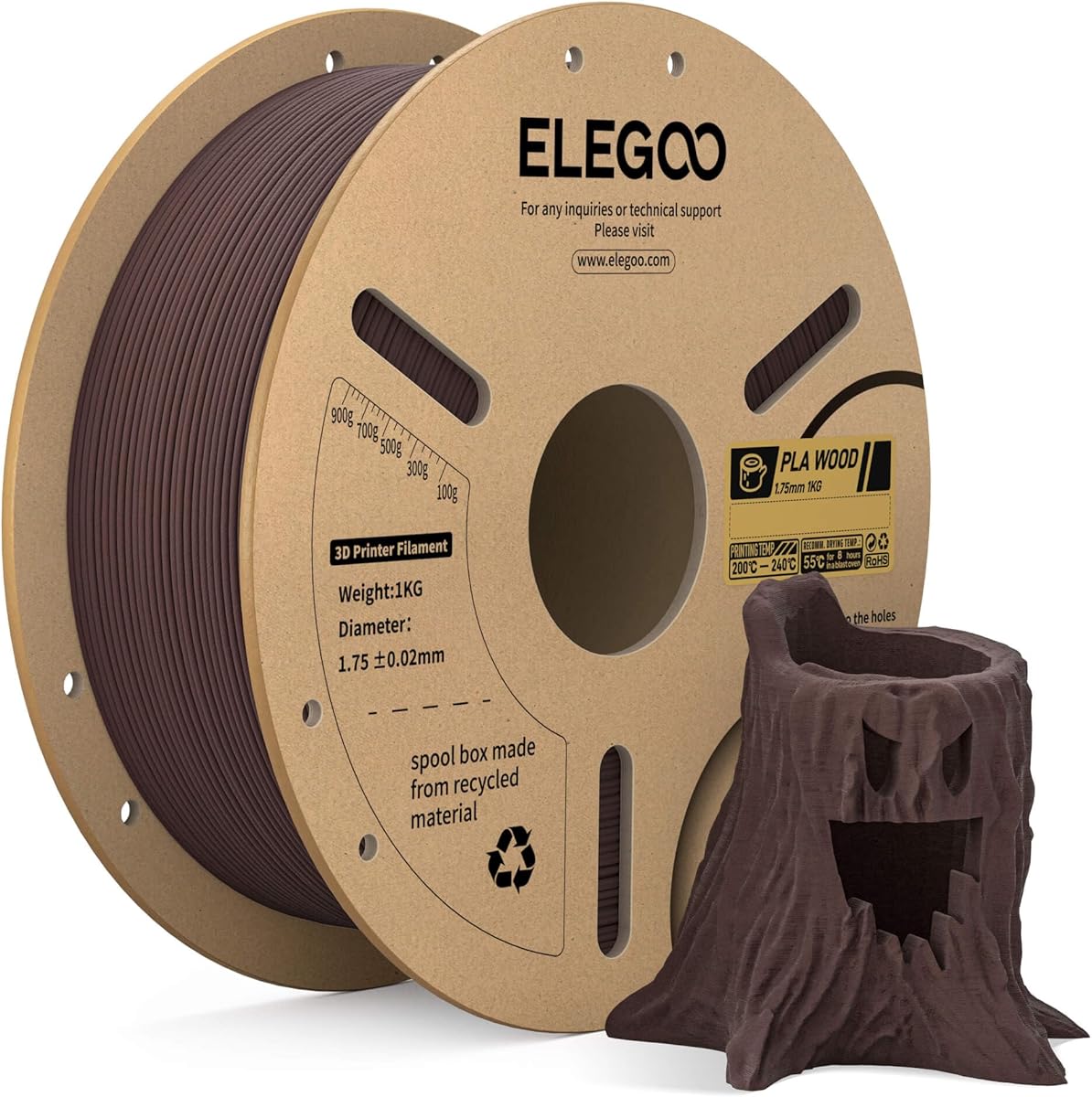
Choosing Wood-Infused PLA: What Makes ELEGOO's Rosewood Filament Distinct
Wood PLA filament isn't just standard PLA with color; it's a composite material containing real wood flour that fundamentally changes printing behavior and post-processing. ELEGOO's Rosewood variant promises the aesthetic of real wood with the printability of PLA, but requires specific handling to manage the added particulate. Buyers should understand that this filament category bridges decorative art and functional prototyping.
Key Considerations Before Buying
- Wood flour content (typically 20-30%) increases abrasion on brass nozzles; consider a hardened steel nozzle for extended printing to maintain dimensional accuracy.
- The particulate nature can lead to inconsistent extrusion and potential clogs if moisture is absorbed, making proper storage in a dry box non-negotiable.
- Post-processing like sanding, staining, and varnishing is where wood PLA shines, but layer adhesion must be strong enough to withstand these techniques.
What Our Analysts Recommend
High-quality wood PLA should have consistent color and particle distribution along the spool, with minimal diameter variance (±0.03mm). The filament should have a matte, slightly textured surface, not a glossy plastic finish. Reliable brands provide specific temperature profiles accounting for the wood content's insulating effect.
3D Printing Filament Market Context
Market Overview
The wood filament market has matured from novelty to a specialized niche, with brands competing on wood type authenticity, particle size, and composite formulas that balance printability with final appearance. ELEGOO positions this as a premium, accessible option within its broader PLA Pro lineup, targeting users wanting organic finishes without resin printing complexity.
Common Issues
Clogging from wood particulate agglomeration and moisture absorption leading to steam bubbles ('popping') are frequent complaints. Inconsistent layer adhesion can cause delamination during sanding, and the abrasive nature often voids printer warranties for nozzle wear. Many users underestimate the required temperature adjustments and cooling settings.
Quality Indicators
Look for vacuum-sealed packaging with desiccant, a spool wound without tangles or excessive tension, and manufacturer-provided verified temperature towers for their specific blend. Authentic wood PLA will have a subtle, natural scent when printing, not a burning plastic odor. Reviews should mention successful post-processing, not just successful extrusion.
Review Authenticity Insights
Grade B Interpretation
A Grade B with an 11% estimated fake review rate suggests a generally trustworthy review pool, but indicates some incentivized or biased feedback may be present. The adjusted rating of 4.60/5 (down from 4.89) is still strong for a specialty filament, reflecting genuine satisfaction tempered by realistic challenges.
Trust Recommendation
Prioritize reviews that discuss specific projects (e.g., 'used for a decorative box,' 'sanded and stained a lithophane'), nozzle types used, and detailed temperature settings over generic praise. Be slightly skeptical of reviews that don't mention any adjustments or challenges, as wood PLA rarely prints perfectly with default PLA profiles.
Tips for Reading Reviews
Search for reviews mentioning 'clog,' 'moisture,' or 'sanding' to find balanced perspectives. Pay close attention to long-term usage reports discussing nozzle wear or spool consistency toward the end. Verified purchase reviews from users with a history of reviewing other 3D printing supplies carry more weight.
Expert Perspective
ELEGOO's Rosewood PLA represents a compelling value proposition in the wood filament segment, backed by a robust 4.60 adjusted rating from a largely authentic review base. Its performance hinges on accepting its niche nature: it requires more meticulous printer tuning and post-processing than standard PLA but delivers unique aesthetic results unreachable with plain filament. The high rating suggests ELEGOO has managed the technical challenges of wood composite consistency better than many budget competitors.
Purchase Considerations
This filament is ideal for creators focused on decorative models, artistic pieces, or prototypes where a natural wood finish is the end goal. It is less suitable for high-strength functional parts or for printers without precise temperature control. Buyers must be prepared to invest time in dialing in settings and performing post-processing to realize its full potential.
Comparing Alternatives
Shoppers should compare particle fineness, wood type authenticity, and recommended printing profiles against brands like HATCHBOX Wood or Amolen, especially if their project requires specific sanding or staining characteristics.


