
How to Choose the Right Ice Cream Attachment for Your KitchenAid Mixer
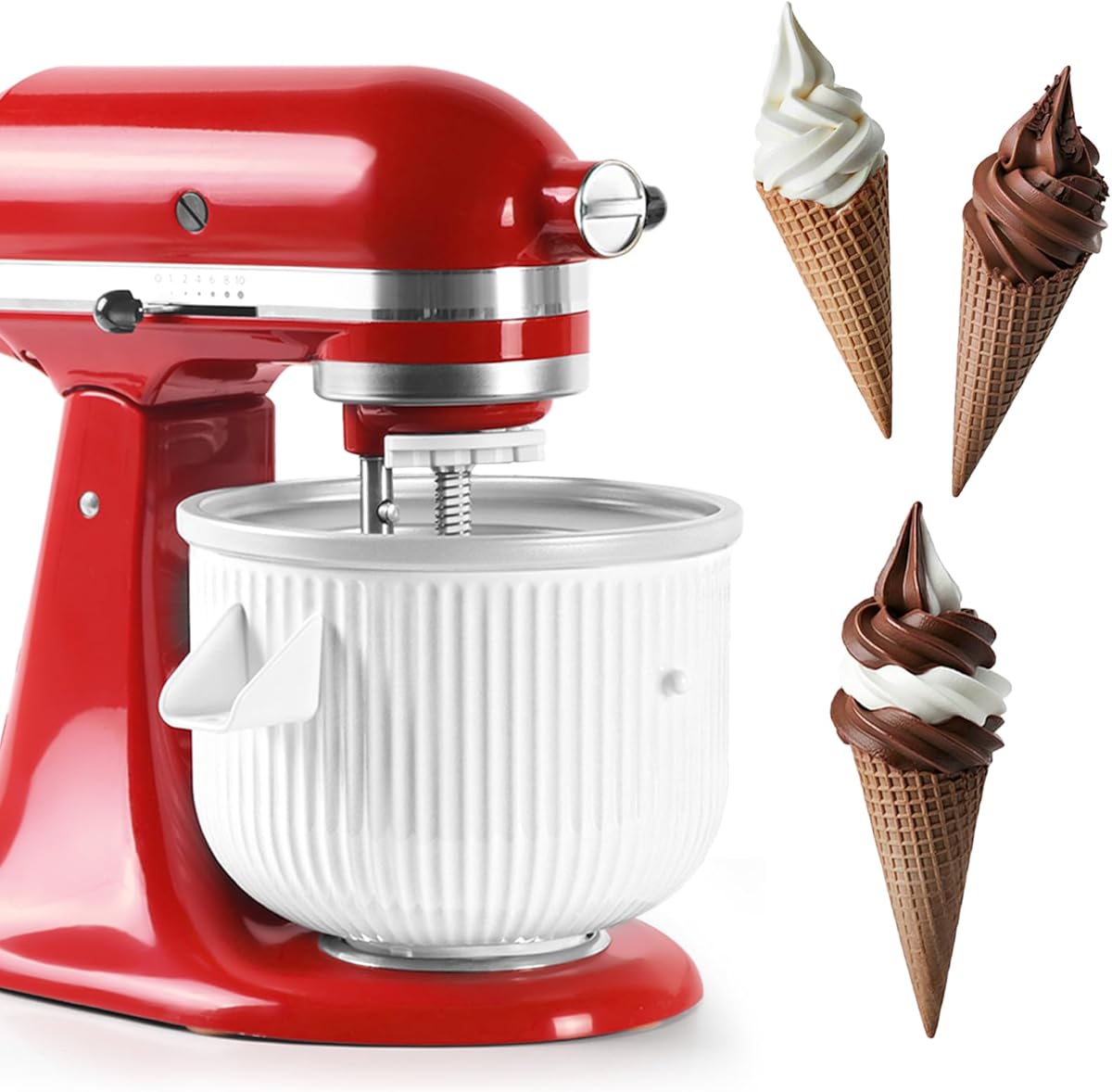
This KitchenAid ice cream maker attachment transforms your stand mixer into a dedicated frozen dessert station, but its 2-quart capacity and freezer-bowl design create specific considerations. Unlike standalone ice cream makers, this attachment leverages your existing KitchenAid motor, requiring proper bowl pre-freezing and understanding of compatibility with 4.5/5QT and 6QT bowl-lift models.
Key Considerations Before Buying
- Verify your KitchenAid mixer model is compatible—this attachment fits 4.5, 5, and 6-quart bowl-lift models, not tilt-head or Artisan Mini versions.
- Plan for the 15-24 hour pre-freeze time for the double-walled aluminum bowl; this isn't an instant-gratification appliance.
- The 2-quart capacity yields about 1.5 quarts of finished ice cream after expansion, ideal for families but requires batch planning for larger gatherings.
What Our Analysts Recommend
Quality indicators include a robust die-cast aluminum drive connection that won't strip under load and a double-walled freezing bowl with efficient thermal transfer. The white exterior should have even coating without thin spots, and the dasher should rotate smoothly without wobble when attached to your mixer's hub.
Mixer Parts & Accessories Market Context
Market Overview
The KitchenAid attachment market is crowded with both official and third-party options, with ice cream makers being among the most popular accessories. Official attachments typically command premium pricing but offer guaranteed compatibility and warranty support through KitchenAid.
Common Issues
Users frequently report confusion about model compatibility, frustration with long pre-freeze times, and inconsistent results when recipes aren't adjusted for the attachment's specific churning dynamics. Some third-party versions have weaker drive connections that can damage mixer gears.
Quality Indicators
Genuine KitchenAid attachments feature precise mold markings, consistent finish quality, and packaging with detailed compatibility charts. The freezing bowl should feel substantial and have fully sealed edges where the aluminum meets the plastic housing to prevent coolant leakage.
Review Authenticity Insights
Grade B Interpretation
A Grade B authenticity rating with 15% estimated fake reviews suggests generally reliable feedback, but shoppers should remain cautious of overly enthusiastic 5-star reviews lacking specific usage details. The adjusted rating of 4.10/5 (down from 4.44) indicates some review inflation but still reflects positive genuine experiences.
Trust Recommendation
Focus on reviews that mention specific KitchenAid models (like "Pro 600" or "Professional 650"), discuss batch outcomes, or compare results to standalone ice cream makers. Be skeptical of reviews that don't mention the mandatory 24-hour freezer pre-chill requirement.
Tips for Reading Reviews
Look for reviews detailing texture outcomes (gelato vs. sorbet), mentions of recipe adjustments needed for this attachment, and comments about storage of the bulky freezer bowl. Verified purchase reviews discussing long-term use over multiple seasons are particularly valuable.
Expert Perspective
This attachment represents a space-saving solution for KitchenAid owners already invested in the ecosystem, with genuine reviews consistently praising its ability to produce professional-quality textures when used correctly. The 4.10 adjusted rating reflects real satisfaction tempered by the operational learning curve. Its main advantage is eliminating a separate appliance, but this comes with the trade-off of advance planning due to bowl freezing requirements.
Purchase Considerations
Weigh your freezer space for the 11-inch bowl against your frequency of use—this isn't ideal for spontaneous ice cream cravings. Consider whether you'll use it enough to justify the investment versus a dedicated compressor-style machine that doesn't require pre-freezing.
Comparing Alternatives
Shoppers should compare against KitchenAid's own 1.5-quart model and third-party attachments, noting differences in drive mechanisms and bowl construction materials.


