
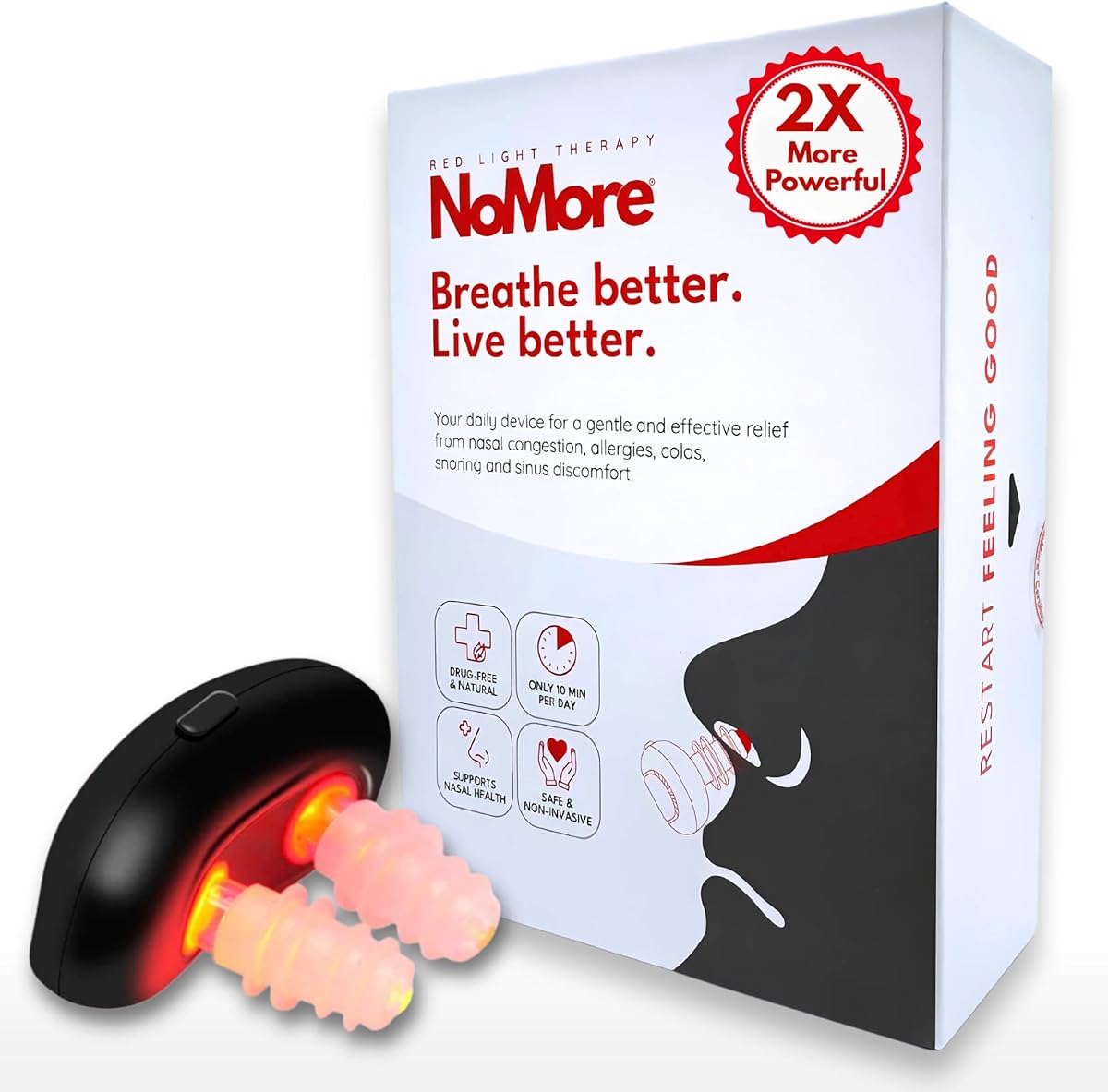
Soothe Sinuses with Light: What to Know Before Buying a Nasal LED Device
If you're considering the Original NoMore Red Light Therapy for Nose, you're looking at a niche wellness tool that uses specific wavelengths of red light to target nasal and sinus discomfort. Unlike full-face masks or large panels, this device is compact, USB-rechargeable, and designed for direct internal nasal application, which means placement and hygiene are critical factors.
Key Considerations Before Buying
- Wavelength specificity matters: Most effective red light therapy for sinus relief uses wavelengths in the 630-660nm (red) and 810-850nm (near-infrared) range. Check if the NoMore device lists its exact wavelength output, as this determines how deeply the light penetrates tissue.
- Hygiene and material quality: Since this device is inserted into the nostrils, look for medical-grade silicone or BPA-free plastic that can be easily cleaned. The NoMore device should have a smooth, non-porous surface to prevent bacterial buildup.
- Battery life and charging convenience: A USB-rechargeable design is handy, but verify the battery capacity (mAh) and how many sessions you get per charge. Some nasal devices offer only 20-30 minutes of use before needing a recharge, which can be inconvenient for daily routines.
What Our Analysts Recommend
Quality indicators for a nasal red light therapy device include clear documentation of FDA registration or clearance (even if not required), a warranty of at least one year, and customer support that can answer technical questions about light output. Also, look for independent third-party testing reports or clinical references that support the claimed benefits for sinus comfort or cold prevention.
Light Therapy Market Context
Market Overview
The red light therapy market has exploded in recent years, with devices ranging from full-body panels to targeted wands and nasal inserts. The nasal-specific segment is still emerging, driven by consumers seeking drug-free relief for sinus congestion, allergies, and chronic dry nose. However, many products lack rigorous clinical backing, making it a 'buyer beware' category.
Common Issues
A frequent problem is exaggerated claims: some nasal devices promise to 'eliminate colds' or 'cure sinusitis' without peer-reviewed evidence. Another issue is inconsistent light output—cheaper units may not emit the advertised wavelength or power, reducing effectiveness. Finally, poor build quality can lead to discomfort or hygiene concerns over time.
Quality Indicators
To identify a quality nasal light therapy device, look for explicit wavelength specifications (e.g., 660nm red + 850nm near-infrared), optical power output measured in milliwatts (mW), and certifications like CE, FCC, or RoHS. Brands that provide clinical study references or have been reviewed by healthcare professionals are more trustworthy.
Review Authenticity Insights
Grade B Interpretation
A Grade U with 0.00% estimated fake reviews suggests that either the product has not yet accumulated enough reviews to be analyzed reliably, or the review data is too sparse to detect patterns. This is common for newer or low-volume listings—it doesn't guarantee authenticity, but it also doesn't indicate active manipulation.
Trust Recommendation
Given the Grade U, approach with cautious optimism. Without a verified review history, rely on the product's specifications, return policy, and any independent third-party reviews from medical or wellness blogs. Consider purchasing from a seller with a strong track record and a clear refund policy.
Tips for Reading Reviews
When reading reviews for this type of product, focus on detailed comments about comfort during use, battery life, and whether users noticed any change in sinus symptoms after consistent use over 2-4 weeks. Be wary of reviews that use overly promotional language or claim immediate, dramatic results—those are often fake.
Expert Perspective
The Original NoMore Red Light Therapy for Nose occupies a specific niche that may appeal to those seeking non-pharmaceutical sinus relief, but the lack of verified reviews and a Grade U authenticity score make it a high-risk purchase. The concept is plausible—red light therapy has shown anti-inflammatory effects in some studies—but this particular device's efficacy remains unproven without transparent specs or clinical data. Buyers should temper expectations and view it as a complementary tool, not a cure.
Purchase Considerations
Weigh the convenience of a targeted nasal device against the uncertainty of its performance. If you have chronic sinus issues, consult a healthcare provider before relying solely on this device. Also, compare the cost (typically $30-$60) to that of a full-face red light mask, which may offer broader benefits.
Comparing Alternatives
Shoppers should compare this device with similar products like the 'Red Light Therapy for Sinus Relief' wands or even low-level laser therapy devices designed for nasal use. Reading professional reviews from medical device blogs can help identify more established options.


