
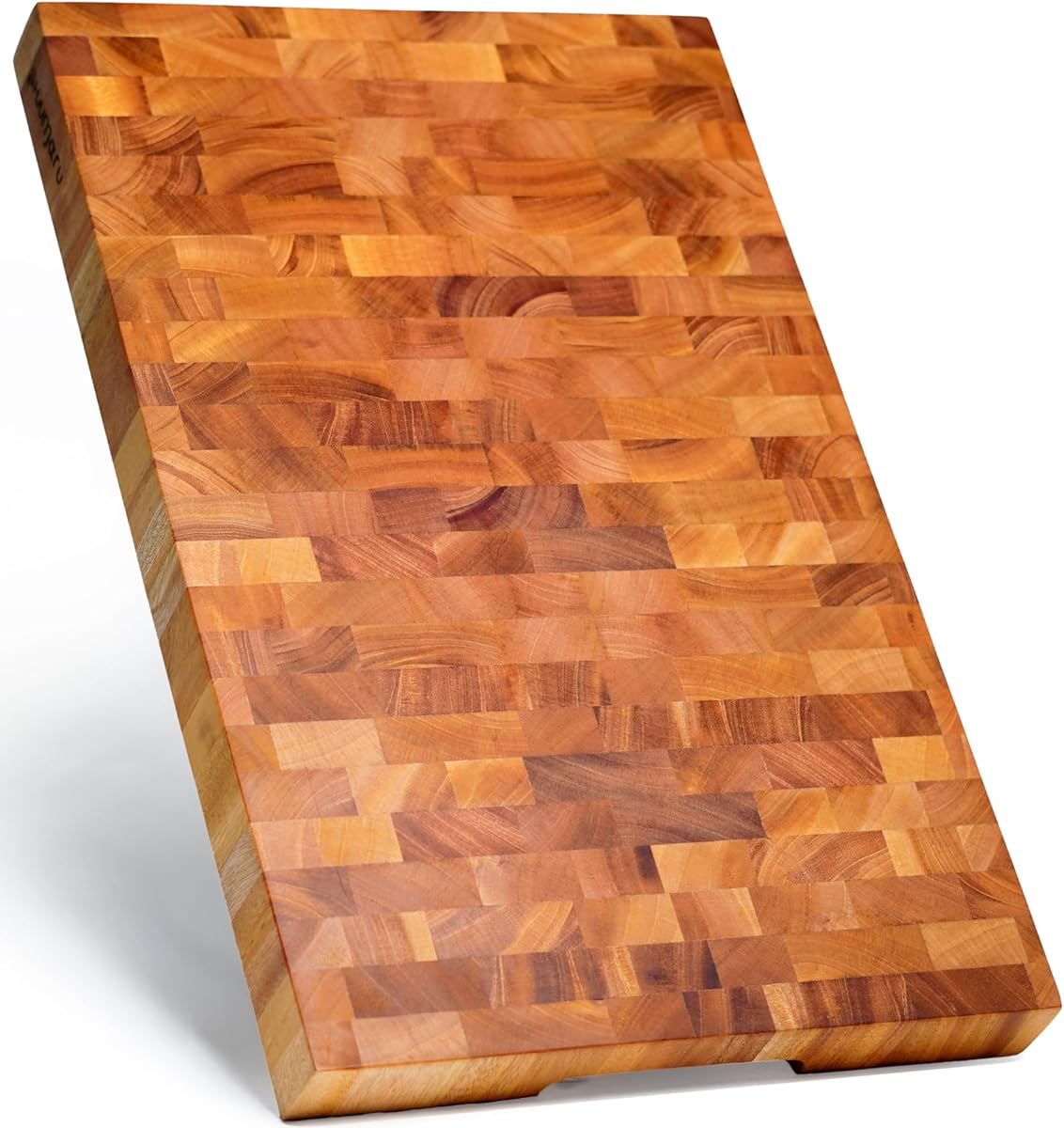
Evaluating End-Grain Mahogany Boards: What Bali-Made Craftsmanship Delivers
When considering a premium end-grain butcher block like the SHUMARU, focus on how its specific construction—mahogany end-grain, 1.6-inch thickness, and ergonomic grips—impacts daily use. This isn't just a cutting surface; it's a tool designed to protect knife edges and withstand heavy prep work, with design choices that directly address common kitchen frustrations.
Key Considerations Before Buying
- End-grain construction, where the wood fibers face upward, is gentler on knife edges than edge-grain boards, but requires more meticulous sealing and maintenance to prevent warping or cracking.
- A 20x13-inch surface provides ample workspace for proteins and vegetables, but its substantial size and 1.6-inch thickness make it a permanent fixture—consider your counter space and storage.
- Features like 'silky-smooth' hand-sanding, integrated grips, and non-slip feet speak to user experience, addressing safety and comfort during extended use, which is critical for a heavy board.
What Our Analysts Recommend
For a board of this caliber, examine the joinery in product images—tight, seamless seams indicate skilled craftsmanship. Authentic end-grain will show a checkerboard pattern of wood ends. Reviews mentioning consistent oiling and the board's heft are good indicators of solid wood construction versus laminated thin pieces.
Cutting Boards Market Context
Market Overview
The premium wood cutting board market is saturated with both mass-produced and artisanal options, with 'end-grain' and 'butcher block' often used as marketing terms. True craftsmanship, evidenced by features like hand-planed surfaces and thoughtful ergonomics, separates lasting investments from decorative pieces.
Common Issues
Buyers frequently report issues with warping, deep knife scars that harbor bacteria, and boards that slide dangerously on countertops. Cheaply made boards may use inferior glues, split at seams, or be finished with non-food-safe sealants that wear off quickly.
Quality Indicators
Look for specifics on wood sourcing (e.g., sustainably harvested mahogany), construction method (handmade vs. machine-pressed), and finish (food-grade mineral oil or beeswax). A substantial weight (implied by the 1.6" thickness) and details like juice grooves or rounded edges signal intentional design.
Review Authenticity Insights
Grade B Interpretation
A 'B' grade and 11% estimated fake reviews suggest a generally trustworthy review pool. This minor inflation is common in competitive categories but doesn't negate the strong consensus. The adjusted 4.6 rating remains excellent, indicating genuine satisfaction outweighs any orchestrated praise.
Trust Recommendation
Prioritize reviews that detail long-term ownership (6+ months), specifically discuss maintenance like oiling, or note the board's performance with different knife types. Be slightly more skeptical of overly vague 5-star reviews that lack these specifics.
Tips for Reading Reviews
For this product, seek out reviews that mention the 'handmade in Bali' aspect—do they note unique grain patterns or slight imperfections that confirm individual craftsmanship? Also, look for comments on the non-slip feet' real-world performance on various countertop materials.
Expert Perspective
The SHUMARU board presents a compelling case based on its review data. The high authentic rating (4.6) centered on its knife-friendliness and ergonomics aligns with what a well-made end-grain board should deliver. The specific praise for its 'silky-smooth' surface suggests proper hand-sanding, a detail often overlooked in factory production. Its combination of size, thickness, and added grips positions it as a serious tool for enthusiastic home cooks rather than a casual accessory.
Purchase Considerations
Weigh the initial cost and commitment to maintenance (regular oiling) against the benefits of knife-edge preservation and durability. If you primarily use delicate Japanese knives or spend significant time meal prepping, this board's design justifies the investment. If you need lightweight, dishwasher-safe convenience, look elsewhere.
Comparing Alternatives
Shoppers should compare the board's thickness, wood hardness (mahogany is mid-range), and included accessories (like oil) with other end-grain options in a similar price tier.


