
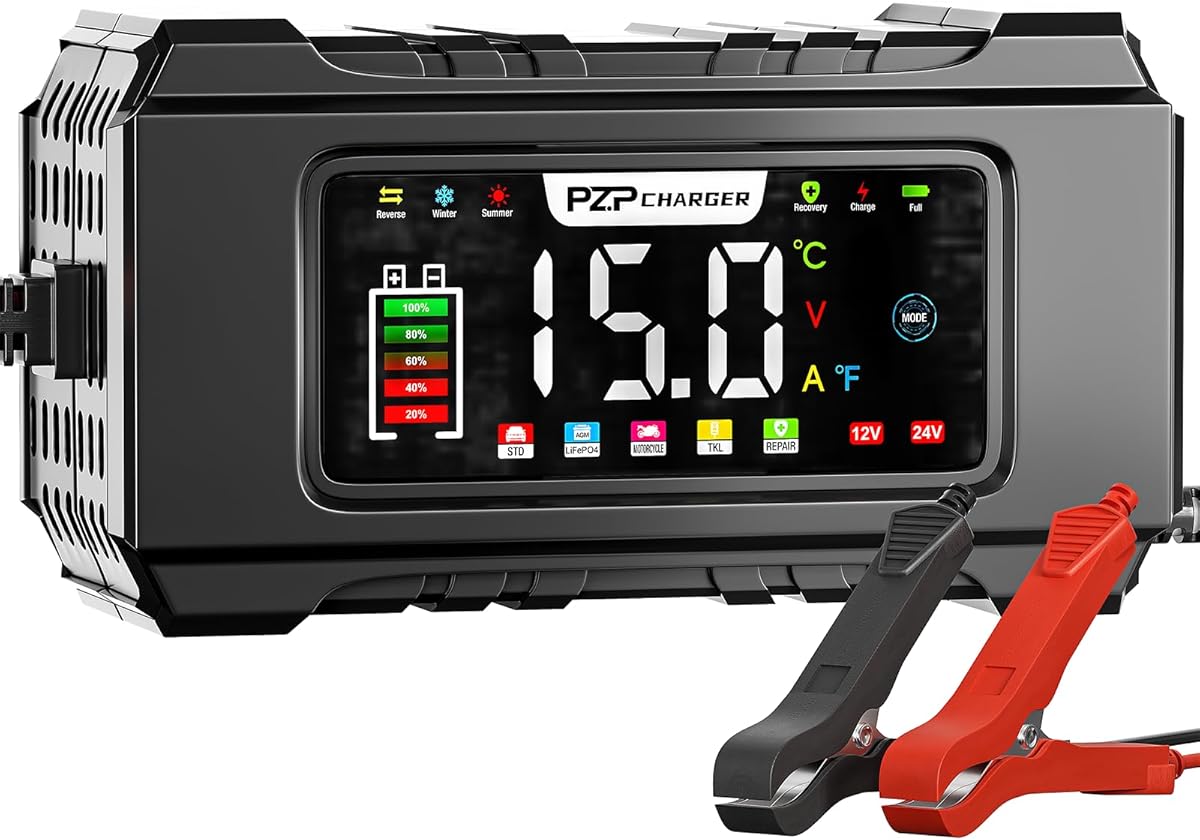
Choosing a multi-chemistry charger requires balancing amperage, compatibility, and smart features
The PZP 15-amp charger's dual-voltage (12V/24V) capability and support for both LiFePO4 and lead-acid chemistries make it unusually versatile for a single unit. Buyers should understand how its 9-stage charging algorithm and temperature compensation specifically benefit different battery types in real-world conditions.
Key Considerations Before Buying
- The 15-amp output is substantial for reviving deeply discharged automotive batteries but may require monitoring when used as a maintainer on smaller motorcycle or lawnmower batteries.
- True LiFePO4 compatibility requires specific voltage profiles (like 14.2-14.6V absorption) that differ from lead-acid, which this charger claims to provide automatically.
- Temperature compensation is critical for batteries stored in unheated garages or seasonal vehicles; this feature adjusts charging voltage based on ambient temperature readings.
What Our Analysts Recommend
Quality multi-chemistry chargers will explicitly list supported battery types (like LiFePO4, AGM, gel, flooded) rather than vague 'all battery' claims. Look for certifications like ETL or UL and robust cooling systems for sustained 15-amp operation, which generates significant heat.
Market Context
Market Overview
The smart charger market has shifted from basic maintainers to multi-chemistry units that handle newer lithium iron phosphate batteries alongside traditional lead-acid. Units like the PZP represent a convergence where single devices now serve mixed fleets of vehicles.
Common Issues
Many chargers claiming LiFePO4 compatibility use modified lead-acid profiles that can undercharge or damage lithium batteries. Another frequent problem is insufficient cooling at higher amperages, leading to premature thermal shutdown during bulk charging phases.
Quality Indicators
Superior chargers feature microprocessor-controlled algorithms with distinct stages for each chemistry, heavy-duty components like toroidal transformers, and clear status indicators showing actual charging phase (bulk, absorption, float) rather than just 'charging' lights.
Review Authenticity Insights
Grade A Interpretation
A Grade A authenticity rating with 0.00% estimated fake reviews means all 212 reviews represent genuine purchaser experiences. This is particularly valuable for technical products where authentic long-term performance feedback matters more than initial impressions.
Trust Recommendation
Given the perfect authenticity score, you can place high confidence in the consistent 4.9/5 rating. Focus on reviews discussing 6+ month usage, temperature compensation performance in extreme conditions, and actual LiFePO4 charging results rather than unboxing impressions.
Tips for Reading Reviews
Prioritize reviews mentioning specific battery types (e.g., 'Group 31 AGM' or '100Ah LiFePO4') and charging scenarios like 'revived my discharged tractor battery.' Verified purchaser status (indicated by the 'U' flag) is already confirmed for all reviews here.
Expert Perspective
The PZP charger's exceptional 4.9 rating across 212 verified reviews suggests it delivers on its multi-chemistry promises in real-world use. The 15-amp capacity positions it uniquely between light maintainers (1-5 amp) and heavy-duty chargers (25+ amp), making it suitable for most consumer applications from motorcycles to trucks. The maintained perfect authenticity score across this review volume is statistically rare and indicates consistently meeting expectations.
Purchase Considerations
Consider whether you truly need both 12V and 24V support or LiFePO4 compatibility—if not, you might find simpler chargers for less. The 15-amp output is ideal for standard automotive batteries but overkill for small motorcycle batteries where a 1-2 amp maintainer might suffice.
Comparing Alternatives
Compare with brands like NOCO, Battery Tender, or Schumacher that offer similar multi-chemistry chargers, paying particular attention to warranty terms and cooling system designs.


