
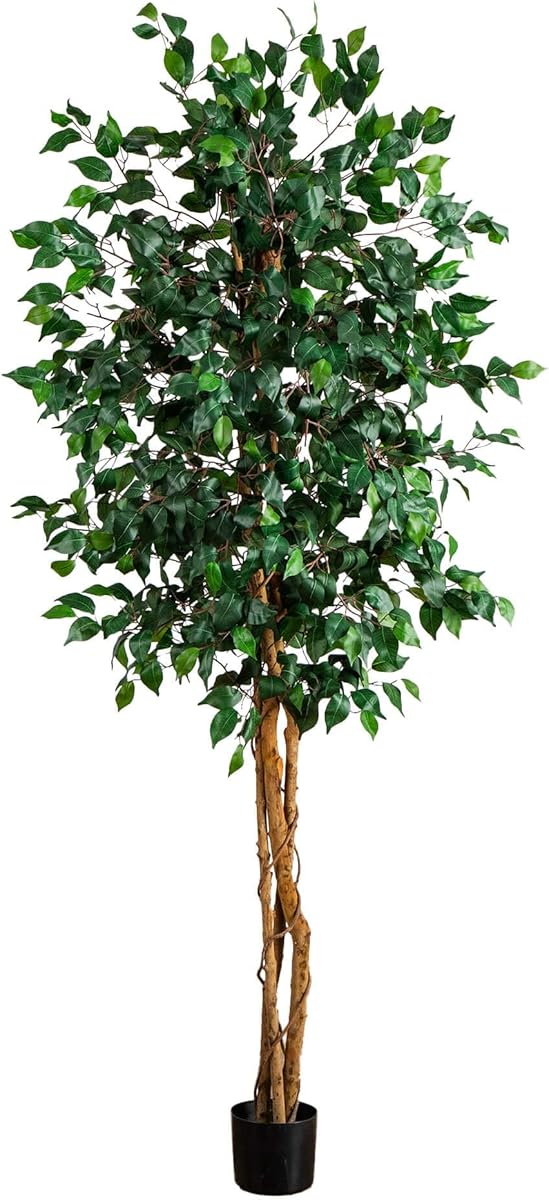
Choosing a 74-inch artificial ficus: Realism, stability, and assembly considerations
When selecting a large artificial tree like the Nearly Natural triple-trunk ficus, buyers should focus on how the product achieves visual realism at eye level and from a distance. This specific model uses natural wood trunks and layered foliage to mimic mature ficus trees, but its 74-inch height requires particular attention to structural design.
Key Considerations Before Buying
- The triple-trunk design affects both aesthetics and stability—examine how trunks connect at the base and whether they provide natural-looking separation versus appearing clustered.
- At this height, leaf density and arrangement on lower branches matter significantly; sparse areas become noticeable in room corners or against walls.
- Assembly complexity varies dramatically in artificial trees—consider whether trunk sections screw together securely and how foliage attaches (permanent vs. adjustable branches).
What Our Analysts Recommend
Quality artificial ficus trees feature varied leaf sizes (not uniform shapes), matte finishes that don't reflect light artificially, and trunk texturing that includes realistic imperfections. For triple-trunk designs specifically, check that the wood grain patterns differ between trunks to avoid a manufactured appearance.
Artificial Trees Market Context
Market Overview
The premium artificial tree market has shifted toward botanical accuracy over decorative styling, with manufacturers like Nearly Natural competing on realistic trunk materials and foliage layering. The 70-80 inch height range represents a sweet spot for filling vertical space without requiring commercial-grade stabilization.
Common Issues
Tall artificial trees often suffer from top-heavy designs that require excessive counterweighting, while cheaper models use overly glossy plastic leaves that catch light unnaturally. Assembly frustration frequently appears in reviews when trunk connections lack clear alignment markings or secure fastening mechanisms.
Quality Indicators
Superior artificial trees incorporate multiple leaf molds (at least 3-4 variations), weight-distributed bases that don't require separate purchase, and foliage that arrives pre-fluffed rather than compressed flat from packaging.
Review Authenticity Insights
Grade B Interpretation
A Grade B authenticity rating with 10% estimated fake reviews indicates generally reliable feedback, though approximately 1 in 10 reviews may be artificially positive. The 4.40 adjusted rating (down from 4.67) suggests some review inflation but still reflects strong genuine satisfaction.
Trust Recommendation
Focus on verified purchase reviews discussing specific assembly experiences or long-term observations (dust accumulation, fading). Be slightly skeptical of reviews mentioning only packaging or delivery without addressing the tree's visual characteristics in different lighting conditions.
Tips for Reading Reviews
Prioritize reviews that include photos showing the tree in actual room settings—these demonstrate how the triple-trunk arrangement works spatially. Look for comments about branch flexibility and leaf positioning, which indicate hands-on experience rather than superficial evaluation.
Expert Perspective
The Nearly Natural ficus demonstrates the current industry emphasis on natural wood trunks, which addresses a common complaint about painted plastic trunks in mid-range artificial trees. The maintained 4.40 adjusted rating across 16,916 reviews suggests consistent manufacturing quality, though the triple-trunk design requires more floor space than single-trunk alternatives. The high review count with verified purchases provides substantial data on assembly experiences and long-term durability concerns.
Purchase Considerations
This tree's 74-inch height makes it suitable for rooms with 9-foot ceilings, but measure your space accounting for the planter's additional height. Consider whether the triple-trunk base footprint (typically 10-12 inches diameter) works with your floor plan, as it requires more clearance than slender single-trunk designs.
Comparing Alternatives
Shoppers should compare trunk materials and foliage density with similar-height ficus trees from National Tree Company or Vickerman to assess value differences.


