
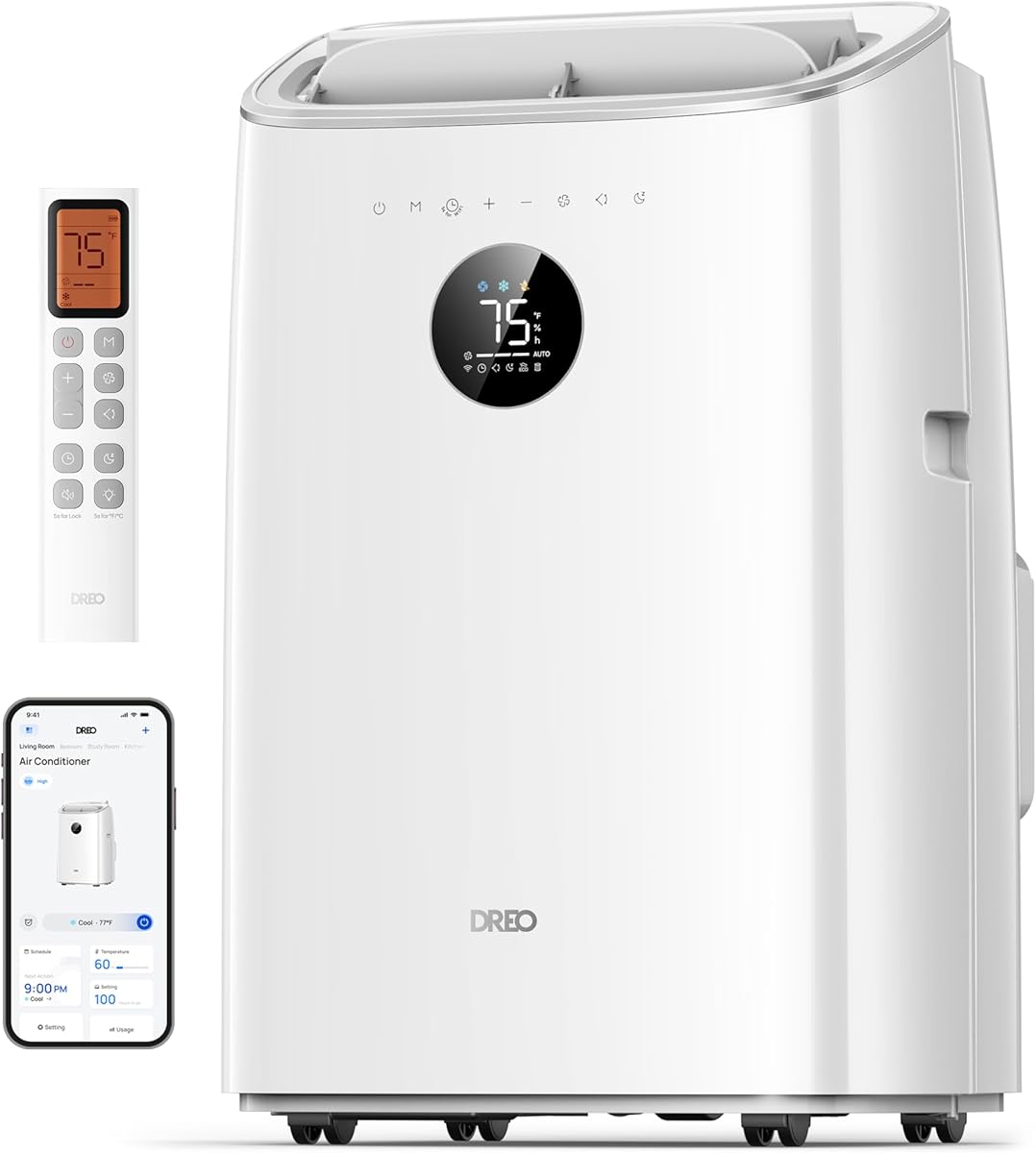
Choosing a Smart Portable AC: What DREO's 45dB Unit Reveals About Modern Cooling
When evaluating the DREO AC318S, buyers must understand the critical difference between its 8000 BTU ASHRAE and 5000 BTU DOE ratings. This portable AC prioritizes smart connectivity and drainage-free operation, making it a specific solution for tech-savvy users in smaller bedrooms who want to avoid manual water removal.
Key Considerations Before Buying
- The 5000 BTU DOE rating is the legally required efficiency standard; this unit is best for rooms around 150 sq ft, not the larger spaces an 8000 BTU ASHRAE rating might suggest.
- Drainage-free cooling relies on evaporative technology, which increases humidity exhaust—consider this if you live in an already humid climate or plan to run it continuously.
- Smart features (APP/Voice/Remote) add convenience but require stable Wi-Fi and compatibility with your existing ecosystem (Alexa/Google Assistant).
What Our Analysts Recommend
For portable ACs like the DREO, scrutinize the decibel rating across fan speeds—45dB is quiet for a compressor but verify noise levels in sleep mode. Check that the exhaust hose kit is robust and seals completely to prevent cooled air leakage, a common failure point that wastes energy.
Portable Market Context
Market Overview
The portable AC market is increasingly segmented between basic cooling units and premium models with smart home integration. Brands like DREO are competing by adding app control and voice commands, features once reserved for window or central systems.
Common Issues
Portable ACs often underperform their advertised BTU ratings due to the single-hose design, which creates negative pressure and draws in warm air. Another frequent complaint is cumbersome water drainage requiring frequent manual emptying during humid operation.
Quality Indicators
Look for dual BTU ratings (ASHRAE/DOE) for honest capacity assessment, a detailed decibel specification for multiple modes, and a well-designed exhaust vent system. Units with auto-evaporation for drainage-free operation should clearly explain the technology and its limitations.
Review Authenticity Insights
Grade B Interpretation
A Grade B with an 11% estimated fake review rate indicates a generally trustworthy review profile, but suggests a modest level of potentially incentivized or biased feedback. The 0.23-point drop from the displayed 4.33 to the adjusted 4.10 rating is meaningful; the true consensus is very good, not excellent.
Trust Recommendation
Focus on verified purchase reviews that mention specific use cases, like cooling a 12x12 bedroom or managing the smart app setup. Be slightly more skeptical of 5-star reviews that lack detail about BTU performance or noise, as these could be among the estimated 11% less-authentic posts.
Tips for Reading Reviews
Prioritize reviews that discuss the DOE vs. ASHRAE BTU discrepancy, the actual noise level at night, and long-term experiences with the auto-evaporation feature. Look for patterns in mid-range (3-4 star) reviews, which often contain the most balanced assessments of pros and cons.
Expert Perspective
The DREO AC318S positions itself as a connected, convenient portable AC for targeted spaces. Its strong adjusted rating of 4.10/5 from verified purchasers suggests it delivers on core promises of quiet(45dB), app-controlled cooling for appropriately sized rooms. However, the significant BTU rating differential (8000 ASHRAE/5000 DOE) is a critical detail; this unit is less powerful than its primary rating implies. The drainage-free feature is a major convenience advantage, but may reduce efficiency in very humid conditions as the unit works to evaporate moisture.
Purchase Considerations
This unit is a compelling choice if your priority is smart home integration and avoiding water buckets in a small-to-medium bedroom. Reconsider if you need to cool a large living area, have poor Wi-Fi in the installation room, or live in an extremely humid region where the evaporation system may struggle.
Comparing Alternatives
Shoppers should compare the DREO's smart features and noise rating against similarly priced 5000-6000 BTU DOE portable ACs from brands like Honeywell or Black+Decker, which may offer higher cooling capacity at the expense of connectivity.


