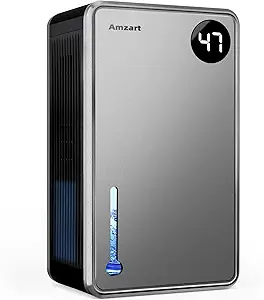
The 150-Pint Heavyweight: What to Know Before Buying a Commercial-Grade Basement Dehumidifier
If you're managing moisture in a large basement, warehouse, or open-plan home, a 150-pint dehumidifier is a serious investment. This unit claims to cover up to 8,000 square feet, making it one of the most powerful residential-commercial hybrids on the market. Before you commit, understand the trade-offs: high capacity means bigger size, higher energy draw, and the need for proper drainage—like the built-in pump and drain hose that this model includes.
Key Considerations Before Buying
- Coverage vs. reality: 8,000 sq. ft. is the manufacturer's maximum, but actual performance depends on ceiling height, insulation, and how damp the space is. For a truly wet basement, expect effective coverage closer to 5,000–6,000 sq. ft.
- Drainage setup: The integrated pump and drain hose are essential for continuous operation—without them, you'd be emptying the 2.11-gallon tank constantly. Ensure your floor drain or sink is within the pump's lift range (typically 15–20 feet).
- Energy consumption: A 150-pint unit draws significant power (often 700–1,000 watts). Check your electrical circuit capacity and factor in monthly operating costs, especially if you'll run it 24/7.
What Our Analysts Recommend
Look for a dehumidifier with a built-in pump that can push water upward (not just gravity drain), a washable filter to reduce dust, and a digital humidistat with auto-restart after power outages. Also check the noise level—commercial units can be loud, so if it's near living spaces, look for a 'quiet mode' or lower dB rating.
Dehumidifiers Market Context
Market Overview
The large-capacity dehumidifier market has grown as homeowners tackle water intrusion and musty basements. Brands like hOmeLabs, Vremi, and Frigidaire dominate, but the 150-pint class is a niche where durability and pump reliability set leaders apart. With climate change increasing flood risks, demand for high-capacity units is rising.
Common Issues
Common complaints in this category include inaccurate humidity sensors, pump failures after a few months, and overly optimistic coverage ratings. Also, some units struggle to maintain low humidity in very cold basements (below 65°F), as coils can frost over.
Quality Indicators
Quality signals include a metal compressor (not plastic), a transparent water tank for easy monitoring, a warranty of at least 1 year, and a pump that can be serviced or replaced. Look for units with auto-defrost and a low-temperature operating range.
Review Authenticity Insights
Grade B Interpretation
The 'B' grade and 15% estimated fake review rate are actually encouraging for a product in this category—many competitors have 30%+ fakes. This suggests that the majority of the 22 reviews are likely from real buyers, giving you a useful baseline. However, with only 22 reviews, the margin of error is still high.
Trust Recommendation
Trust the detailed reviews—the one citing a drop from 65% to 41% humidity with a specific basement size is a gold standard. But be cautious of the 3.70 adjusted rating: it's below the 4.00 displayed, indicating that some suspicious reviews may be inflating the score. Weigh the negative reviews for patterns (e.g., pump issues) rather than dismissing them.
Tips for Reading Reviews
For large dehumidifiers, focus on reviews that mention installation, drainage, and long-term use (3+ months). Look for photos of the setup and any water collected. Be wary of reviews that are overly generic or lack specifics about room size and humidity levels—these are often fake.
Expert Perspective
This 150-pint unit is a beast designed for serious moisture problems, and the built-in pump is a practical feature that many competitors lack at this price point. However, the adjusted rating of 3.70 suggests that real-world performance may not fully match the marketing claims. The one detailed review showing a 65%→41% humidity drop is promising, but it's a single data point. If you need to dry out a large space quickly, this unit has the capacity, but expect to manage its size and noise.
Purchase Considerations
Consider your space's specific needs: if you have a sump pump or floor drain, you might not need the pump version (which adds cost and a potential failure point). Also, check the return policy—these large units are heavy to ship back if defective. If you're on a budget, a 70-pint model might suffice for smaller basements, saving energy and money.
Comparing Alternatives
Shoppers should compare with top-rated 150-pint models from established brands like hOmeLabs and Vremi, which often have more reviews and better support. Also, consider the 'AlorAir Sentinel' series if you need extreme durability for construction or restoration use.