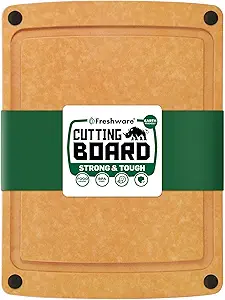
Titanium cutting boards offer durability but require specific maintenance considerations
This three-piece titanium cutting board set represents a departure from traditional wood or plastic boards, offering a non-porous, double-sided metal surface. Buyers should understand that titanium-coated boards behave differently than conventional materials, with distinct advantages in hygiene but different handling requirements for knives and noise levels.
Key Considerations Before Buying
- Titanium surfaces are harder on knife edges than wood or plastic, requiring more frequent sharpening of quality knives.
- The double-sided design with different textures (typically one smooth, one textured) provides versatility but requires proper cleaning to prevent cross-contamination between sides.
- These boards' non-porous nature eliminates bacterial absorption but can create more noise during chopping and may show knife marks more visibly over time.
What Our Analysts Recommend
Examine the edge construction where titanium meets the core material—quality boards have seamless, rounded edges without sharp transitions. Check for consistent coating thickness across all three sizes (15.6" x 11", 13" x 9.3", 11.8" x 7.8") and verify the food-grade certification specifically mentions titanium safety, not just general food-grade materials.
Cutting Boards Market Context
Market Overview
The cutting board market has expanded beyond traditional materials to include specialized options like titanium-coated boards, which occupy a premium niche between basic plastic and high-end end-grain wood. These metal-surface boards appeal particularly to consumers prioritizing hygiene and easy cleaning over traditional cutting feel.
Common Issues
Metal cutting boards often face complaints about excessive knife dulling, loud chopping noise, and surface slipping during use if not properly stabilized. Some titanium-coated boards develop coating wear at high-impact areas over years of use, particularly if used with cleavers or aggressive chopping techniques.
Quality Indicators
Quality titanium boards feature a substantial core material (often bamboo or composite) beneath the coating for stability, have non-slip silicone feet or borders, and maintain consistent coating without thin spots. The best options include clear care instructions addressing metal-specific maintenance like avoiding abrasive cleaners that can degrade the titanium surface.
Review Authenticity Insights
Grade B Interpretation
A Grade B authenticity rating with 11% estimated fake reviews indicates generally reliable feedback but suggests some review manipulation. The adjusted rating of 4.40/5 (down from 4.67/5) reflects this filtering, making the product's true performance slightly lower than initial impressions suggest.
Trust Recommendation
Focus on reviews mentioning long-term use (3+ months) to assess durability claims, and prioritize feedback discussing specific knife maintenance experiences. Be skeptical of reviews that only praise hygiene benefits without addressing practical drawbacks like noise or knife wear.
Tips for Reading Reviews
Look for detailed comparisons with users' previous wood or plastic boards, particularly regarding knife maintenance frequency. Pay attention to reviews discussing the different texture sides and how each performs with various foods—this practical insight indicates genuine usage experience.
Expert Perspective
This titanium cutting board set's 4.40 adjusted rating suggests solid performance within its niche, particularly for users prioritizing hygiene and easy cleaning. The three-size configuration provides versatility for different tasks, from large vegetable prep to small camping use. However, the metal surface necessitates accepting trade-offs in knife maintenance and cutting acoustics that traditional board users might find disruptive.
Purchase Considerations
Consider this set if you frequently prepare raw meats and need impeccable hygiene, or if you want lightweight boards for outdoor use where plastic might warp. Avoid if you own expensive Japanese or carbon steel knives that require delicate edge preservation, or if kitchen noise is a significant concern in your household.
Comparing Alternatives
Compare with high-density plastic boards for similar hygiene benefits with less knife wear, or end-grain wood boards if knife preservation is your priority over absolute sterilization.