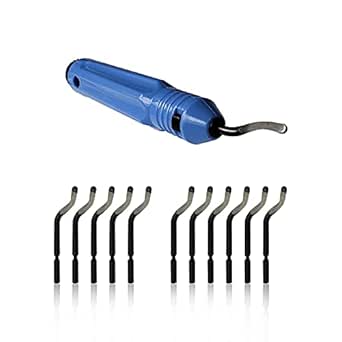
Choosing an 11-blade deburring tool: blade quality and handle ergonomics matter most
This specific 11-blade deburring tool distinguishes itself with high-speed steel (HSS) blades designed for multiple materials, including 3D-printed plastics, resin, and soft metals. Buyers should understand that the blade count and steel quality directly impact edge finish quality and tool longevity across different applications.
Key Considerations Before Buying
- Material compatibility is crucial—this tool's HSS blades are rated for plastics and soft metals, but may struggle with hardened steel or thick aluminum without proper technique.
- The 11-blade configuration offers multiple cutting angles, making it versatile for different edge profiles, but requires understanding which blade angle matches your specific material thickness.
- Handle design affects control during precision work; the knurled aluminum handle on this model provides grip but may feel different than traditional plastic-handled deburrers.
What Our Analysts Recommend
Quality indicators include securely mounted blades without lateral play, sharp cutting edges visible under magnification, and smooth blade rotation. Premium HSS should have a consistent gray finish without discoloration from improper heat treatment.
Deburring Cutters Market Context
Market Overview
The deburring tool market has expanded significantly with the rise of 3D printing, creating demand for tools that handle PLA, ABS, and resin alongside traditional metalworking applications. Many new products target hobbyists rather than industrial users.
Common Issues
Common problems include blades dulling quickly on abrasive materials like carbon-fiber-filled filaments, handles loosening over time, and blades chipping when used on materials beyond their hardness rating. Some tools struggle with consistent cutting depth across all blades.
Quality Indicators
Look for tools with individually replaceable blades rather than fixed units, proper blade retention mechanisms (not just friction fit), and clear material compatibility specifications. Quality HSS blades typically maintain sharpness 3-5 times longer than carbon steel alternatives.
Review Authenticity Insights
Grade B Interpretation
A Grade B with 10% estimated fake reviews indicates generally reliable feedback, but suggests some reviews may exaggerate performance. The 4.60 adjusted rating (down from 4.89) reflects this adjustment and represents a more accurate performance assessment.
Trust Recommendation
Focus on reviews discussing specific materials (like PETG or TPU filaments) and those mentioning long-term use over several months. Verified purchase status adds credibility, but still evaluate the detail provided about actual deburring results.
Tips for Reading Reviews
Prioritize reviews that mention blade replacement needs, handle comfort during extended use, and performance comparisons between different blade angles. Be skeptical of reviews claiming universal perfection across all materials without specifics.
Expert Perspective
This tool's strong adjusted rating of 4.60 suggests genuine satisfaction among users, particularly for 3D printing applications. The 11-blade configuration provides flexibility, though some blades may see less use depending on material thickness. The HSS construction should offer reasonable durability for hobbyist and light professional use, though industrial applications might require more specialized tools. The high rating despite the authenticity adjustment indicates the product generally delivers on its core promises.
Purchase Considerations
Consider whether you need all 11 blade angles or would benefit from a simpler design. Evaluate if the aluminum handle provides sufficient comfort for your typical working duration, and whether the blade replacement process (if needed) seems practical for your use case.
Comparing Alternatives
Shoppers should compare blade steel types, handle materials, and warranty terms against similar 5-blade or 9-blade deburring tools in the same price range.