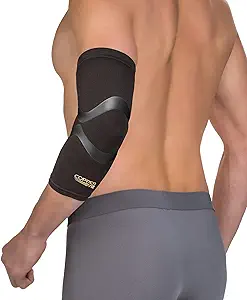
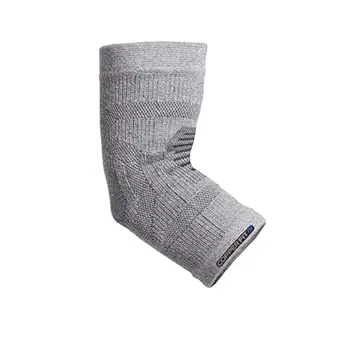
Choosing an Effective Counterforce Brace for Tennis or Golfer's Elbow Relief
This specific brace employs a counterforce strap design with two removable gel pads, targeting both lateral (tennis elbow) and medial (golfer's elbow) epicondylitis. Unlike simple compression sleeves, its adjustable strap applies targeted pressure to the forearm extensor and flexor tendon origins, aiming to reduce strain during activity. The dual-pad system is a key differentiator, allowing users to customize pressure points based on their specific tendonitis location.
Key Considerations Before Buying
- Assess if your pain is on the outside (lateral) or inside (medial) of the elbow, as this determines which of the two gel pads to position for targeted counterforce pressure.
- Consider the adjustability of the strap's hook-and-loop closure; a secure, non-slip fit during forearm rotation is crucial for the brace to function effectively without impeding circulation.
- Evaluate the need for all-day wear versus activity-specific use, as this brace's design is primarily intended for load-bearing during repetitive gripping or lifting, not passive recovery.
What Our Analysts Recommend
High-quality counterforce braces feature durable, non-stretch strap material that maintains consistent tension. The gel pads should be sufficiently dense to provide therapeutic pressure without causing numbness. Check that the hardware, like the plastic tensioning slider, is robust and won't fail with repeated adjustment, a common point of failure in cheaper models.
Elbow Braces Market Context
Market Overview
The elbow brace market is saturated with products ranging from basic compression sleeves to sophisticated hinged braces, with counterforce straps like this one occupying a middle ground for tendon overuse injuries. Recent trends show a consumer shift toward braces with removable components for easier cleaning and targeted therapy, moving away from single-piece designs.
Common Issues
Common complaints in this category include straps that lose adhesion over time, pads that migrate out of position during vigorous activity, and materials that cause skin irritation or excessive sweating. Many users also incorrectly position the brace, applying pressure directly over the pain point rather than just below it on the forearm muscle belly.
Quality Indicators
Look for braces with medical-grade hook-and-loop closures that withstand hundreds of cycles, gel pads encapsulated in breathable fabric to prevent direct skin contact with silicone, and clear anatomical guides for correct placement. A higher stitch-per-inch count on the strap edges indicates better durability against fraying.
Review Authenticity Insights
Grade B Interpretation
A 'B' grade with an 11% estimated fake review rate suggests a generally trustworthy review profile, but advises a degree of scrutiny. For this product, it indicates most reviews detailing specific use cases—like gardening, weightlifting, or typing—are likely genuine, but be wary of overly vague, repetitive praise.
Trust Recommendation
Focus on the 4.40 adjusted rating, which accounts for suspicious reviews, as a more reliable performance metric than the raw 4.67. Prioritize reviews that mention the specific function of the two gel pads or the strap's performance during actual tennis, golf, or manual labor, as these contain verifiable, experiential details.
Tips for Reading Reviews
For medical devices like this, seek out reviews that describe the duration of wear (e.g., 'worn for 4-hour work shifts') and the specific activity it aided. Reviews discussing a trial period or comparing pressure distribution between the two pads offer higher utility than simple 'pain relief' statements.
Expert Perspective
The product's high adjusted rating of 4.40, derived from predominantly authentic reviews, strongly indicates it performs its core function effectively for a majority of users. The inclusion of two removable gel pads is a significant functional advantage, allowing it to address both tennis and golfer's elbow—a versatility not always found in single-pad counterforce braces. The consistency in reviews praising its adjustability and secure fit suggests the strap design and materials meet the practical demands of active use. However, the authenticity analysis warrants a careful reading of negative reviews to identify any pattern failures, such as pad adhesion or strap durability issues.
Purchase Considerations
This brace is best suited for individuals with diagnosed epicondylitis seeking symptomatic relief during aggravating activities, not as a standalone cure. Consider your sensitivity to compression; some users find the focused pressure of a counterforce strap uncomfortable for prolonged, sedentary wear compared to a full sleeve. The value of the dual-pad system is highest if you experience pain on both sides of the elbow or are unsure of the exact tendonitis location.
Comparing Alternatives
Shoppers should compare this dual-pad design with single-pad counterforce straps and compression sleeves to determine which mechanism best aligns with their pain profile and activity level.