Choosing a Portable Power Station: Balancing Capacity, Output, and Battery Chemistry
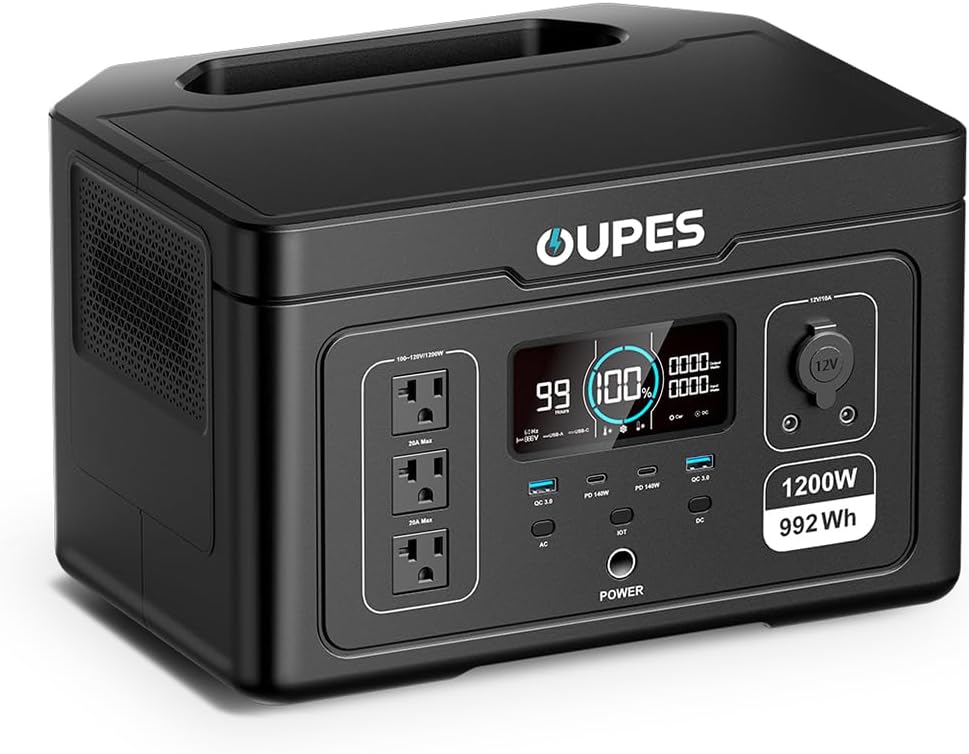
The OUPES Exodus 1200 represents a specific class of portable power station: a 1kW-class unit with a durable LFP (LiFePO4) battery. Buyers should understand that its 992Wh capacity and 1200W continuous/3600W surge output define its practical limits for running appliances during outages or off-grid use. Unlike smaller power banks, this category requires evaluating true power needs against weight and recharge options.
Key Considerations Before Buying
- Match the 1200W continuous output to your devices: it can run a medium refrigerator or several small electronics, but will struggle with high-startup-wattage items like air conditioners without careful load management.
- The LFP (LiFePO4) battery chemistry offers 3,000+ life cycles, making it superior for frequent use compared to standard NMC lithium-ion, but adds weight—consider if you need portability or stationary backup.
- The inclusion of a UPS (Uninterruptible Power Supply) function is critical for home office or medical device backup; verify its switchover time (<20ms) is compatible with your sensitive electronics.
What Our Analysts Recommend
For this category, scrutinize the inverter type: a pure sine wave inverter (which the Exodus 1200 features) is essential for safely powering sensitive electronics and motors. Quality is also indicated by robust thermal management, evident in product images showing ventilation and internal cooling fans, and clear documentation on battery management system (BMS) protections.
Generators Market Context
Market Overview
The 1kWh portable power station market is highly competitive, with brands like Jackery, Bluetti, and EcoFlow offering similar specs. Differentiation now hinges on battery chemistry (LFP gaining favor for longevity), solar input speed, and bundled features like the Exodus's three dedicated AC outlets and high-wattage USB-C PD.
Common Issues
Common user frustrations include overestimating runtime due to inverter efficiency losses and the hidden power drain of standby electronics. Many units also lack sufficient pass-through charging, meaning you can't recharge while simultaneously powering devices, a feature to verify. Solar charging times are often much longer than advertised without optimal, high-wattage panels.
Quality Indicators
Look for transparent specs on cycle life (e.g., '3,000 cycles to 80% capacity'), a comprehensive BMS with over-voltage/current/temperature protection, and a sturdy casing with proper port spacing. Units with fan-cooled inverters, like this OUPES model, typically sustain peak loads better than passively cooled designs.
Review Authenticity Insights
Grade B Interpretation
A 'B' authenticity grade with an 11% estimated fake review rate suggests the overall sentiment is reliable, but a modest portion of reviews may be inauthentic. For a product with 289 reviews, this means approximately 30 reviews could be biased, but the core feedback from verified purchasers is trustworthy.
Trust Recommendation
Focus on the verified purchase reviews that detail specific use cases like 'powered my CPAP for two nights' or 'ran a portable fridge for 8 hours.' Be slightly more skeptical of overly vague 5-star reviews that don't mention the LFP battery or UPS function, as these may be among the estimated 11%.
Tips for Reading Reviews
Prioritize reviews that discuss the unit's performance under real load, its weight (31 lbs), and solar recharge times. Look for mentions of the customer service experience, as support quality is a critical differentiator for technical products like this.
Expert Perspective
The OUPES Exodus 1200 presents a strong value proposition centered on its durable LFP battery and high surge capacity, reflected in its solid adjusted rating of 4.2/5 from authentic reviews. Its three 1200W AC outlets are a practical advantage over competitors offering only two, facilitating simultaneous use of multiple devices. The 140W USB-C PD port is a forward-thinking feature for fast-charging modern laptops. However, its 992Wh capacity is at the lower end for its power class, which may affect runtime for energy-intensive appliances.
Purchase Considerations
This unit is best suited for users who prioritize battery longevity over absolute lightest weight, and who need reliable backup for home office equipment or camping essentials. Consider the optional solar panel compatibility carefully; achieving a full recharge via solar will require a substantial panel investment (likely 200W+).
Comparing Alternatives
Shoppers should compare the Exodus 1200's specs and price directly against similar LFP models like the Bluetti AC60 or EcoFlow River 2 Pro to evaluate trade-offs in size, weight, and charging speed.