
Find Your Fit: Choosing the Right CPAP Pillow for Side, Back, and Stomach Sleepers
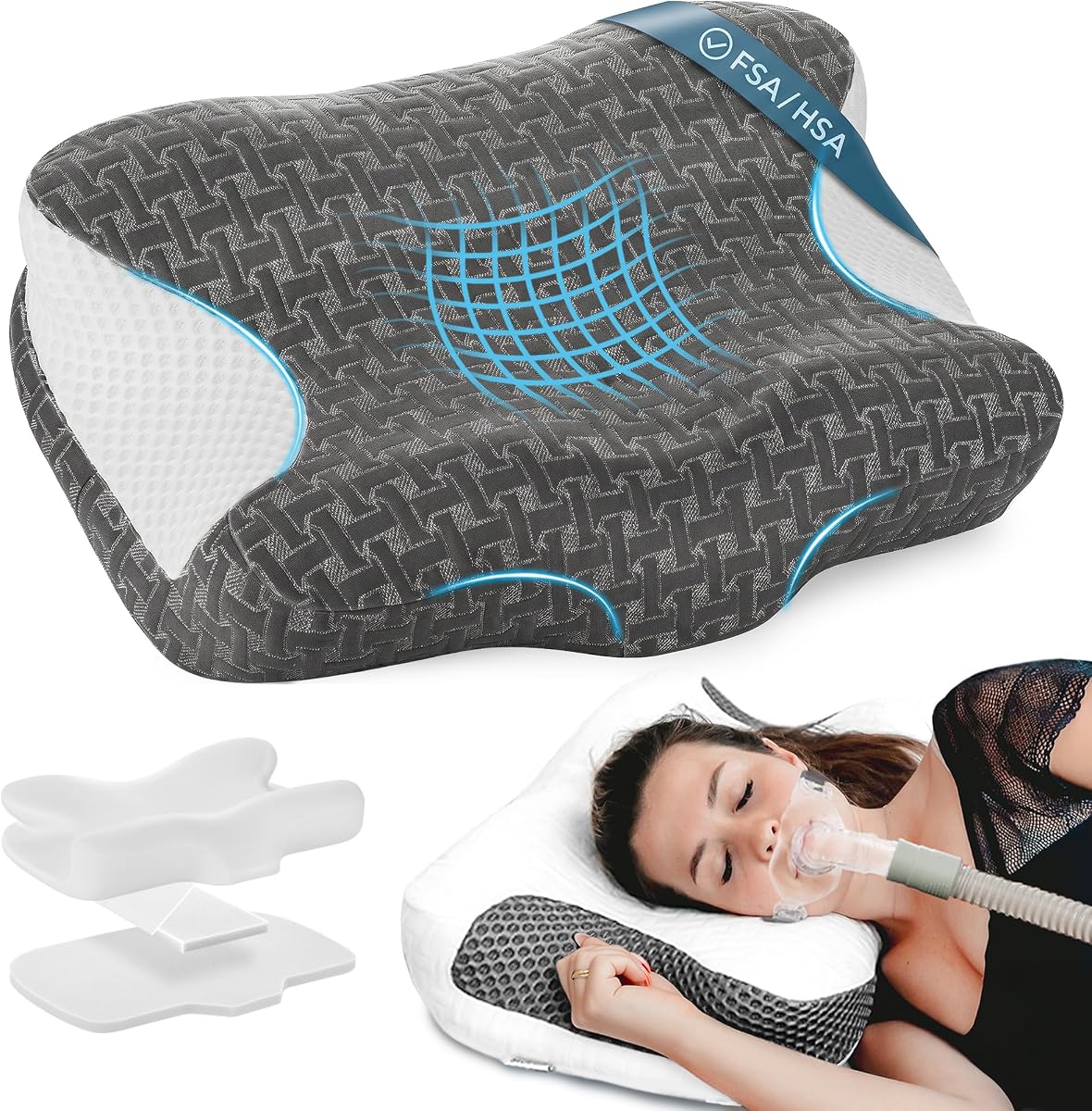
For CPAP users, a standard pillow often leads to mask leaks and neck strain, especially when sleeping on your side, back, or stomach. The Elviros CPAP Pillow targets these issues with an adjustable design featuring four height options and firmness customization, aiming to reduce air leaks and mask pressure. This guide will help you understand what to look for in a specialized cervical pillow to improve your sleep apnea therapy.
Key Considerations Before Buying
- Sleeping Position Compatibility: This pillow is designed for all sleep positions, but its four height settings are critical—side sleepers generally need a higher loft to fill the space between shoulder and head, while back and stomach sleepers require lower heights to avoid neck flexion. Ensure the adjustments offer enough range for your specific needs.
- Adjustable Firmness and Height: The Elviros pillow allows you to remove or add foam layers to change both height and firmness. This is a key feature for CPAP users because a proper fit can prevent mask displacement and reduce pressure on the face, directly impacting therapy effectiveness.
- Material Quality and Support: Memory foam provides contouring support that can cradle the mask hose and reduce pressure points. Look for high-density foam that retains its shape over time, as cheaper foams may degrade quickly, leading to inadequate support and increased mask leaks.
What Our Analysts Recommend
When evaluating a CPAP pillow, prioritize models with removable, washable covers for hygiene and durability. The foam should have a certification for low VOCs (volatile organic compounds) to ensure it's safe and odor-free. Also, check if the pillow includes cutouts or recessed areas specifically designed to accommodate a CPAP mask hose, which can further minimize leaks.
Neck & Cervical Pillows Market Context
Market Overview
The neck and cervical pillow market has expanded rapidly with the rise in sleep apnea diagnoses, with many products now integrating CPAP-specific features like hose channels and adjustable lofts. However, the category suffers from inconsistent quality, as many pillows claim to be 'adjustable' but offer only minimal customization. Consumers are increasingly seeking data-driven recommendations to navigate these claims.
Common Issues
A frequent complaint among CPAP users is that pillows marketed as 'adjustable' often have limited height settings that don't accommodate all body types or sleep positions. Additionally, memory foam can retain heat, leading to discomfort for hot sleepers, and some pillows emit a strong chemical odor during initial use. Durability is another concern, as foam can lose its supportive properties within months.
Quality Indicators
High-quality CPAP pillows typically feature dense, slow-recovery memory foam (at least 4 pounds per cubic foot) and offer at least three distinct height options. Look for pillows with a removable inner core or zippered cover that allows for easy customization. Certifications like CertiPUR-US for foam safety and OEKO-TEX for fabric safety are strong indicators of quality manufacturing.
Review Authenticity Insights
Grade B Interpretation
The Elviros CPAP Pillow received a Review Authenticity Grade of B, with an estimated 15% of reviews being fake. This means that while the majority of feedback is genuine, you should be cautious about overly positive or negative outlier reviews. A B grade is fairly common in this category and suggests that the product's 3.89/5 rating is likely a reasonable reflection of real user experiences, though slightly inflated by inauthentic reviews.
Trust Recommendation
Given the 15% fake review rate, focus on reviews that describe specific, personal usage scenarios—such as how the pillow performed with a particular CPAP mask or sleeping position. Be skeptical of reviews that use generic language or lack verified purchase tags. The adjusted rating of 3.60/5, which removes suspicious reviews, provides a more conservative and likely more accurate expectation.
Tips for Reading Reviews
For this type of product, prioritize reviews from users who mention their specific sleep apnea machine or mask model, as these details indicate genuine experience. Look for reviews that discuss the pillow's longevity (e.g., after 3 months of use) rather than just first impressions. Also, pay attention to reviews that compare this pillow to other CPAP pillows, as they offer valuable comparative insights.
Expert Perspective
The Elviros CPAP Pillow addresses a genuine need for adjustable support in sleep apnea therapy, with its four height options and removable foam layers offering more customization than many competitors. However, the moderate 3.89/5 rating (and adjusted 3.60/5) suggests that execution may not fully meet expectations—some users likely find the foam too firm or the adjustments insufficient for their specific needs. The high percentage of authentic reviews indicates that real users have had mixed experiences, which is typical for a product that relies heavily on personal fit. For a CPAP pillow, the key is whether it can consistently reduce mask leaks and neck pain over months of use, and the data here suggests it works for many but not all.
Purchase Considerations
If you are a side sleeper with a larger frame, the highest loft setting may still be too low, so check reviews from users with similar body types. The adjustable firmness is a strong selling point, but be prepared for a potential break-in period as memory foam softens over time. Consider your budget and whether you can return the pillow if it doesn't work, as fit is highly personal.
Comparing Alternatives
Shoppers should compare the Elviros with other adjustable CPAP pillows like the Contour Products CPAP Max or the Core Products Restore, which offer similar features but may have different foam densities and height ranges. Reading comparative reviews can help identify which model best matches your sleep position and mask type.


