
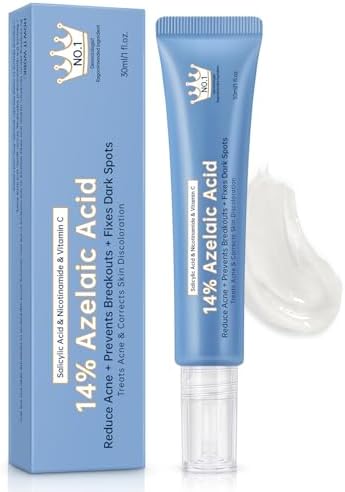
Azelaic Acid 14% Cream: What to Know Before You Buy
This 1 oz cream combines a high-strength 14% azelaic acid with niacinamide and vitamin C to target redness, dark spots, and excess oil. Unlike many single-ingredient azelaic acid products, this formula adds brightening and sebum-balancing actives—so it’s worth understanding how these ingredients interact before you commit.
Key Considerations Before Buying
- Azelaic acid at 14% is a potent concentration; if you have sensitive or rosacea-prone skin, start with once-daily application and buffer with a plain moisturizer to minimize tingling or dryness.
- Niacinamide and vitamin C can both be irritating for some skin types, especially when layered with azelaic acid—patch-test first and avoid combining with other strong actives like retinol or high-percentage AHAs/BHAs.
- This is a cream-serum hybrid in a 1 oz tube, so it may not provide enough hydration for dry skin on its own; consider it a treatment step rather than a standalone moisturizer.
What Our Analysts Recommend
Check that azelaic acid is listed near the top of the ingredient list (ideally at 14% as claimed) and that the formula is fragrance-free, since added fragrance can aggravate redness. Also look for airless or opaque packaging to protect vitamin C from oxidation, and a texture that absorbs without pilling under sunscreen.
Face Moisturizers Market Context
Market Overview
Azelaic acid has moved from prescription-only to a staple in over-the-counter acne and rosacea care, with 10–20% concentrations now common. The addition of niacinamide and vitamin C reflects a broader trend of multi-tasking serums that promise to treat acne, fade dark spots, and control oil in one step.
Common Issues
Many azelaic acid products cause temporary itching or stinging, especially at higher percentages, and some users report purging or dryness during the first few weeks. Formulas that combine multiple actives can also be unstable—vitamin C may oxidize, and niacinamide can sometimes cause flushing in sensitive individuals.
Quality Indicators
A well-formulated azelaic acid cream should disclose its exact percentage, use pH-appropriate delivery, and avoid irritating alcohols or essential oils. Look for clinical-sounding ingredient names (e.g., potassium azeloyl diglycinate) and packaging that minimizes light and air exposure.
Review Authenticity Insights
Grade B Interpretation
A Grade B authenticity rating with an estimated 15% fake reviews means most reviews are genuine, but a noticeable minority may be incentivized or exaggerated. The adjusted rating of 3.90 (vs. 4.22) suggests that when suspicious reviews are removed, satisfaction drops—so real-world results may be more mixed than the headline score implies.
Trust Recommendation
Focus on reviews that mention specific skin types, duration of use, and side effects like tingling or purging. Be cautious of reviews that only praise the product in generic terms or were posted in bulk around the same date, as these are more likely to be inauthentic.
Tips for Reading Reviews
Look for reviewers who describe their skin concerns (e.g., rosacea, hormonal acne) and how long they used the product before seeing results. Pay attention to negative reviews that detail irritation or lack of effect—they often provide more actionable insight than five-star one-liners.
Expert Perspective
This azelaic acid 14% cream is a solid option for those seeking a multi-active treatment for redness, dark spots, and oily skin, provided they can tolerate the combination of azelaic acid, niacinamide, and vitamin C. The 4.22 rating with a 3.90 adjusted score indicates that many users see benefits, but a significant minority experience irritation or insufficient results. The 1 oz size is typical for a serum but may run out quickly if used twice daily.
Purchase Considerations
Weigh the convenience of a multi-ingredient formula against the risk of irritation—if your skin is reactive, a single-ingredient azelaic acid product may be safer. Also consider whether you need the added brightening effects of niacinamide and vitamin C, or if a simpler azelaic acid cream would suffice.
Comparing Alternatives
Shoppers should compare this product with other 10–15% azelaic acid creams that may have simpler formulas or additional soothing ingredients like centella asiatica.


