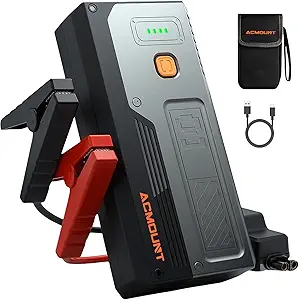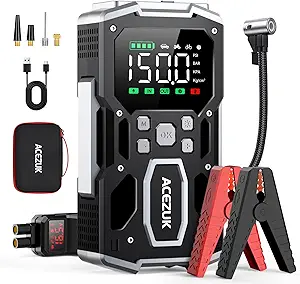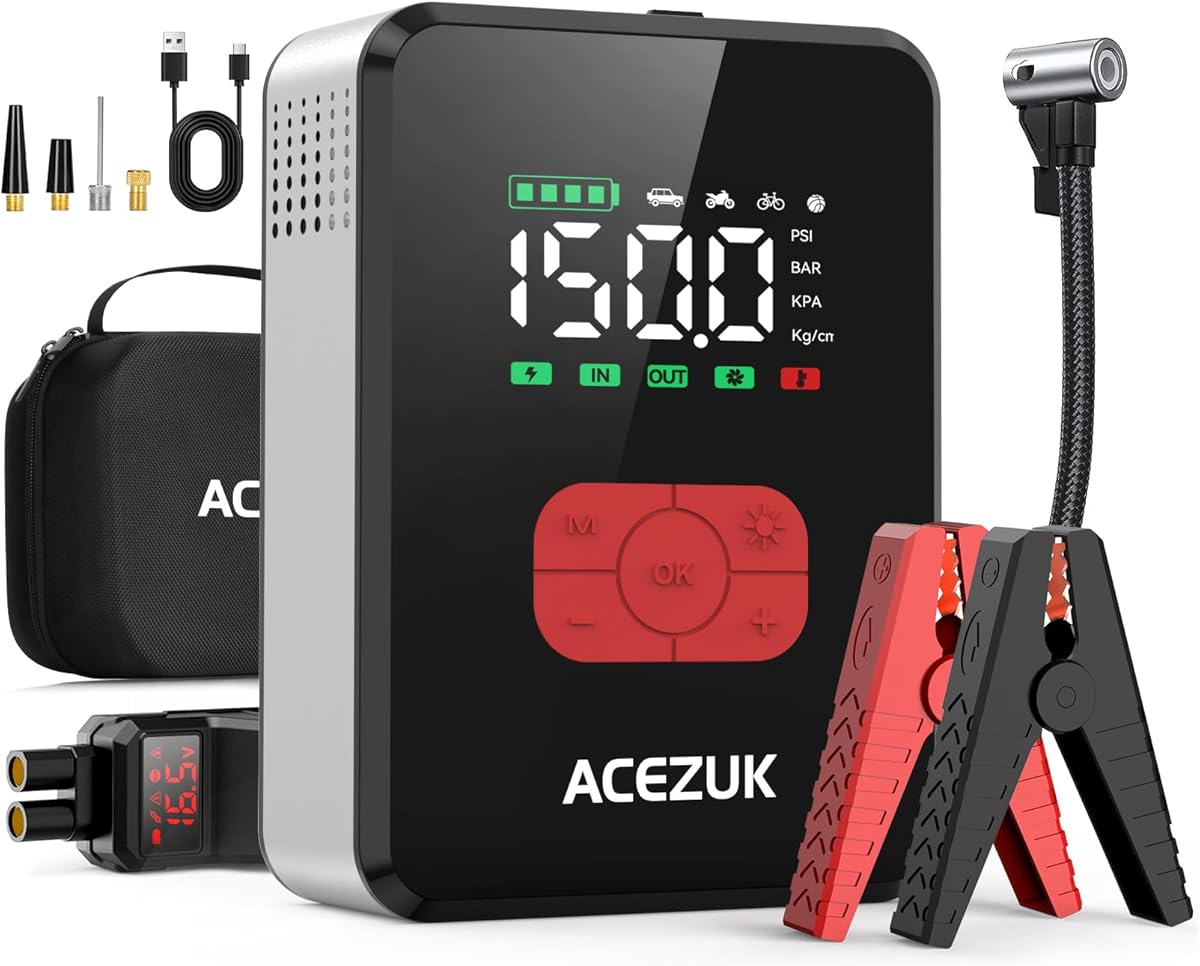
Choosing a Jump Starter with Air Compressor: Key Features for Emergency Preparedness
When selecting a combination jump starter and air compressor like this 8000A 150PSI model, buyers should prioritize both peak amperage for starting capability and compressor performance for tire inflation. This specific unit's 12L diesel engine compatibility and smart cable technology represent important differentiators in the market. Understanding how these features translate to real-world use is crucial for emergency roadside situations.
Key Considerations Before Buying
- The 8000A peak current rating determines starting power for larger engines, but sustained cranking amperage matters more for repeated attempts or cold weather starts.
- The integrated 150PSI air compressor requires evaluating both maximum pressure and inflation speed—higher PSI ratings are essential for truck tires but slower compressors can be frustrating for routine use.
- Smart jump cables with reverse polarity protection are critical safety features that prevent damage to vehicle electronics, making them non-negotiable for modern vehicles with sensitive computer systems.
What Our Analysts Recommend
Quality indicators include UL certification for safety, genuine verified purchase reviews mentioning cold weather performance, and manufacturer specifications detailing battery chemistry (typically lithium iron phosphate for stability). Pay particular attention to compressor duty cycle specifications—continuous run times over 15 minutes indicate better thermal management for multiple tire inflations.
Jump Starters Market Context
Market Overview
The jump starter market has shifted toward multi-function devices combining emergency starting with tire inflation capabilities, creating a competitive segment where compressor performance often differentiates products. Current offerings range from basic 2000A units to premium 8000A+ models like this one that target truck and SUV owners needing both high cranking power and reliable air supply.
Common Issues
Users frequently report compressor overheating during extended use, inaccurate battery charge indicators leading to dead units when needed, and smart cable systems failing to recognize proper connections. Lithium battery degradation over 2-3 years remains an industry-wide concern despite improved battery management systems.
Quality Indicators
Look for products specifying peak AND working amperage (often 2000A sustained for an 8000A peak unit), compressor CFM ratings alongside PSI maximums, and thermal protection for both the battery and compressor motor. Quality units typically include detailed specifications about battery cell origin and compressor motor type.
Review Authenticity Insights
Grade B Interpretation
The Grade B authenticity rating with 11% estimated fake reviews indicates mostly reliable feedback but suggests some review manipulation. For this product category, this typically manifests as overly enthusiastic reviews about compressor speed or battery life that don't match technical limitations.
Trust Recommendation
Focus on verified purchase reviews mentioning specific use cases like starting diesel trucks in cold weather or inflating multiple large tires sequentially. The adjusted 4.20/5 rating (down from 4.44) better reflects genuine user experiences and suggests the product performs well but may have some compressor limitations.
Tips for Reading Reviews
Prioritize reviews discussing actual compressor performance metrics (time to inflate from 20-35 PSI) and jump starter performance in temperatures below 40°F. Be skeptical of reviews claiming the compressor maintains 150PSI continuously or that the unit starts vehicles after years without recharging.
Expert Perspective
This 8000A unit with 150PSI compressor represents a capable mid-to-high tier option based on the 4.20 adjusted rating from predominantly genuine reviews. The smart cable technology and diesel compatibility address common user pain points, while the compressor specification suggests adequate but not exceptional inflation capability. The authenticity analysis indicates reasonable review reliability, though shoppers should temper expectations about compressor performance in sustained use scenarios.
Purchase Considerations
Weigh the convenience of an integrated compressor against potentially slower inflation speeds compared to standalone units. Consider whether your vehicle fleet requires the 8000A peak power or if a lower-amperage unit would suffice, as higher ratings typically mean larger, heavier units. The LED lights add emergency utility but shouldn't be a primary decision factor.
Comparing Alternatives
Shoppers should compare compressor duty cycles and sustained amperage ratings with similar-priced competitors, as peak ratings alone don't indicate real-world performance.