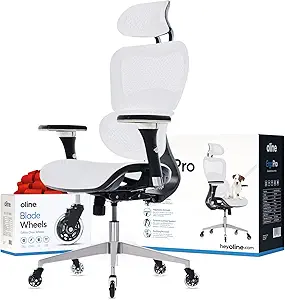
Choosing a Big & Tall Ergonomic Chair: What the Zen Model's 3D Lumbar Support Really Means
For taller or larger-framed users, the Zen's 'Big and Tall' designation and 5D armrests aren't just marketing—they're critical for proper alignment. This chair's 3D lumbar support allows you to adjust height, depth, and angle independently, which is essential for targeting the natural curve of your lower spine rather than just providing a static cushion.
Key Considerations Before Buying
- The 90-130° tilt range is particularly relevant for this executive-style chair; the 130° recline is suitable for short breaks, but dedicated zero-gravity positions require a greater range, so assess if your work style needs more aggressive recline.
- BIFMA certification on a chair at this price point indicates tested durability for components like the cylinder and frame, but it doesn't guarantee the mesh or padding will hold up for a heavier user over 5+ years without showing wear.
- The 4D headrest's adjustability is only valuable if your seated height aligns with its range; for truly tall users (over 6'3"), verify in reviews if the headrest extends high enough to support the cervical spine without forcing an upright posture.
What Our Analysts Recommend
Beyond the BIFMA label, examine the mechanism's smoothness: a quality synchronous tilt should recline without jerking or requiring excessive force. For the mesh, a tighter, double-weave pattern like the Zen's typically offers better long-term support and resistance to sagging compared to a single-layer stretch mesh.
Home Office Desk Chairs Market Context
Market Overview
The 'executive' mesh chair segment is crowded, with many models boasting similar feature lists (4D armrests, adjustable lumbar). Differentiation now hinges on the quality of those adjustments and the durability of materials under sustained load, not just the quantity of levers.
Common Issues
A frequent mismatch occurs between 'big and tall' marketing and actual seat dimensions—specifically seat depth and width—leaving larger users with inadequate thigh support. Another is 'feature creep,' where complex mechanisms like 5D armrests have plastic internals that develop wobble or fail before the chair's lifespan is over.
Quality Indicators
Prioritize chairs that specify the mesh material (e.g., Korean-made or high-elasticity polypropylene) and the gas cylinder class (e.g., Class 4). A robust, multi-point base with dual-wheel casters, as seen on the Zen, is a better stability indicator for heavier users than a cheaper five-point design.
Review Authenticity Insights
Grade B Interpretation
A 'B' grade with a 10% estimated fake review rate suggests the vast majority of feedback is reliable, but you should be slightly more critical of extreme 5-star reviews that lack detail. The drop from a 3.89 to a 3.70 adjusted rating indicates a few overly positive reviews may have been filtered.
Trust Recommendation
Focus on the verified purchase reviews that discuss long-term use (3+ months), specifically mentioning the 3D lumbar mechanism's durability and the mesh's resistance to stretching. The presence of genuine critical reviews (the 1, 2, and 3-star ratings) discussing specific part failures adds credibility to the overall rating.
Tips for Reading Reviews
For this chair, prioritize reviews from users who disclose their height and weight. Look for comments on whether the lumbar support maintains its position after repeated adjustments and if the seat pan's front edge ('waterfall') adequately relieves pressure for extended sitting periods.
Expert Perspective
The Zen presents a compelling feature set for its category, particularly the independent 3D lumbar and 4D headrest, which are often found only on premium brands. The 3.70 adjusted rating from verified buyers is realistic for a chair in this price tier, reflecting good value but potential variability in assembly or long-term component wear. The BIFMA certification is a significant trust signal, but the true test is how the mesh and adjustment mechanisms perform for a 'big and tall' user after a year of daily 8-hour use.
Purchase Considerations
Weigh the comprehensive adjustability against your actual needs: if you rarely use a headrest, a model with superior lumbar support at a lower price might be better. Conversely, if you are over 250lbs, the chair's reinforced construction is a key advantage, but scrutinize reviews for any mention of the seat frame or armrests feeling insubstantial.
Comparing Alternatives
Compare the Zen's seat dimensions and weight capacity directly with similar 'big and tall' models from brands like Hbada or SIHOO, focusing on the depth of the seat pan and the sturdiness of the armrest attachment points.