
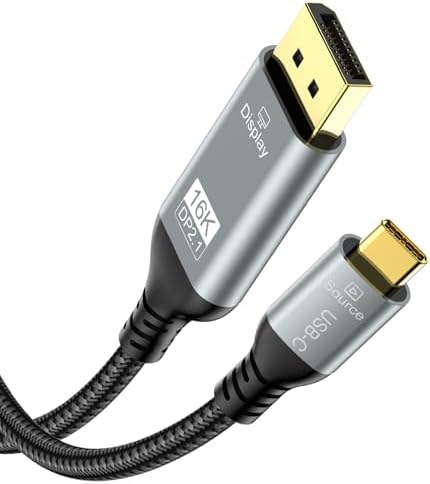
Choosing a USB-C to DisplayPort 2.1 Cable for High-Refresh 8K and 4K Gaming
This specific 6.6-foot cable targets users pushing the limits of modern displays, promising 8K at 120Hz and 4K at 240Hz. Buyers should understand that achieving these specs requires both a true DisplayPort 2.1 UHBR20 cable and a source/display that supports the latest Thunderbolt 4 or USB4 standards.
Key Considerations Before Buying
- Verify your device's actual output capability; an M4 MacBook Pro or iPhone 16 supports specific modes, but not all advertised resolutions/refresh rates.
- The 40Gbps claim aligns with Thunderbolt 4/USB4, but true DP 2.1 UHBR20 bandwidth (≈80Gbps) is needed for 16K/30Hz; this cable likely uses a DP 2.1 *receptacle* with a lower negotiated link rate.
- Length matters for signal integrity at high bandwidths; 6.6ft is a practical maximum for reliable 8K@120Hz without active circuitry or exceptional build quality.
What Our Analysts Recommend
Look for explicit mention of VESA certification for DisplayPort 2.1 UHBR (though rare in aftermarket cables) and reviews confirming the specific high-refresh mode you need. A quality braided nylon jacket, like many reviewers note on this model, often indicates better strain relief for a stiff, high-bandwidth cable.
Thunderbolt Cables Market Context
Market Overview
The market for USB-C/Thunderbolt to DisplayPort cables is flooded with products claiming DP 2.1 compatibility, but many use older DP 1.4 chipsets in a new housing, creating confusion. Genuine, fully-certified DP 2.1 cables remain premium and less common.
Common Issues
The most frequent problems are handshake failures (blank screens), failure to achieve advertised refresh rates at full resolution, and compatibility issues with specific monitor firmware or GPU drivers. Cables often work but default to a lower performance mode (HBR3 instead of UHBR).
Quality Indicators
Beyond branding, consistent user reports of achieving 4K@144Hz or higher are a strong indicator. Quality cables use thicker, lower-gauge wires (often 28AWG or lower) for power and ground to reduce voltage drop, which is critical for the +3.3V AUX power line in the DP protocol.
Review Authenticity Insights
Grade B Interpretation
A 'B' grade with a 10% estimated fake review rate suggests the vast majority of feedback is trustworthy, but a small portion of reviews may be artificially boosting the near-perfect 4.89/5 rating. The adjusted 4.60/5 rating is still exceptionally high for this category.
Trust Recommendation
Focus on the 90% of reviews deemed authentic. Pay particular attention to detailed, verified purchase reviews that mention specific monitor models (e.g., Samsung Odyssey G7, LG UltraGear) and the exact resolution/refresh rate they successfully achieved, as these are hard to fabricate convincingly.
Tips for Reading Reviews
For technical cables, prioritize reviews that discuss troubleshooting, like needing to enable DSC (Display Stream Compression) on their monitor or updating their GPU driver. Skeptically view reviews that only praise packaging or generic 'works great' statements without technical specifics.
Expert Perspective
The analysis data paints a picture of a high-performing cable that meets or exceeds expectations for most users, especially those with high-refresh 4K monitors. The 4.60 adjusted rating from verified purchasers is a robust signal of quality in a category rife with signal integrity issues. The specific compatibility calls for MacBook Pro M4 and iPhone 16 indicate the manufacturer is testing with current-generation devices, a positive sign for chipset/driver compatibility.
Purchase Considerations
Weigh your immediate needs: if you require certified DP 2.1 UHBR20 for a future 16K display, wait for a VESA-certified option. However, for driving a 4K@240Hz or 8K@60/120Hz gaming monitor today from a modern Thunderbolt 4 laptop, this cable's authentic reviews strongly suggest it is a reliable, high-bandwidth solution.
Comparing Alternatives
Shoppers should compare the chipset used (if disclosed) and warranty length with competitors offering similar specs, as the internal IC is the primary determinant of performance and compatibility.

![Fitee USB4 Cable for Thunderbolt 4 Cable [2 Pack 5FT], 40Gbps Data Sync, 8K/6K@60Hz, 4K@144Hz, PD3.1 240W Charging, USB C Thunderbolt Cable for Mac mini, MacBook Pro, PSSD, Display, Docking, Monitor](https://m.media-amazon.com/images/I/41Romr2SkxL._SX342_SY445_QL70_FMwebp_.jpg)

![Plugable Thunderbolt 5 Cable Right Angle 80Gbps 240W Charging [Thunderbolt Certified] Up to 120Gbps Bandwidth Boost for Laptops & Docks Works with Thunderbolt 4/3 USB4 USB C, 2.6ft (80cm) TBT5-240W80R](https://m.media-amazon.com/images/I/31zNA5voaqL._SX342_SY445_QL70_FMwebp_.jpg)


