
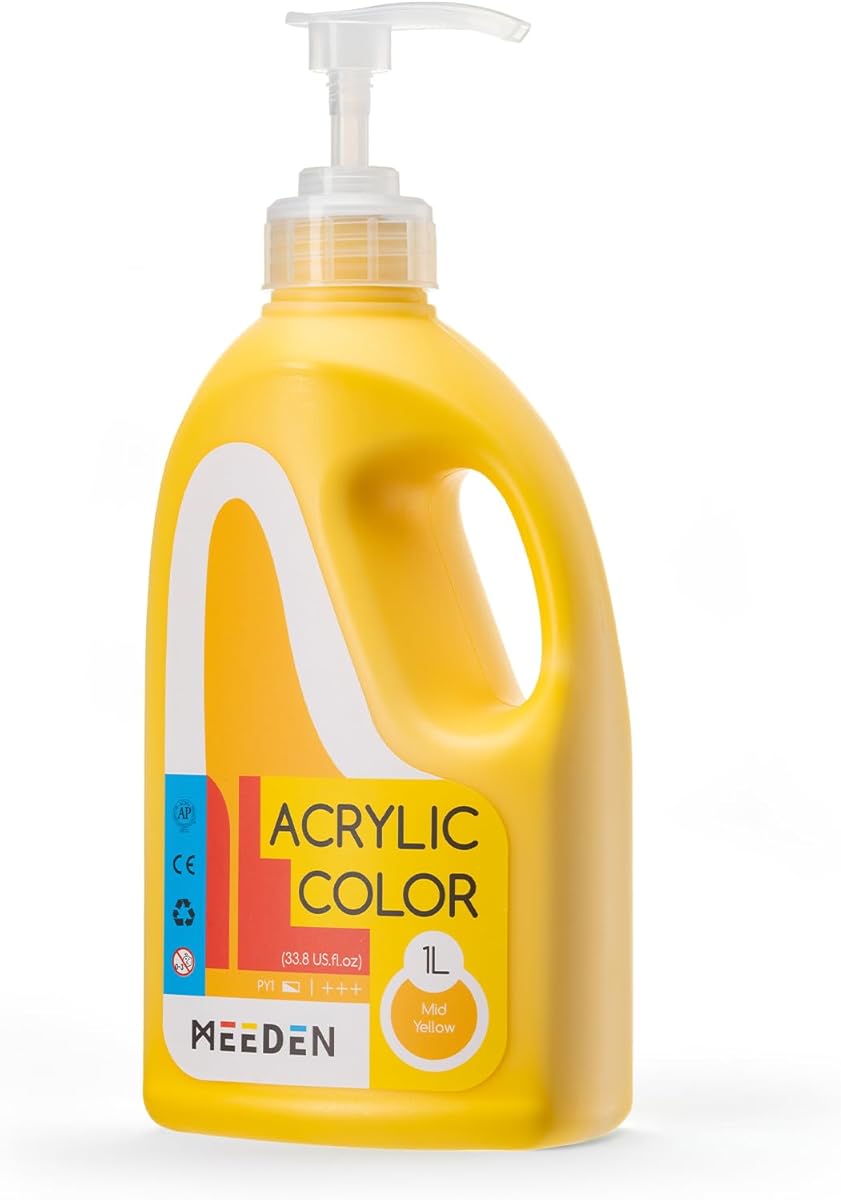
Evaluating Mid-Tone Yellow Acrylics: What Artists Need to Know About MEEDEN's Offering
When considering MEEDEN's Mid Yellow acrylic paint, artists should understand that mid-tone yellows serve as crucial mixing colors for greens and oranges, not just standalone hues. This specific shade's opacity and pigment load will determine its versatility in layering and color blending techniques. Without existing user reviews, evaluating this paint requires close attention to its technical specifications and manufacturer reputation.
Key Considerations Before Buying
- For a mid-yellow, check whether the pigment is a single pigment (like PY74) or a blend, as this affects color mixing predictability and lightfastness ratings.
- Consider the paint's viscosity—whether it's heavy body for impasto techniques or fluid for glazing—as this impacts application methods and drying time.
- Evaluate the opacity rating; a truly mid-tone yellow should offer decent coverage without being completely transparent like lemon yellows or completely opaque like cadmium alternatives.
What Our Analysts Recommend
Quality acrylic yellows maintain vibrancy when mixed with whites without turning chalky and resist darkening significantly as they dry. Look for information about pigment concentration (often indicated by series pricing) and whether the manufacturer discloses lightfastness ratings, which are particularly important for yellow pigments that can be prone to fading.
Paints Market Context
Market Overview
The student-grade acrylic paint market has expanded significantly, with brands like MEEDEN competing against established names like Liquitex Basics and Arteza by offering affordable color ranges. Mid-yellows specifically fill a gap between pale primaries and deep golden hues, serving artists who need mixing versatility without extreme value shifts. Many newer brands emphasize price competitiveness over pigment disclosure, creating variability in performance across color lines.
Common Issues
Budget yellow acrylics frequently suffer from weak tinting strength, requiring multiple layers for coverage, and may use filler pigments that create muddy mixtures when combined with other colors. Some manufacturers substitute more expensive, lightfast pigments with fugitive alternatives that fade over time, particularly problematic in yellows where pigment costs vary dramatically.
Quality Indicators
Superior acrylic yellows maintain consistent viscosity across batches and exhibit minimal color shift between wet and dry states. Reliable manufacturers provide pigment codes (like PY3 or PY74) and opacity ratings on packaging, while premium options often include ASTM lightfastness ratings and pigment load percentages.
Review Authenticity Insights
Grade U Interpretation
The 'Grade U' (Unrated) authenticity score with 0.00% estimated fake reviews means there's insufficient review data to analyze patterns of manipulation—common with new products or lesser-known brands. This absence of reviews creates a vacuum where potential buyers cannot rely on crowd-sourced quality assessments, shifting the evaluation burden entirely to product specifications and brand reputation.
Trust Recommendation
Given the complete lack of verified user experiences, artists should seek third-party testing videos or independent artist reviews before purchasing. Consider buying a single tube first to test properties like adhesion, drying time, and color accuracy rather than committing to a full set based solely on manufacturer claims.
Tips for Reading Reviews
When reviews eventually appear for this specific shade, look for mentions of its behavior in mixtures with blues (for greens) and reds (for oranges), as these applications reveal pigment quality. Be skeptical of reviews that don't mention actual painting experiences or that focus exclusively on packaging aspects rather than paint performance.
Expert Perspective
MEEDEN's Mid Yellow enters a competitive segment without the social proof of customer reviews, placing it at a disadvantage against established alternatives. The complete absence of ratings suggests either very recent market entry or limited sales volume, making performance evaluation challenging. Artists should approach this paint as an experimental purchase rather than a reliable staple until independent testing emerges. The 'mid' designation suggests it aims to balance between pale and deep yellows, but without pigment information, its actual mixing characteristics remain uncertain.
Purchase Considerations
Weigh this paint's likely price advantage against the risk of inconsistent performance, particularly if you need predictable results for commissioned work or series paintings. Consider whether you can accept potential variations in opacity or drying time that might occur with budget-friendly acrylic lines. For color-critical applications, investing in a professionally reviewed alternative might provide better long-term value despite higher initial cost.
Comparing Alternatives
Shoppers should compare MEEDEN's offering against Golden Fluid Acrylics' Hansa Yellow Medium or Liquitex Basics' Medium Yellow, which have established performance records and detailed technical specifications.


