
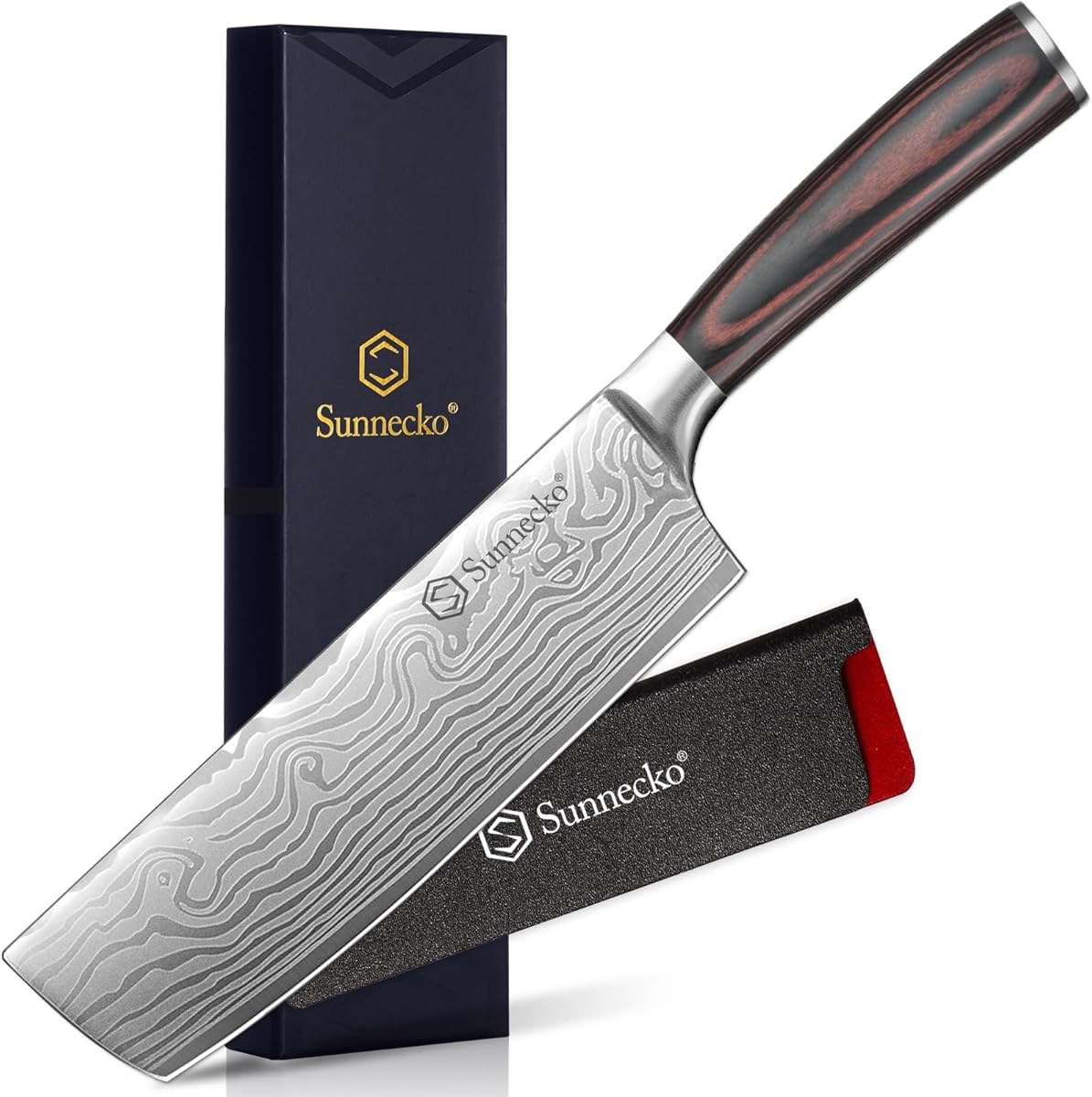
Mastering Vegetable Prep with a 7-Inch Carbon Steel Nakiri
For home cooks and professionals alike, a Nakiri knife is purpose-built for vegetable preparation, offering a flat blade edge for clean, precise cuts. The Sunnecko Japanese Nakiri Knife 7 Inch, crafted from carbon steel, is designed to excel at chopping, slicing, and dicing vegetables with minimal effort. Understanding the unique properties of a Nakiri, such as its straight edge and squared-off tip, is key to leveraging its full potential for efficient, uniform cuts.
Key Considerations Before Buying
- Carbon steel requires diligent care: unlike stainless steel, carbon steel is prone to rust and discoloration if not dried immediately after washing. You must be committed to hand washing, thorough drying, and occasional oiling to maintain the blade's performance and appearance.
- The 7-inch blade length is ideal for home kitchens, offering a balance between maneuverability and cutting surface. This size is particularly effective for large vegetables like cabbage or squash, but may feel less nimble for intricate work compared to a smaller 6-inch Nakiri.
- A sheath is included for safe storage, but proper knife maintenance extends beyond storage. Ensure you have a suitable sharpening tool, like a whetstone, as carbon steel edges can wear faster than stainless alternatives.
What Our Analysts Recommend
In a quality Nakiri knife, examine the blade's edge geometry—a true flat edge (not a slight curve) ensures full contact with the cutting board for clean slices. The steel's hardness, often measured on the Rockwell scale, should be balanced: too hard can lead to chipping, while too soft dulls quickly. A comfortable, well-balanced handle that provides a secure grip is also critical for safe, repetitive cutting motions.
Usuba & Nakiri Knives Market Context
Market Overview
The market for Japanese-style Nakiri knives has expanded significantly, with many brands offering carbon steel options that appeal to purists seeking superior edge retention and sharpness. However, this growth has led to variable quality, from artisanal hand-forged blades to mass-produced imports that may lack consistent heat treatment. Consumers are increasingly drawn to the specific benefits of a Nakiri—its straight edge and thin profile—for vegetable-centric cooking, especially in plant-based and Asian cuisines.
Common Issues
A frequent concern with carbon steel Nakiri knives is the risk of rust and patina development, which some users find undesirable despite its natural protective properties. Another common issue is blade thickness: some budget-friendly models are too thick or have a suboptimal grind, leading to wedging in dense vegetables. Additionally, fit and finish, such as uneven handles or poorly aligned blades, can affect performance and safety.
Quality Indicators
High-quality Nakiri knives typically feature a full tang (the blade extends through the handle) for balance and durability, though hidden tangs are common in traditional Japanese designs. The blade's grind should be consistent, often a convex or flat grind, to reduce sticking and ensure smooth cuts. Look for a knife with a high Rockwell hardness (around 60-62 HRC) for carbon steel, as this indicates good edge retention without excessive brittleness.
Review Authenticity Insights
Grade B Interpretation
The Sunnecko Nakiri has a Review Authenticity Grade of 'U' (unrated) and a 0.00% estimated fake review percentage, which means there is insufficient data to assess review authenticity. This is typical for a product with zero reviews, as the algorithms cannot evaluate patterns of deception. It does not indicate that reviews are fake, but rather that no review data exists to analyze.
Trust Recommendation
Given the absence of verified customer feedback, potential buyers should approach this product with cautious optimism. Look for third-party reviews from reputable culinary sources or user forums that discuss the Sunnecko brand and its carbon steel Nakiri. Consider the product's features and your own needs carefully, and be prepared to test the knife's performance yourself.
Tips for Reading Reviews
When reviews eventually appear, prioritize those that include specific details about the knife's edge retention, ease of sharpening, and handling of dense vegetables. Be wary of overly generic praise or criticism that lacks concrete examples. Also, note that early reviews may be from promotional samples, so look for verified purchase badges and balanced perspectives.
Expert Perspective
The Sunnecko Japanese Nakiri Knife 7 Inch presents an intriguing option for those seeking an affordable entry into carbon steel vegetable knives, but the complete lack of customer reviews makes it a speculative purchase. Its carbon steel construction promises excellent sharpness and edge retention, but this comes with the responsibility of meticulous maintenance. Without user feedback on its heat treatment, grind consistency, or handle comfort, its true quality remains unvalidated. For experienced cooks who understand carbon steel care, it could be a value-driven choice, but novices may find the learning curve steep.
Purchase Considerations
Weigh your comfort with carbon steel maintenance against the potential performance benefits. If you are willing to invest time in care and sharpening, this knife might offer professional-level cutting at a lower price point. However, consider that a similarly priced stainless steel Nakiri from a known brand might provide more predictable performance and lower upkeep.
Comparing Alternatives
Shoppers should compare this knife with other Nakiri options in the same price range, particularly those with established customer reviews and known quality standards, to make an informed decision.


