
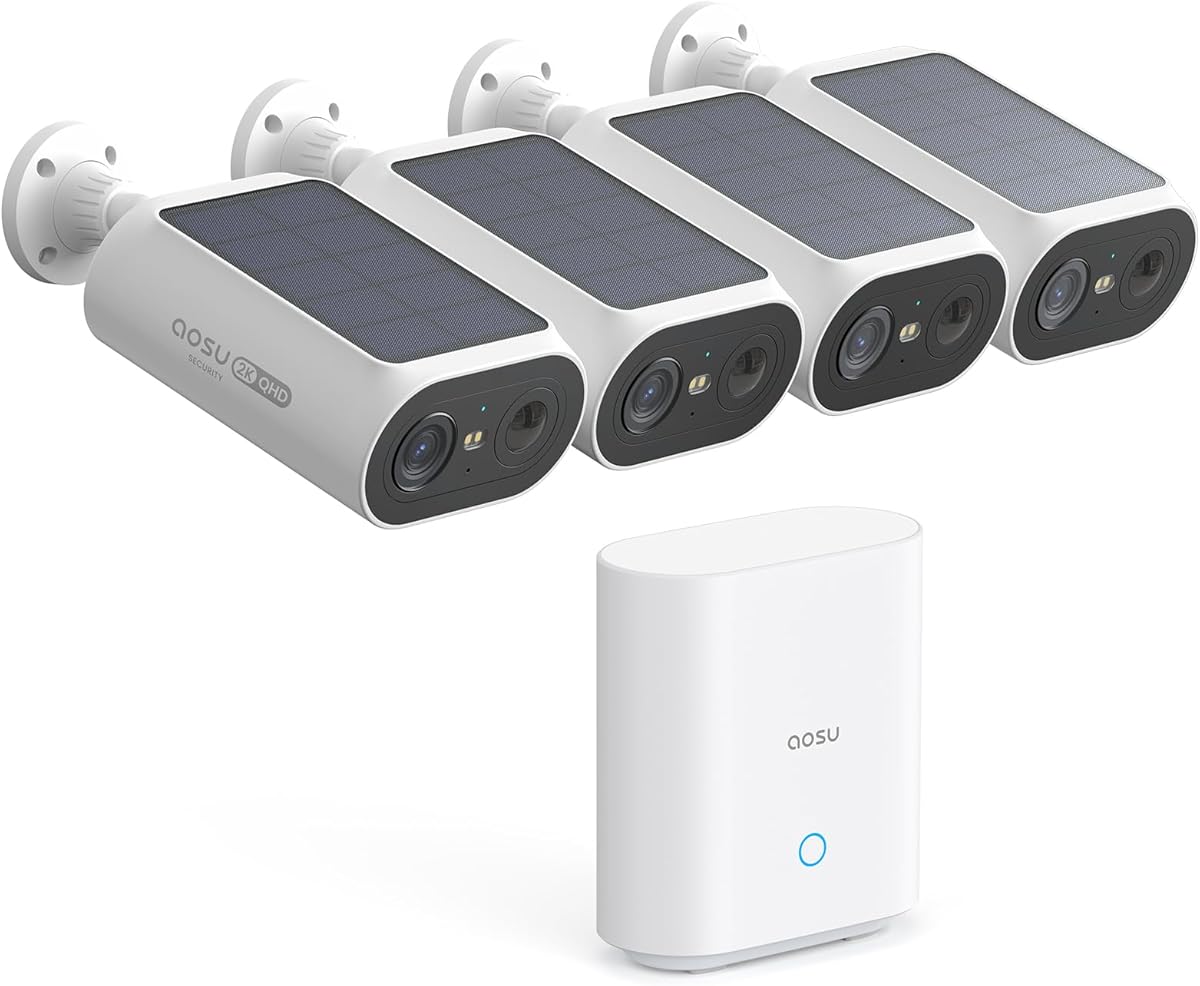
Aosu's 4-Cam Solar Kit: Real Security Without Monthly Fees
For homeowners seeking a wire-free security solution that doesn't lock you into a subscription, the aosu 4-cam solar kit offers a rare combination of easy installation and 2K color night vision. With a claimed 2-minute setup and local storage, this system targets those who want reliable outdoor surveillance without recurring costs. But with a 10% estimated fake review rate, it's crucial to separate genuine user experiences from potential puffery.
Key Considerations Before Buying
- Solar panel placement is critical: ensure your mounting locations get enough direct sunlight to keep the batteries charged, especially in winter or shaded areas, or you may need to manually recharge.
- Local storage via the base station means no cloud fees, but consider how much video you need to retain—the 64GB included may fill up quickly with 2K footage from four cameras.
- Dual-band WiFi (2.4 & 5GHz) is a plus for reducing interference, but verify your home network's coverage reaches all camera mounting points, as weak signals can cause dropouts.
What Our Analysts Recommend
In solar-powered bullet cameras, prioritize battery capacity (measured in mAh) and solar panel wattage—higher numbers mean less downtime. Also check the field of view: a wider angle (130°+) covers more area but may distort edges. Reliable motion detection with adjustable zones and sensitivity is essential to avoid false alerts from passing cars or animals.
Bullet Cameras Market Context
Market Overview
The outdoor wireless security camera market has exploded, with solar-powered models gaining traction as users reject subscription fees for cloud storage. Systems like aosu's 4-cam kit compete with brands like Ring, Arlo, and Eufy, but often at a lower price point, appealing to budget-conscious DIYers. However, the category is crowded with mixed-quality products, making independent review analysis more important than ever.
Common Issues
Many solar cameras suffer from inconsistent battery life in low-light regions, leading to frequent recharging or missed recordings. Motion detection delays and false alerts are also frequent complaints, as is poor night vision clarity in budget models. Additionally, some systems require a proprietary hub that can be a single point of failure for all cameras.
Quality Indicators
Look for cameras with a high IP rating (IP65 or higher) for weather resistance, and a reputable image sensor brand (e.g., Sony Starvis) for better low-light performance. A strong mobile app with customizable settings and reliable push notifications is a hallmark of a well-engineered system. Verified purchase reviews with detailed installation stories often reveal real-world reliability.
Review Authenticity Insights
Grade B Interpretation
The Grade B and 10.00% estimated fake review rate suggest that while the majority of feedback is genuine, a notable fraction may be incentivized or fabricated. This is typical for a popular, competitively priced product—buyers should be cautious of overly glowing 5-star reviews lacking specific details, especially those mentioning free product or discount.
Trust Recommendation
Focus on the 4.50 adjusted rating, which likely reflects the real user experience more accurately than the raw 4.78. Look for reviews that mention both pros (easy install, no subscription) and cons (battery life in shade, app quirks) as these are more credible. Cross-check negative feedback for common themes that might indicate systemic issues.
Tips for Reading Reviews
When reading reviews for solar camera kits, pay special attention to comments about battery performance after 3-6 months, as initial impressions can be misleading. Also note any descriptions of the mobile app's reliability, as poor software can ruin an otherwise good hardware experience. Filter by 'Verified Purchase' and look for reviewers who mention specific installation scenarios (e.g., 'north-facing wall' or 'partial shade').
Expert Perspective
The aosu 4-cam kit presents a compelling value proposition for homeowners who want multi-camera coverage without ongoing fees, but the 10% fake review rate and Grade B authenticity score warrant a cautious approach. The 2K color night vision, dual-band WiFi, and solar charging are strong features for the price, but the adjusted rating of 4.50 suggests that real-world performance may not be flawless. Given the category's common issues with battery life and motion detection, this system is likely best suited for users with sunny mounting locations and moderate security needs, not those requiring 24/7 recording in challenging environments.
Purchase Considerations
Weigh the convenience of no subscription against the potential need for occasional manual recharging or camera repositioning. Also consider that a 4-cam kit may be overkill for a small property—but for larger homes, it offers good coverage per dollar. Make sure the base station's local storage capacity (64GB) meets your recording retention preferences, as upgrading may not be straightforward.
Comparing Alternatives
Before committing, compare the aosu kit against competitors like the Eufy Solar Wall Light Cam or Reolink's solar models, which also offer no-subscription options but may have different trade-offs in image quality, app experience, or battery life.


