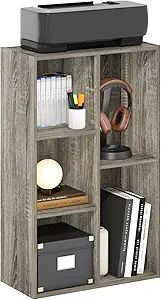
Rotating Corner Bookshelves: What to Know Before You Buy
A 360-degree rotating bookshelf like the MXV 4-tier model can turn a dead corner into usable storage, but its footprint, rotation mechanism, and load limits matter more than the product photos suggest. This guide covers what to evaluate before committing to a rotating, narrow bookcase for a small space.
Key Considerations Before Buying
- Measure your corner and clearance: a 360-degree rotating unit needs open floor space on all sides to spin freely, so confirm the base diameter plus a few inches of swing room before buying. In tight bedrooms or living rooms, a rotating shelf can actually consume more usable floor area than a static corner shelf.
- Check the tier height and depth against what you store: four tiers work well for paperbacks, small decor, and kids' books, but tall hardcovers or oversized art books may overhang narrow shelves. Verify each tier's usable depth and the gap between tiers so items clear the shelf above when the unit rotates.
- Evaluate the base and rotation hardware: a floor-standing rotating bookcase depends on a stable, weighted base and a smooth bearing or turntable mechanism. Look for descriptions of the base material and any anti-tip or leveling features, since a top-heavy load on a small footprint is the main stability risk.
What Our Analysts Recommend
Quality indicators for this category include a solid wood or engineered-wood frame with clean edge banding, a base wide enough to resist tipping when the upper tiers are loaded, and hardware that rotates without wobble. Reviews that mention smooth spinning after months of use and no tipping when fully loaded are more informative than initial impressions.
Bookcases Market Context
Market Overview
Small-space bookcases have shifted toward multi-functional, space-saving designs, and rotating corner units are a fast-growing niche within that segment. Most options in this price tier are engineered wood with a metal or composite turntable base, sold primarily online where buyers rely heavily on reviews rather than showroom inspection.
Common Issues
Frequent complaints in this category include wobbling or grinding rotation after assembly, shelves that are shallower than expected, and instability when the upper tiers are fully loaded. Assembly quality also varies widely, and some units arrive with misaligned pre-drilled holes or missing hardware.
Quality Indicators
Strong products in this category specify load capacity per tier, list base dimensions and materials, and include anti-tip hardware or leveling feet. Clear assembly instructions, labeled parts, and responsive seller support are practical signals of a better-built rotating bookcase.
Review Authenticity Insights
Grade A Interpretation
A Grade B authenticity rating with an estimated 15% fake review rate means most reviews are likely genuine, but a meaningful minority may be inflated or incentivized. The adjusted rating of 4.50/5 versus the displayed 4.89/5 suggests the honest consensus is still positive but less uniformly glowing than the headline score implies.
Trust Recommendation
Treat the 4.50 adjusted score as the more realistic benchmark and read a spread of reviews rather than the top handful. Pay particular attention to verified-purchase reviews that mention assembly, stability, and long-term rotation performance, since those are hardest to fake convincingly.
Tips for Reading Reviews
For rotating bookcases, prioritize reviews that describe the unit after weeks or months of use, include photos of it loaded with books, and mention specific room sizes. Be skeptical of short five-star reviews that praise appearance without addressing stability or the rotation mechanism.
Expert Perspective
The MXV Rotating Bookshelf targets a real problem: narrow corner storage in small bedrooms and living rooms, with a 360-degree display that doubles as a room divider or display piece. The 4.89 displayed rating across 62 reviews is strong, and the 4.50 adjusted rating still indicates solid satisfaction once potential review inflation is discounted. The main open questions for this product are long-term rotation smoothness and stability under a full load, which are the typical weak points for floor-standing rotating units at this size.
Purchase Considerations
Weigh your actual storage needs against the rotating format: if you need to hold heavy hardcovers or large volumes, a static narrow bookcase may be more stable for the money. If display and accessibility in a tight corner are the priority, the rotating design earns its place, provided you have the clearance to spin it.
Comparing Alternatives
Compare this unit with static corner bookcases and other rotating tiered shelves in the same price range, checking base dimensions and per-tier load specs side by side.