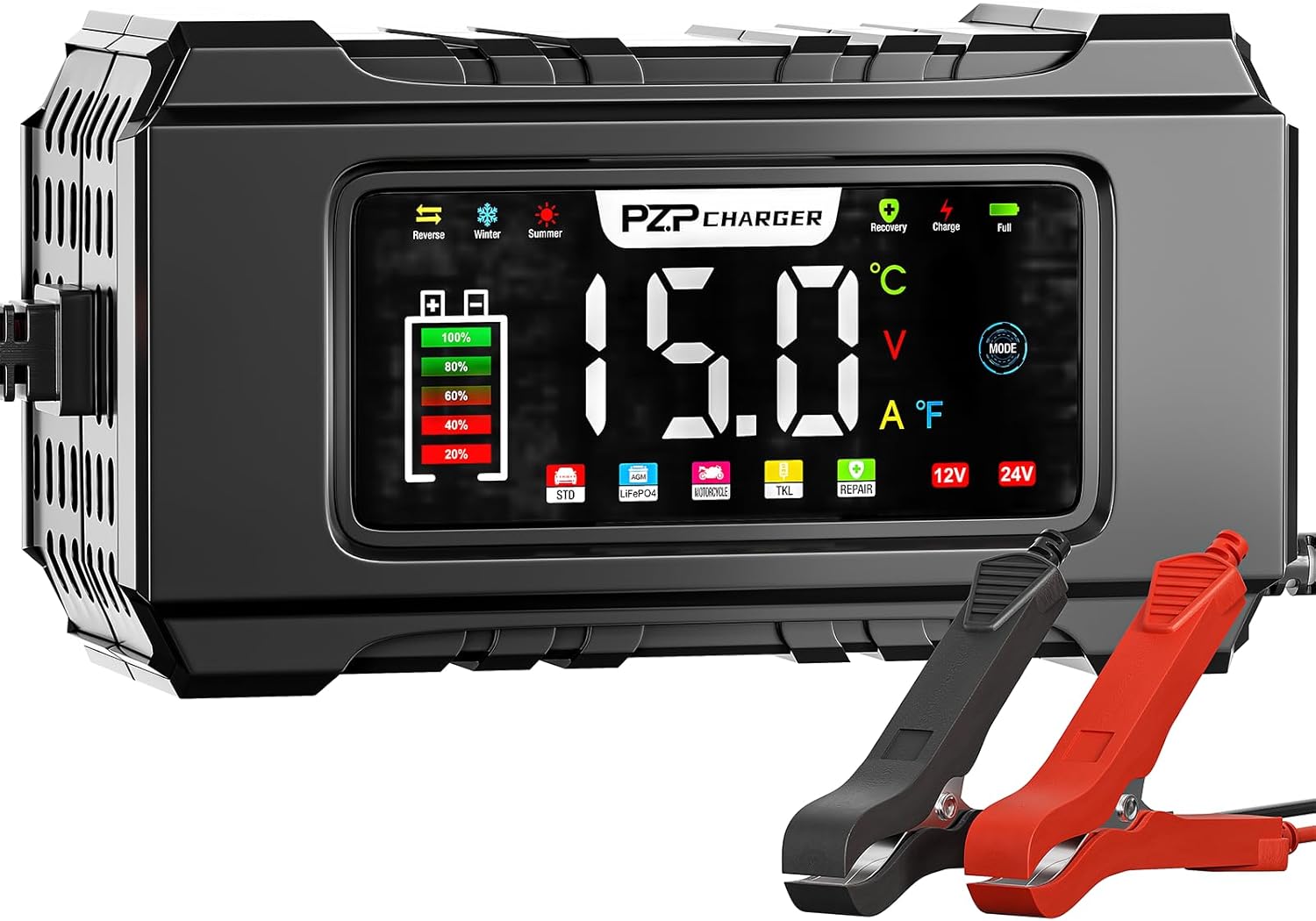
Powering Your Off-Grid Adventures: A Guide to 24V LiFePO4 Chargers
When you're running a 24V LiFePO4 battery bank in an RV, on a boat, or for a trolling motor, the charger you choose is the lifeline of your system. This 29.2V, 30A charger is designed specifically for the unique charging profile of LiFePO4 chemistry, which differs significantly from lead-acid. Understanding the nuances of voltage, amperage, and charging stages is crucial to protect your investment and ensure reliable power.
Key Considerations Before Buying
- Voltage Match: Ensure the charger's output voltage (29.2V) precisely matches your battery's nominal voltage (24V). Using a charger with the wrong voltage can lead to undercharging or overcharging, both of which degrade LiFePO4 batteries.
- Charging Stages: Look for a smart 3-stage charger (bulk, absorption, float) that is specifically programmed for LiFePO4. This ensures a full charge without overcharging, which is a common cause of premature battery failure.
- Environmental Protection: For marine and RV use, an IP67 waterproof rating is essential. This guarantees the charger can withstand splashes, rain, and even temporary submersion, adding to its lifespan and safety.
What Our Analysts Recommend
Beyond the specs, check for features like battery activation for deeply discharged batteries (a common issue with LiFePO4), over-temperature protection, and reverse polarity protection. A quality charger should also have a cooling fan or heat sink to manage heat during high-amperage charging, and clear LED indicators to show charging status.
Battery Chargers Market Context
Market Overview
The market for LiFePO4 chargers is growing rapidly alongside the adoption of lithium batteries in RVs, marine, and off-grid solar systems. Consumers are moving away from traditional lead-acid chargers, which are not compatible with the different voltage and charging algorithms of LiFePO4. This has led to a proliferation of chargers with varying quality, making it essential to choose one from a reputable brand with proven reliability.
Common Issues
A frequent problem is chargers that are not truly 'smart'—they may not properly terminate the charge, leading to overcharging and reduced battery life. Another issue is the use of substandard components that fail under stress, especially in demanding environments. Also, some chargers lack the ability to 'wake up' a battery that has gone into protection mode due to deep discharge, which is a critical feature for many users.
Quality Indicators
Look for chargers that explicitly state their compatibility with LiFePO4 and list the specific charging algorithm. A genuine IP67 rating (not just 'water resistant') is a good sign of build quality. Additionally, check for certifications like UL or CE, and read user reviews that mention long-term reliability and performance in real-world conditions.
Review Authenticity Insights
Grade B Interpretation
The Grade B rating and 12% estimated fake review percentage indicate that while the majority of reviews are authentic, a small but notable portion may be unreliable. This is typical for a product in a niche category, where some sellers may attempt to inflate their ratings. However, the high number of genuine reviews (111 total) provides a solid base of real user experiences.
Trust Recommendation
Given the 4.44/5 rating and the adjusted rating of 4.20/5, you can generally trust the positive feedback, but be cautious of overly glowing reviews with generic language. Focus on reviews that mention specific technical details, such as charging times, battery type, and installation scenarios, as these are more likely to be from actual users.
Tips for Reading Reviews
When reading reviews, look for those that discuss the charger's performance in conditions similar to yours (e.g., cold weather, high humidity, or with specific battery brands). Pay attention to any negative reviews that mention failures or issues, and see if there are consistent patterns. Also, consider the ratio of reviews to the product's popularity—a high number of reviews in a short time can be a red flag.
Expert Perspective
This 24V 30A LiFePO4 charger appears to be a solid choice for off-grid and mobile applications, offering the necessary voltage and amperage for efficient charging of 24V lithium batteries. The IP67 waterproofing and battery activation feature are significant advantages, addressing common pain points in the field. The 3-stage smart charging algorithm should help maintain battery health, though the adjusted rating suggests that some reviews may be overly positive.
Purchase Considerations
Before purchasing, verify that the charger's output current (30A) is appropriate for your battery capacity—typically, a charging current of 0.2C to 0.5C (where C is the battery's amp-hour rating) is recommended. Also, consider the physical size and mounting options to ensure it fits your installation. If you have a battery bank larger than 100Ah, you may need a higher amperage charger for faster charging.
Comparing Alternatives
While this charger seems capable, it's wise to compare it with other 24V LiFePO4 chargers from reputable brands like NOCO, Victron Energy, or Renogy, which may offer different features such as Bluetooth monitoring or higher amperage. Always check for warranty and customer support, as these can be crucial if issues arise.