Choosing a 3/8'' Synthetic Winch Rope: Strength, Safety, and Hook Integrity
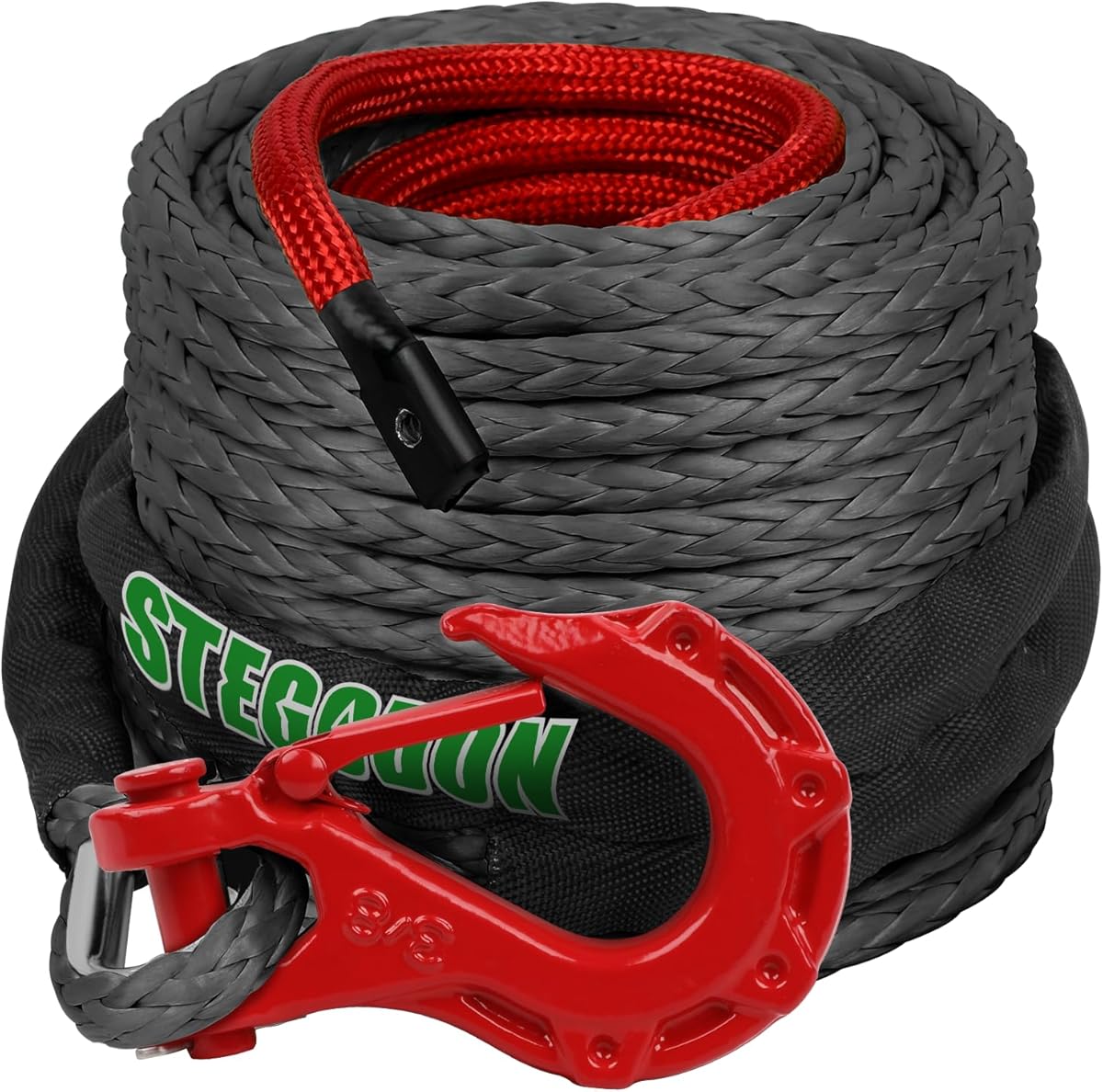
When replacing your winch cable with synthetic rope, the 3/8'' diameter and 25,000-pound rating are critical specifications that must match your winch's capacity. This particular 85-foot black rope with a forged hook represents a specific balance between weight savings and tensile strength for mid-to-heavy-duty recovery situations. Buyers should verify their winch drum's compatibility with 85 feet of 3/8'' line to ensure proper spooling.
Key Considerations Before Buying
- The 25,000-pound minimum breaking strength is a rating for the rope itself; your effective winch pull capacity will be lower and depends on the winch motor, gear ratio, and the rope's condition after abrasion.
- A forged steel hook, like the one included, is superior to cast hooks for heavy loads, but inspect the latch mechanism and swivel for smooth operation to prevent accidental release under tension.
- The 85-foot length is ideal for most vehicle recoveries, but consider if you frequently need longer reaches; splicing synthetic rope is possible but requires specific kits and knowledge.
What Our Analysts Recommend
High-quality synthetic winch lines use ultra-high-molecular-weight polyethylene (UHMWPE) fibers, often branded as Dyneema or Spectra, for minimal stretch and high abrasion resistance. Examine product descriptions for fiber type and a consistent, tight braid without fraying. The thimble—the metal sleeve where the hook attaches—should be securely seized to the rope with no visible gaps or loose strands.
Cables Market Context
Market Overview
The synthetic winch rope market has matured, moving from a niche upgrade to a mainstream replacement for steel cable due to its safety and handling benefits. Products in the 3/8'' diameter and 25,000-lb class are among the most popular for full-size trucks and SUVs, creating intense competition on price and included accessories like hooks and shackles.
Common Issues
Premature wear from improper spooling under load and UV degradation are frequent failures. Inferior products may use lower-grade HDPE fibers or inadequate coatings, reducing abrasion resistance. Another common complaint is hooks with weak latches or poor-quality zinc plating that rusts quickly.
Quality Indicators
Look for explicit mention of a 12-strand braid construction (better abrasion resistance than 8-strand) and a manufacturer's warranty. Quality ropes often have a color-fast, abrasion-resistant coating and include a protective outer sleeve (a 'hawse fairlead protector') for the section that contacts the fairlead.
Review Authenticity Insights
Grade B Interpretation
A 'Grade B' with a 10% estimated fake review rate suggests a generally trustworthy review pool with minor manipulation. The high verified purchase rate (100%) strongly supports authenticity. The adjusted rating of 4.60/5 is still excellent and likely reflects a more accurate consensus than the raw 4.89/5.
Trust Recommendation
Focus on reviews from verified purchasers that detail long-term use over multiple recoveries, not just initial impressions. Be slightly more critical of 5-star reviews that lack specific details about performance under load, abrasion, or weather exposure.
Tips for Reading Reviews
Prioritize reviews that mention the product's performance in real-world recovery scenarios—mud, sand, rocks—and its behavior when spooled under load. Look for mentions of the hook's durability and whether the rope's black coating stains or wears off on gloves.
Expert Perspective
The analysis data indicates this is a highly-regarded product within its category, with authentic user experiences driving its strong adjusted rating of 4.60. The specification—3/8'' x 85' at 25,000 lbs—hits the sweet spot for many off-road enthusiasts, offering a significant safety advantage over steel cable without a premium price. The inclusion of a forged hook is a key value-add, addressing a common point of failure in cheaper kits. The minimal fake review concern suggests the positive feedback is rooted in actual performance.
Purchase Considerations
Weigh this rope's length and strength against your typical winching needs; 85 feet is standard but may be short for deep bog or complex pulls. Consider if your fairlead is compatible with synthetic rope (a hawse fairlead is required; roller fairleads can damage it). The primary trade-off is the higher cost per foot compared to steel, offset by vastly improved safety and ease of handling.
Comparing Alternatives
Shoppers should compare the fiber material, included hardware quality, and warranty details with competitors offering similar 3/8'' 25,000-lb specifications.