
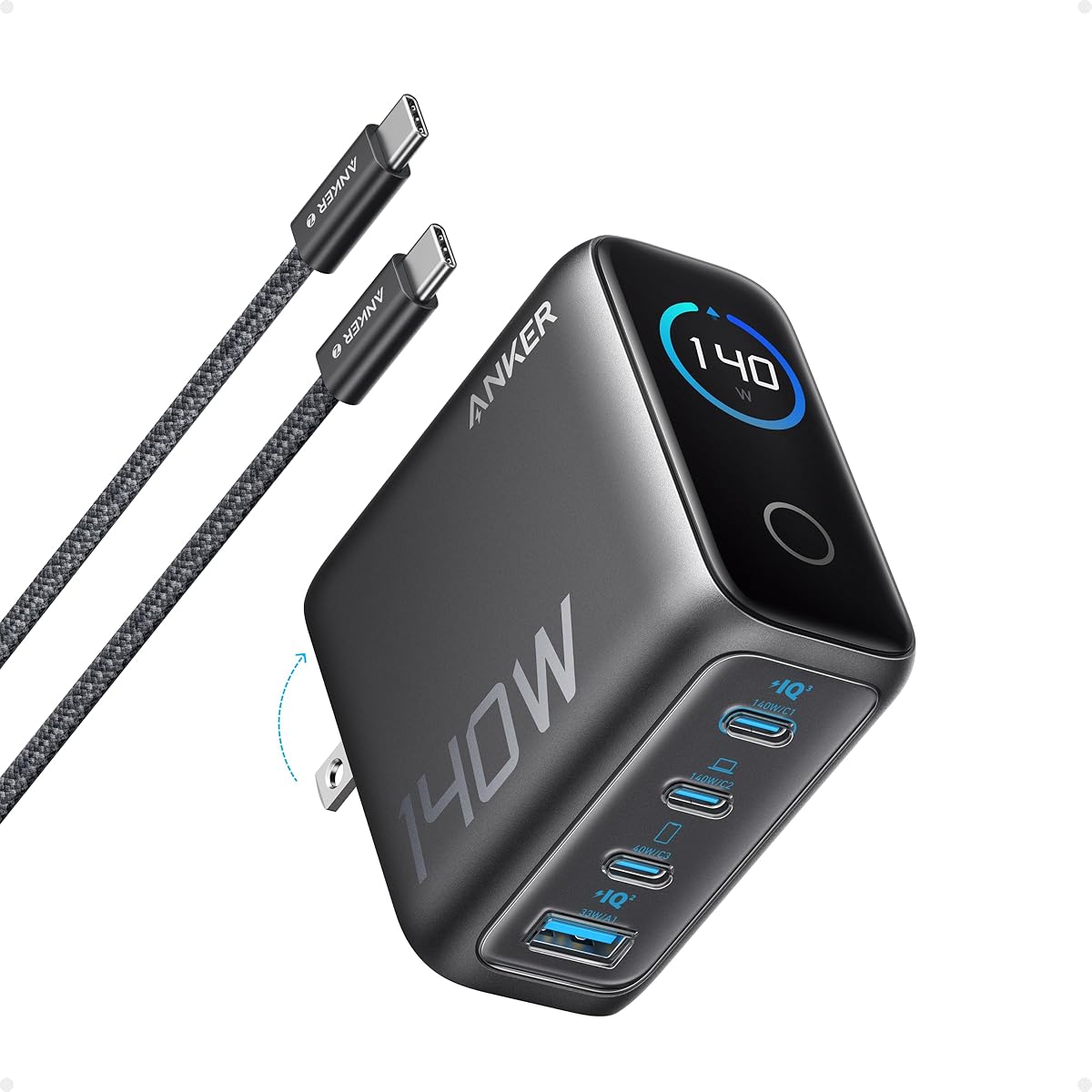
Evaluating Anker's 140W GaN Charger: Touch Controls and Multi-Device Power
The Anker 140W MAX USB-C charger represents a premium category of multi-port GaN chargers designed for power users with multiple devices. This specific model combines high-wattage laptop charging with intuitive touch controls, targeting professionals who need to charge a MacBook alongside smartphones and tablets simultaneously.
Key Considerations Before Buying
- Verify the 140W power distribution logic—some chargers only deliver maximum wattage to a single port, while others split power dynamically across multiple devices.
- Assess the touch control interface for practicality versus accidental activation, especially when plugging and unplugging cables in tight spaces.
- Confirm compatibility with your specific laptop model's power requirements, as some high-performance laptops need sustained high wattage that multi-port chargers may not maintain during simultaneous charging.
What Our Analysts Recommend
Quality indicators include GaN (Gallium Nitride) technology for compact size and heat management, clear labeling of each port's maximum output, and robust build quality around the USB-C connectors. Premium chargers should specify power distribution scenarios in their documentation, showing exactly how 140W gets allocated when multiple ports are active.
Chargers & Adapters Market Context
Market Overview
The multi-port GaN charger market has evolved rapidly, with 140W models now competing against traditional single-port laptop chargers by offering complete workstation power solutions. Anker positions this model in the premium segment against brands like UGREEN and Satechi, emphasizing both raw power and user interface innovation through touch controls.
Common Issues
Users frequently encounter thermal throttling in compact high-wattage chargers, inconsistent power delivery to connected devices, and compatibility issues with proprietary fast-charging protocols like Samsung Super Fast Charging or Google Pixel charging. Touch interfaces can also suffer from reliability problems over time compared to physical buttons.
Quality Indicators
Look for certifications like UL, CE, or FCC marks indicating safety testing, clear thermal management design with ventilation, and manufacturer transparency about long-term reliability. Premium chargers typically use higher-grade capacitors and have over-temperature, over-voltage, and short-circuit protection clearly documented.
Review Authenticity Insights
Grade B Interpretation
The 'Grade U' with 0.00% estimated fake reviews indicates this product lacks established review history, making authenticity assessment impossible rather than suspicious. For newly launched electronics like this Anker charger, this grade reflects market novelty rather than quality concerns.
Trust Recommendation
Since no verified purchase reviews exist yet, prioritize Anker's brand reputation for charger reliability and examine their warranty terms for this specific model. Consider waiting for initial user feedback focusing on real-world thermal performance and touch control reliability before purchasing.
Tips for Reading Reviews
When reviews appear, prioritize those mentioning specific device combinations (e.g., 'MacBook Pro M3 + iPhone 16 Pro + Galaxy S24'), detailed thermal observations during extended use, and touch control responsiveness over time. Be skeptical of reviews that don't mention actual charging speeds or device compatibility specifics.
Expert Perspective
This Anker 140W charger enters a competitive space with two distinguishing features: touch controls and 4-port configuration at this wattage class. The complete absence of reviews creates uncertainty about real-world performance, particularly regarding whether it can sustain 140W output to a single device while remaining cool and stable. Anker's established GaN expertise suggests competent engineering, but the touch interface represents an unproven variable in daily use.
Purchase Considerations
Early adopters should weigh Anker's generally strong charger reputation against the lack of user feedback, particularly regarding long-term touch control reliability. Consider whether the touch interface provides meaningful advantage over physical controls or if it introduces potential failure points. Verify return policies in case the charger doesn't meet your specific device combination needs.
Comparing Alternatives
Shoppers should compare this model against similar 140W multi-port chargers from UGREEN, Satechi, and Anker's own non-touch models to assess value propositions.


