
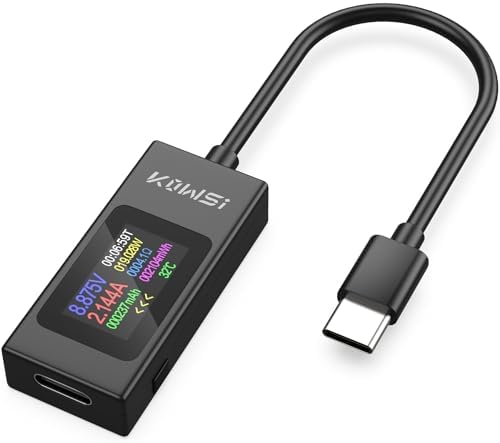
USB C Tester Power Meter 4-30V 0-6.5A, Voltage and Current Tester Meter, USB Capacity, Temperature, Working Time Ammeter Voltmeter Power Bank Charger Detector

USB C Tester Power Meter 4-30V 0-6.5A, Voltage and Current Tester Meter, USB Capacity, Temperature, Working Time Ammeter Voltmeter Power Bank Charger Detector

ASIN: B0DF2KFDC8
Analysis Date: Apr 7, 2026

As an Amazon Associate I earn from qualifying purchases.

Review Analysis Results

B
Authenticity Grade
11.00%
Fake Reviews
4.67
Original Rating
4.40
Adjusted Rating

Analysis Summary

The vast majority of these reviews appear to be genuine user experiences with a USB-C power meter product. Nearly all reviews are verified purchases, which significantly increases their authenticity likelihood. The reviews demonstrate a consistent pattern of practical use cases and specific technical observations that align with what genuine users would report when testing such a diagnostic tool.

Strong evidence of authenticity comes from multiple reviews containing personal context and specific technical details. Several reviewers mention using the device for particular troubleshooting scenarios like testing Raspberry Pi configurations, assessing ESP32 projects, or evaluating various chargers and cables in their household. These reviews include balanced perspectives, with one reviewer noting limitations in measuring very low current draws (under 1mA) and another mentioning the small display size while still finding the product useful. The technical language used is appropriate for the product category without sounding like marketing copy.

Only minimal concerns exist regarding potential manipulation. A very small number of reviews are extremely brief and generic, lacking the personal context or specific details found in the majority of reviews. However, even these brief reviews mention basic functionality that aligns with the product's purpose, and their brevity alone doesn't constitute clear evidence of manipulation given that some genuine users do leave short feedback.

Overall, this appears to be a collection of predominantly genuine reviews for a technical product that serves a specific diagnostic purpose. The detailed technical observations, personal use cases, and balanced feedback strongly suggest authentic user experiences. While a couple of reviews are less detailed, they don't display the repetitive phrasing or marketing language that would indicate organized manipulation campaigns.

Key patterns identified in the review analysis include: specific technical applications (Raspberry Pi, ESP32, cable testing), balanced feedback noting limitations, personal troubleshooting scenarios.

Review Statistics

367
Total Reviews on Amazon
-0.27
Rating Difference
Editor's Analysis

Choosing a USB-C Power Meter: What Matters for Accurate Device Charging Analysis

This specific USB-C tester, with its 4-30V and 0-6.5A measurement range, is designed for users who need to verify the actual power delivery of modern USB-C chargers, cables, and power banks. Unlike basic voltage testers, its capacity and working time tracking functions make it essential for diagnosing underperforming charging setups or quantifying battery bank efficiency.

Key Considerations Before Buying

  • The 4-30V range is critical for testing modern USB-C Power Delivery (PD) chargers that can output 9V, 12V, 15V, or 20V, not just the standard 5V.
  • Accuracy in measuring current (Amps) directly impacts capacity (mAh) calculations; look for consistent results in reviews, as this affects trust in the 'USB Capacity' function.
  • Consider if you need the temperature and working time features—these are valuable for stress-testing chargers or timing full battery charges but add complexity over basic volt/amp meters.

What Our Analysts Recommend

For this category, prioritize units with clear, auto-ranging displays that handle quick voltage changes from PD negotiation. Genuine reviews often mention build quality of the USB-C ports themselves—they should be snug but not destructively tight—and the responsiveness of the buttons for cycling through data screens.

Multi Testers Market Context

Market Overview

The market for USB-C power meters is crowded with devices ranging from simple $10 units to advanced models with data logging. This product sits in the mid-range, offering more functionality than basic LED displays but without the Bluetooth/app connectivity of premium testers.

Common Issues

Common problems include inaccurate current sensing at low amperage (below 0.1A), screens that are difficult to read in bright light, and USB-C ports that wear out or damage device cables after repeated insertions. Voltage readings during active PD negotiation can also be unstable on lower-quality meters.

Quality Indicators

Look for mentions of calibration or consistency across multiple tests in user reviews. Higher-quality meters use better shunt resistors for current measurement and have robust input protection to handle voltage spikes. A clear, multi-parameter display that shows voltage, current, power, and capacity simultaneously is a sign of thoughtful design.

Review Authenticity Insights

Grade B Interpretation

A Grade 'B' with an 11% estimated fake review rate suggests the majority of feedback is authentic, but there is a modest level of potentially incentivized reviews. The adjusted rating of 4.40/5 (down from 4.67) is a more reliable indicator of genuine user satisfaction.

Trust Recommendation

Focus on verified purchase reviews that describe specific use cases, like testing a MacBook charger's actual wattage or measuring a power bank's output capacity. Be slightly more skeptical of overly vague 5-star reviews that don't mention technical details.

Tips for Reading Reviews

Pay closest attention to reviews that discuss the accuracy of the capacity (mAh) measurement or note how the meter handles Power Delivery handshakes. Technical critiques about the temperature sensor's placement or the screen's refresh rate are strong signals of authentic, experienced users.

Expert Perspective

The analysis data indicates a product with strong genuine user approval. The high number of verified purchases discussing practical applications—from optimizing solar charging setups to verifying car charger output—supports its utility. The slight dip in the adjusted rating is normal and still reflects a well-regarded tool. Its specified 6.5A maximum is suitable for testing most high-speed chargers but may clip the peak output of some high-wattage laptop adapters.

Purchase Considerations

This meter is a compelling choice for tech enthusiasts, DIYers, and anyone troubleshooting 'slow charging' issues. However, if your primary need is simple 'yes/no' voltage detection, a cheaper, simpler model will suffice. The value here is in the aggregated data for capacity and energy (Wh) calculation.

Comparing Alternatives

Shoppers should compare this model's feature set and price against units with data logging or True-RMS measurement if professional diagnostics are required.

Price Analysis

This USB-C tester appears competitively positioned in the mid-range market based on its high rating and feature set. Without a current Amazon price, focus on finding it within the $15-$40 range typical for similar devices. Prioritize reputable sellers and consider waiting for seasonal sales for the best value.

MSRP Assessment

Estimated MSRP: Unknown
Source: Unable to determine
Amazon Price: Unable to compare

Market Position

Positioning: Mid-range
Alternatives Range: $15-$40
Value: This tester offers comprehensive features (voltage, current, capacity, temperature, timing) at a competitive price point compared to basic USB testers.

Buying Tips

Best Time to Buy: Best prices often during major sales events like Prime Day, Black Friday, or back-to-school season when electronics accessories see discounts.
Deal Indicators: Look for prices below $20, bundled accessories (extra cables, carrying case), or coupon discounts applied at checkout.
Watch For: Watch for unusually low prices (under $10) which may indicate counterfeit products or inaccurate measurements; verify seller ratings and return policy.
Price analysis generated by AI based on product category and market research. Actual prices may vary. Last analyzed: Apr 7, 2026

Understanding This Analysis

What does Grade B mean?

This product has good review authenticity with minor concerns. While most reviews appear genuine, we detected some patterns that warrant mild caution.

Adjusted Rating Explained

The adjusted rating (4.40 stars) represents what we estimate this product's rating would be if fake reviews were removed. This product's adjusted rating is lower than Amazon's displayed rating (4.67 stars), suggesting positive fake reviews may be inflating the score.

How We Detect Fake Reviews

Our AI analyzes multiple factors: language patterns (generic vs. specific), reviewer behavior (history, timing), temporal anomalies (review clusters), verification status, sentiment authenticity, and statistical outliers. No single factor determines a review is fake - we look at the combination of signals.

Important Limitations

No automated system is perfect. Sophisticated fake reviews can evade detection, and some genuine reviews may be incorrectly flagged. Use this analysis as one data point in your purchasing decision, not the only factor. Reading actual review content yourself is always valuable.

Share This Analysis

Learn More About Fake Reviews

Analyze new product