
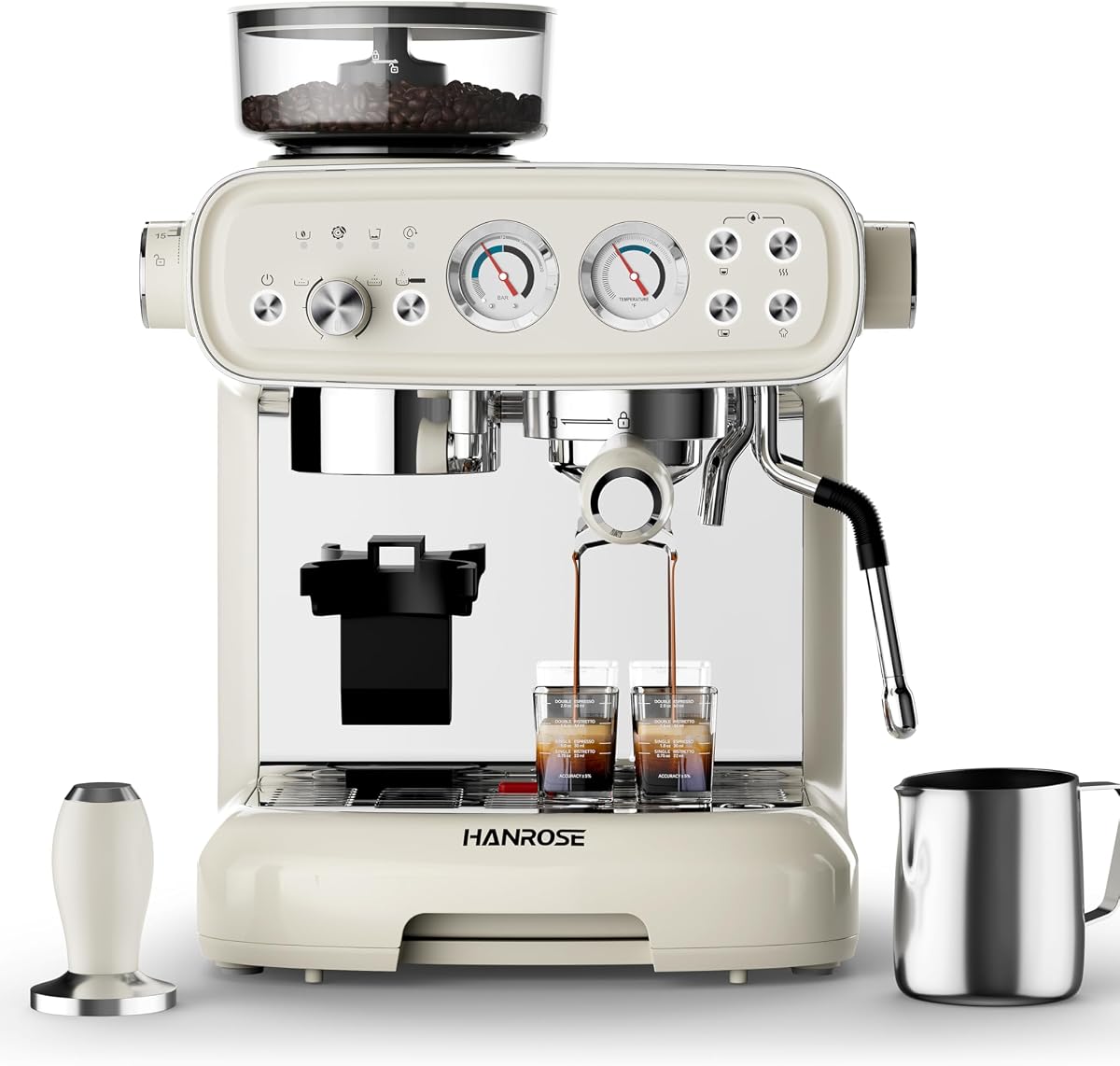
How to Choose a Semi-Automatic Espresso Machine with Grinder and Frother
This all-in-one espresso machine combines a 20-bar ULKA pump, built-in grinder, and milk frother, promising café-quality drinks at home. But before you buy, understand how these features work together and what to expect from a semi-automatic setup.
Key Considerations Before Buying
- The 20-bar ULKA pump provides ample pressure for rich crema, but the quality of your espresso also depends on consistent grind size and tamping technique. Look for machines with adjustable grind settings to match your beans.
- A built-in grinder saves counter space and ensures freshness, but check if the grind consistency is uniform. Conical burr grinders are preferred over blade grinders for espresso, as they produce more even particles.
- The milk frother can be a steam wand or automatic frother; steam wands offer more control for microfoam, while automatic frothers are easier for beginners. Consider which style suits your skill level and desired drinks.
What Our Analysts Recommend
Prioritize machines with a sturdy build, stainless steel components, and a portafilter that feels substantial. Look for clear pressure gauges, easy-to-clean drip trays, and a removable water tank. Also, check if the grinder is bypassable, allowing you to use pre-ground coffee if needed.
Semi-Automatic Espresso Machines Market Context
Market Overview
The semi-automatic espresso machine market has grown as home baristas seek café-quality drinks without the cost of a commercial machine. Brands now offer integrated grinders and frothers to streamline the process, but quality varies widely. ULKA pumps are a common standard, known for reliability and consistent pressure.
Common Issues
Common complaints include inconsistent grind size leading to poor extraction, milk frothers that produce large bubbles instead of microfoam, and machines that are difficult to clean. Some users also report that the 20-bar pressure is overkill for most home use, as 9 bars is often optimal for espresso.
Quality Indicators
High-quality machines feature brass or stainless steel internal components, a heavy portafilter, and a grinder with conical burrs. Look for brands with good customer support and available replacement parts. Reviews that mention longevity and ease of maintenance are positive signs.
Review Authenticity Insights
Grade B Interpretation
The B grade and 15% estimated fake reviews indicate a moderate level of authenticity concern. While most reviews are genuine, a notable minority may be manipulated, so it's wise to read critically and look for detailed, balanced feedback.
Trust Recommendation
Focus on reviews that describe specific experiences, mention pros and cons, and include photos or videos. Be cautious of reviews that are overly glowing or vague. Cross-reference with other sources like coffee forums or expert reviews.
Tips for Reading Reviews
For espresso machines, pay attention to comments about grind consistency, frothing performance, and durability. Reviews that mention long-term use (6+ months) are more reliable. Ignore reviews that only praise the product without context.
Expert Perspective
This machine offers a convenient all-in-one solution with a reliable ULKA pump and integrated grinder, appealing to beginners and intermediate users. However, the 4.10 adjusted rating suggests some quality control or performance issues. The 20-bar pressure is higher than necessary for espresso, which may require careful technique to avoid over-extraction.
Purchase Considerations
Weigh the convenience of an all-in-one machine against the potential for mediocre grinding and frothing. If you're serious about espresso, a separate grinder and machine might yield better results. Consider your budget, available counter space, and willingness to learn proper technique.
Comparing Alternatives
Before purchasing, compare with similar semi-automatic machines from brands like Breville, Gaggia, or De'Longhi, which may offer better build quality or more precise controls.


