
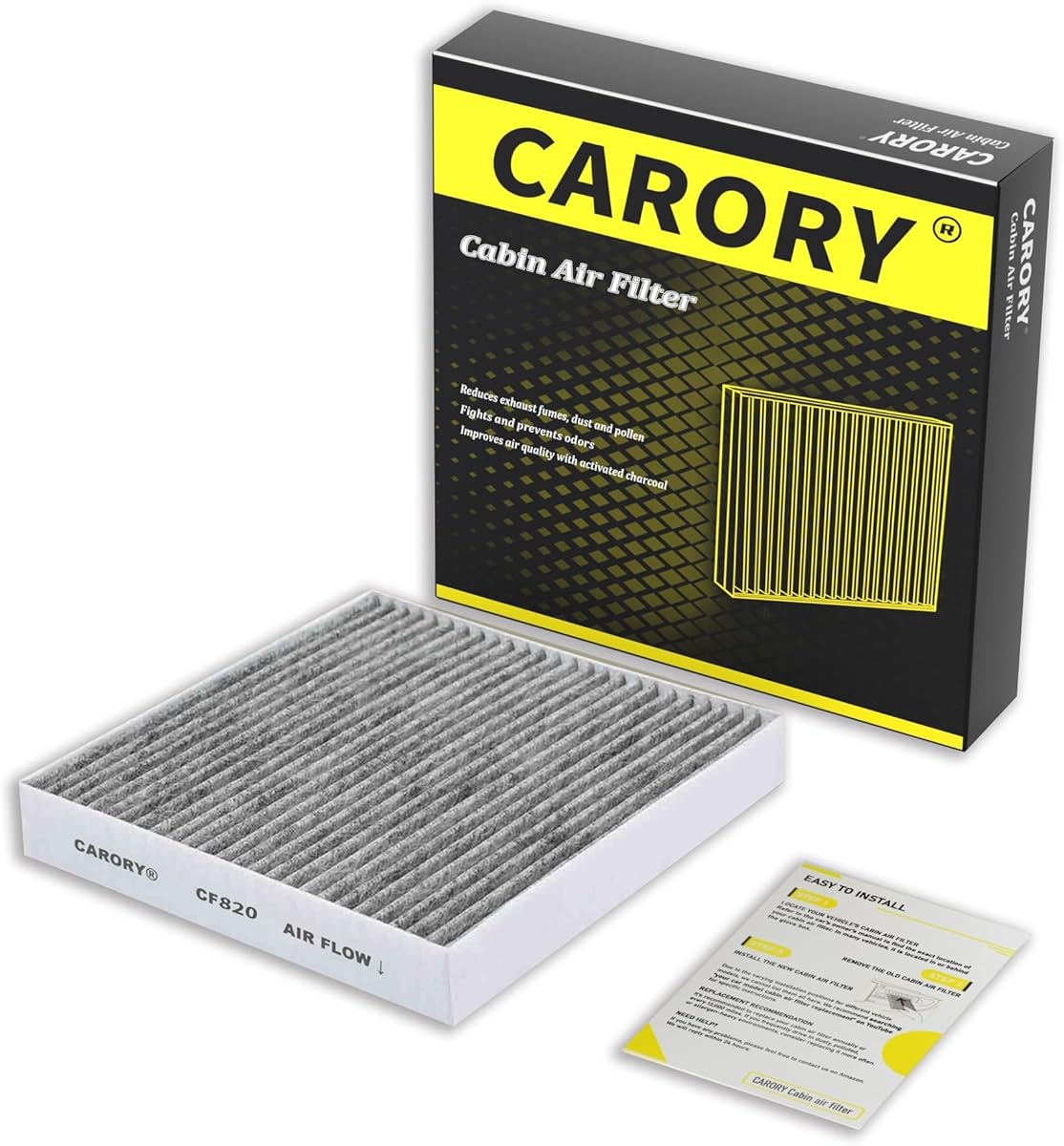
Breathe Cleaner: The Best Activated Carbon Cabin Air Filters for Hyundai, Kia, and Genesis
When you're shopping for a cabin air filter for your Hyundai, Kia, or Genesis, you're not just buying a piece of pleated paper—you're investing in the air quality inside your vehicle. This filter, with its activated carbon layer, is specifically designed to trap odors, exhaust fumes, and particulate matter, making it essential for urban commuters and anyone sensitive to smells. The CF820 cross-reference fits a wide range of popular models, from the Tucson to the EV9, so it's crucial to verify your vehicle's exact year and trim before purchasing.
Key Considerations Before Buying
- Ensure the filter's dimensions and fitment match your specific vehicle model and year. This filter is listed for many models, but cross-reference the CF820 number with your owner's manual or existing filter to guarantee a perfect seal—a poor fit can let unfiltered air bypass the filter.
- Activated carbon is the key differentiator here. Unlike standard particulate filters, the carbon layer absorbs odors and harmful gases like nitrogen oxides and volatile organic compounds. If you regularly drive in heavy traffic or notice musty smells, this feature is worth the extra cost.
- Consider the replacement interval. Cabin air filters typically need changing every 12,000 to 15,000 miles or annually. If you drive in dusty or polluted conditions, you may need to replace it more often. Check the filter condition visually—if it's visibly dirty or smells, it's time for a swap.
What Our Analysts Recommend
High-quality cabin air filters should have a sturdy frame that won't warp during installation, and the media should be evenly pleated to maximize surface area. For activated carbon filters, the carbon layer should be well-integrated, not just a loose coating that will shed. Look for filters with a tight seal or foam edges to prevent air bypass, and check for OEM or aftermarket certifications that ensure compatibility.
Passenger Compartment Air Filters Market Context
Market Overview
The passenger compartment air filter market has grown significantly as consumers become more health-conscious and aware of in-car air quality. Many OEM filters are basic particulate filters, so aftermarket options with activated carbon offer an upgrade that is both affordable and easy to install. The rise of EVs like the Ioniq 5 and EV6 has also led to more filters designed for these platforms, though they often share the same cabin filter as their combustion counterparts.
Common Issues
A frequent issue with cabin air filters is improper installation, leading to whistling noises, reduced airflow, or even water leaks in some models. Another problem is that some low-cost filters use thin media that collapses or tears easily, reducing filtration efficiency. Additionally, some buyers overlook the need for activated carbon if they have allergies or are sensitive to odors, only to realize later that a standard filter doesn't address these concerns.
Quality Indicators
Quality indicators include a dense, consistent pleat structure, a robust frame that holds its shape, and the presence of a carbon layer that is visibly dark and evenly distributed. Reviews that mention easy installation and a precise fit are strong signals of quality. Also, look for filters that come with a protective bag or packaging that prevents damage during shipping, as crushed filters can lose their effectiveness.
Review Authenticity Insights
Grade A Interpretation
With a Grade A authenticity rating and an estimated fake review percentage of just 5.00%, you can be confident that the vast majority of the 7,784 reviews are genuine. This means the 4.89-star rating is a reliable reflection of real-world performance, not inflated by paid or bot-generated reviews. The adjusted rating of 4.80 still indicates excellent satisfaction, even after accounting for potential anomalies.
Trust Recommendation
Given the high authenticity grade, you can trust the positive feedback from buyers. However, it's wise to read a few of the critical reviews—they often mention fitment issues for specific models or installation challenges that might apply to your vehicle. Since the fake review percentage is low, you can rely on the overall rating to make your decision, but always cross-check the fitment for your exact car.
Tips for Reading Reviews
When reading reviews, focus on those that mention your specific vehicle model and year. Look for comments about installation ease, smell reduction, and how the filter compares to the OEM part. Also, pay attention to any reviews with photos—they can show the filter's quality and fit. Be wary of overly vague reviews that lack specifics, as these are more likely to be fake.
Expert Perspective
This cabin air filter with activated carbon represents an excellent value for Hyundai, Kia, and Genesis owners seeking improved in-cabin air quality. The high adjusted rating of 4.80, combined with a low fake review percentage, indicates a product that consistently meets expectations. Its compatibility across a wide range of models, from the compact Elantra to the large EV9, makes it a versatile choice, and the inclusion of activated carbon is a significant upgrade over standard filters for odor and gas filtration.
Purchase Considerations
Before buying, double-check your vehicle's year and model to confirm the CF820 part number matches. If you have a newer EV like the Ioniq 6, verify that the filter size hasn't changed from the combustion models. Also, consider that while this filter may cost more than a basic one, the added carbon layer provides tangible benefits for allergy sufferers and those who drive in polluted areas.
Comparing Alternatives
While this filter is a strong contender, you may also want to compare it with other aftermarket brands that offer similar carbon-impregnated filters. Some may have slightly different features like anti-microbial coatings or enhanced static filtration, so it's worth exploring a few options to find the best fit for your needs.

![[2-Pack] EPAuto CP182 (CF11182) Cabin Air Filter Replacement for Honda Accord, Civic, CR-V, Fit, HR-V, Insight, Odyssey, Pilot, CR-Z, Clarity;Acura Integra,MDX,RDX,TLX - Fits Select Models 2009-2025](https://m.media-amazon.com/images/I/91tgohNmNiL._AC_SY300_SX300_QL70_FMwebp_.jpg)

