
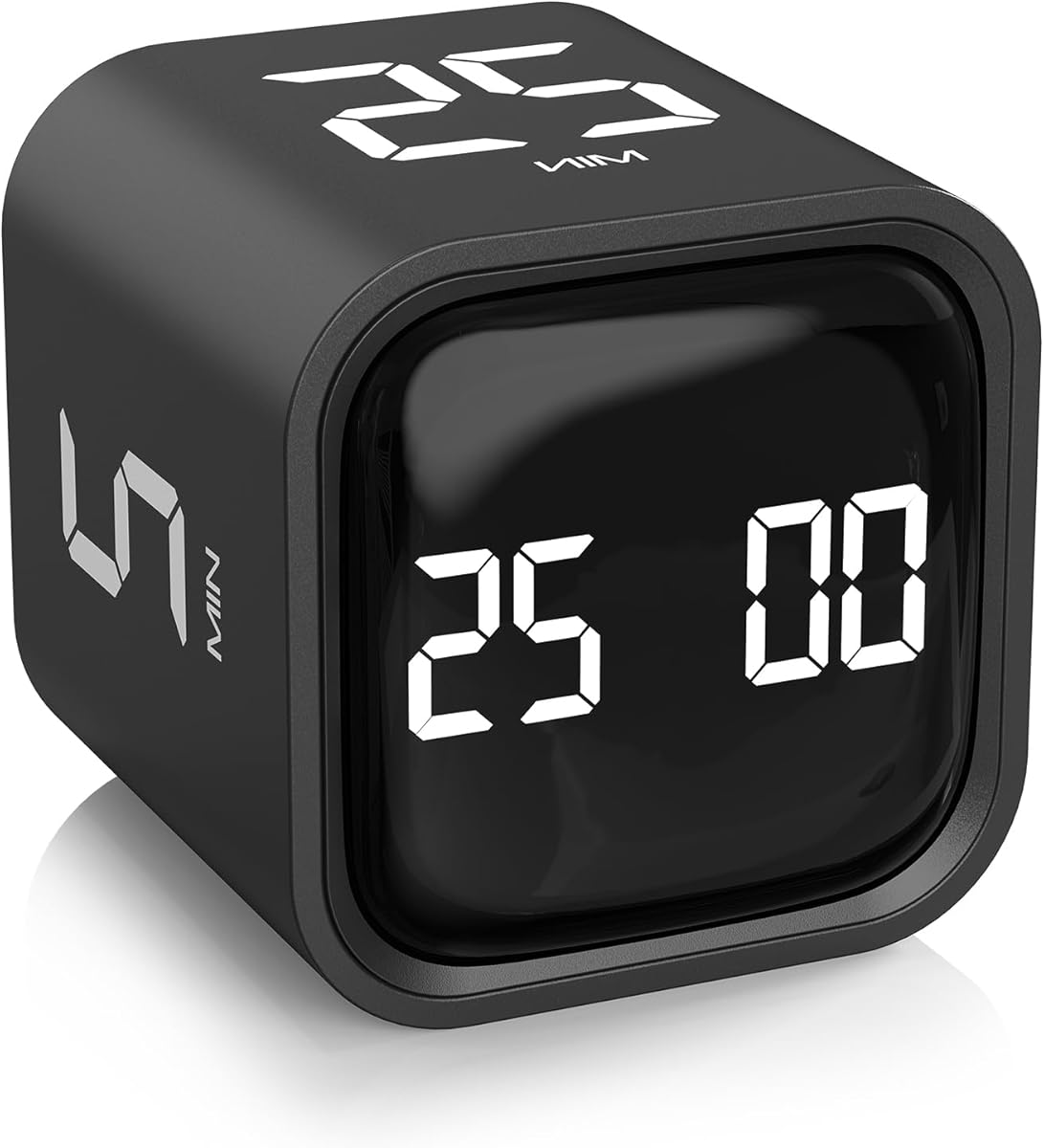
Choosing a Pomodoro Timer: Key Features Beyond Basic Time Tracking
When selecting a dedicated Pomodoro timer like this rotating cube model, buyers should prioritize preset configurations that match their workflow. This specific product offers 5, 25, 10, and 50-minute presets—ideal for traditional Pomodoro technique but potentially limiting for customized intervals. The vibration and volume modes represent critical considerations for different environments.
Key Considerations Before Buying
- Preset intervals should align with your specific productivity method—this timer's 25/5 work/break cycle suits standard Pomodoro but lacks 15 or 20-minute options common in modified techniques.
- Alert customization is essential: this model's vibration-only mode makes it viable for offices, while the high/low volume options accommodate different noise sensitivities.
- Physical design impacts usability—the flip-to-rotate mechanism and cube format offer tactile engagement but require desk space and may be less portable than flat timers.
What Our Analysts Recommend
Quality indicators include clear visual feedback during countdown (often lacking in minimalist designs) and durable construction for frequent flipping. The magnetic base mentioned in reviews prevents sliding during use, while battery life should exceed several months with regular vibration alerts.
Timers Market Context
Market Overview
The kitchen timer category has expanded significantly into productivity tools, with Pomodoro-specific devices commanding premium pricing over basic digital timers. Current offerings range from simple mechanical devices to smart-connected models, creating distinct price and functionality tiers.
Common Issues
Many timer products suffer from unclear mode indicators, confusing button interfaces, or alerts that are either too subtle or disruptive. Battery compartments that require tools for access remain a frequent complaint, as do presets that can't be overridden for custom timing needs.
Quality Indicators
Superior timers feature intuitive mode switching without consulting manuals, distinct tactile feedback between settings, and alert systems that balance audibility with discretion. Construction materials should withstand repeated flipping without developing play or wobble in the mechanism.
Review Authenticity Insights
Grade B Interpretation
A Grade B authenticity rating with 11% estimated fake reviews indicates generally trustworthy feedback, though shoppers should remain cautious of overly enthusiastic reviews lacking specific usage details. The adjusted 4.60 rating (from 4.89) suggests genuine satisfaction remains high after accounting for suspicious content.
Trust Recommendation
Focus on reviews discussing specific applications like ADHD management, study sessions, or kitchen use—these detailed accounts demonstrate authentic experience. Be skeptical of reviews that only praise packaging or generic 'great product' statements without context.
Tips for Reading Reviews
Look for mentions of the vibration intensity, magnet strength, and battery replacement process—these operational details rarely appear in fabricated reviews. Reviews comparing this cube timer to phone apps or other physical timers typically offer more balanced perspectives.
Expert Perspective
This rotating cube timer occupies a niche between basic kitchen timers and sophisticated productivity devices, with its 4.60 adjusted rating reflecting strong user satisfaction. The physical flipping action provides tangible time management that digital solutions lack, particularly beneficial for ADHD focus techniques. However, the fixed presets may frustrate users needing flexible intervals beyond the 5/25/10/50-minute options. The inclusion of vibration alerts makes it unusually versatile for shared spaces compared to most audible-only timers.
Purchase Considerations
Consider whether the cube format's desk presence justifies its functionality over smartphone apps, and evaluate if the preset intervals match your typical work blocks. The premium over basic timers is justified primarily by the tactile interaction and discreet alert options, which research suggests can improve time management adherence.
Comparing Alternatives
Shoppers should compare with interval timers offering customizable presets and timers with visual progress indicators, as these features may better suit variable workflows.


