
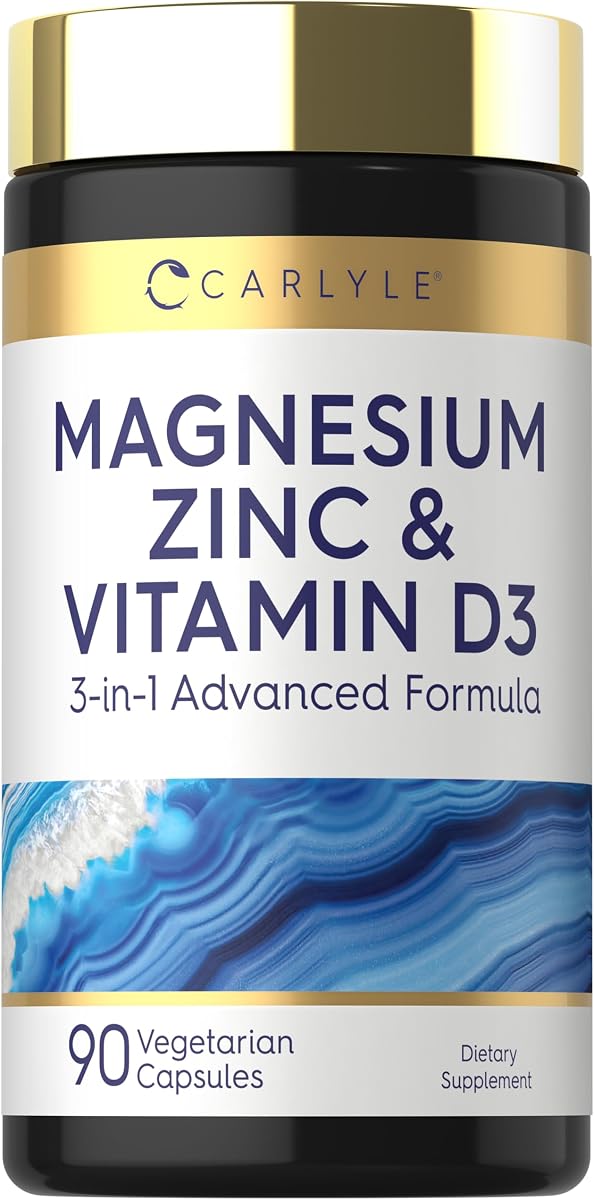
Maximize Your Mineral Intake: Carlyle's Magnesium, Zinc & D3 Combo
When considering a magnesium supplement, the Carlyle Magnesium Zinc and Vitamin D3 blend stands out by pairing three essential nutrients that often work synergistically in the body. This triple-action formula targets muscle function, immune support, and bone health, making it a convenient choice for those looking to address multiple deficiencies at once. However, not all magnesium supplements are created equal, and understanding the specific form of magnesium and the quality of the other ingredients is crucial.
Key Considerations Before Buying
- Check the specific form of magnesium used (e.g., oxide, citrate, glycinate). Magnesium oxide, often used in budget-friendly blends, has lower bioavailability compared to citrate or glycinate, which may be a factor if you're taking it for muscle cramps or sleep.
- Consider the dosage of each nutrient. Carlyle provides 250mg of magnesium, 15mg of zinc, and 1000 IU of Vitamin D3 per serving, which is a moderate dose. Ensure this aligns with your dietary intake and any other supplements you take to avoid exceeding safe upper limits.
- Look at the capsule size and count. With 90 capsules, this is a 45-day supply at two capsules per day. Some users may find taking two larger capsules inconvenient, so compare with single-capsule options if ease of use is a priority.
What Our Analysts Recommend
In this category, seek products that list the elemental amount of each mineral (which Carlyle does) and that are third-party tested for purity and potency. Look for clear labeling of the magnesium compound, and verify that the product is free from artificial colors, preservatives, and common allergens. A reputable brand like Carlyle typically provides a certificate of analysis or at least a clear manufacturing date, indicating quality control.
Magnesium Market Context
Market Overview
The mineral supplement market is saturated with countless magnesium products, often differentiated by the type of magnesium, delivery format, and combination with other vitamins. The trend is toward synergistic formulas that combine magnesium with Vitamin D and zinc to enhance absorption and overall health benefits. Consumers are increasingly savvy, looking for value and transparency in a crowded field.
Common Issues
A frequent problem in this category is the use of cheap, poorly absorbed magnesium forms like oxide, which can lead to gastrointestinal discomfort without delivering the intended benefits. Another issue is misleading labels that don't clearly state the elemental amount of minerals, leaving consumers confused about actual dosages. Additionally, some products make exaggerated claims about energy or mood support without robust scientific backing.
Quality Indicators
Quality indicators include third-party certifications like NSF or USP, which verify that the product contains what the label claims. Also, look for brands that openly state their manufacturing practices (cGMP compliance) and provide a clear breakdown of the nutrient amounts. High customer ratings, especially from verified purchases, and a low incidence of complaints about side effects are also positive signs.
Review Authenticity Insights
Grade B Interpretation
The 'B' grade and estimated 10% fake review rate indicate that the review pool is largely authentic but has a notable minority of potentially unreliable reviews. This suggests that while you can trust most of the 454 ratings, a small fraction may be incentivized or non-verified. The adjusted rating of 4.60/5, down from the reported 4.89, reflects a more conservative estimate of true customer satisfaction.
Trust Recommendation
Given the 10% estimated fake review rate, it's wise to focus on the substantive, verified purchase reviews that describe specific outcomes—like relief from leg cramps or improved sleep—rather than generic praise. Pay attention to any negative reviews that mention side effects or lack of effect, as they can provide a balanced view. Because the overall authenticity is good, you can proceed with confidence, but remain alert to patterns in reviews that seem overly promotional.
Tips for Reading Reviews
When reading reviews for this supplement, prioritize those that mention how long they used the product and what specific changes they noticed. Look for reviews that discuss the physical sensation of taking the capsules (e.g., any stomach upset) and whether they noticed benefits for sleep, muscle recovery, or energy. Be cautious of reviews that are vague or use similar language, as these might be part of the estimated 10% inauthentic ones.
Expert Perspective
Carlyle Magnesium Zinc and Vitamin D3 appears to be a well-received, budget-friendly supplement that effectively combines three key nutrients in moderate doses. The high adjusted rating of 4.60, despite a 10% fake review deduction, indicates genuine consumer satisfaction, particularly for issues like leg cramps and improved sleep. However, the use of magnesium oxide (if that is the form) may be a downside for those seeking maximum absorption, though it is common in multi-nutrient blends.
Purchase Considerations
Before purchasing, consider whether the 2-capsule-per-day serving fits your routine and whether the nutrient dosages are appropriate for your health needs. If you have a known magnesium deficiency or are using it for severe cramps, you might need a higher dose or a more bioavailable form. Also, factor in the cost per serving compared to buying separate supplements, as the convenience of a combo may not always be the best value.
Comparing Alternatives
Shoppers should compare this product with other magnesium-zinc-D3 combos that might use magnesium citrate or glycinate, which are often better absorbed. Also, consider single-ingredient magnesium supplements if you already get enough zinc and D3 from your diet or other supplements.


