
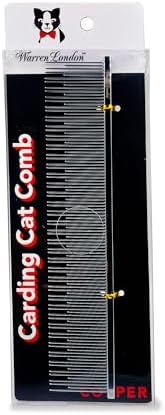
Mastering Cat Grooming: The Warren London Carding Comb Unraveled
When tackling mats and tangles in your cat's coat, a standard brush often falls short, especially for sensitive feline skin. The Warren London Carding Cat Comb, with its 7.5-inch copper construction and dual-tooth design, targets both short and long hair, offering a specialized tool for dematting without the irritation of sharp-tipped alternatives. Understanding how a carding comb differs from a slicker or flea comb is key to using it effectively and safely.
Key Considerations Before Buying
- Coat type and sensitivity: This comb's rounded tips are designed to prevent skin irritation, making it suitable for cats with delicate skin, but you must still use gentle, short strokes to avoid pulling. Its dual-tooth design means one side works for detangling while the other tackles finer mats, so match the tooth spacing to your cat's hair length.
- Material matters: The copper construction is a standout feature—copper naturally resists rust and static, which helps reduce flyaway hair and makes cleaning easier. However, copper is softer than stainless steel, so this comb is best for maintenance grooming rather than severe, compact mats that might require a metal dematting tool.
- Technique over force: This is a carding comb, not a rake; it works by gently teasing apart tangles rather than cutting through them. For best results, start at the ends of the hair and work your way up to the skin, using the comb's length (7.5 inches) to cover more area efficiently.
What Our Analysts Recommend
In a carding comb, look for tooth tips that are rounded or ball-tipped to prevent micro-cuts on a cat's skin—the Warren London comb explicitly addresses this. Quality indicators include seamless tooth alignment (no sharp edges between teeth) and a handle that offers a secure grip, even when wet or soapy. The copper material also indicates a focus on durability and anti-static properties, which are valuable for long-haired breeds prone to matting.
Combs Market Context
Market Overview
The cat grooming comb market is flooded with plastic and stainless steel options, but copper-based tools like the Warren London comb are emerging as a premium niche for pet owners seeking anti-static and antimicrobial benefits. Most standard combs lack the dual-tooth design that addresses both fine detangling and heavier mat removal, leaving many consumers using the wrong tool for their cat's coat type.
Common Issues
A frequent problem with cat combs is skin irritation from poorly finished teeth, which can lead to grooming aversion in cats. Another issue is static buildup, especially in dry climates, which makes hair fly away and cling to the comb—copper combs mitigate this naturally. Additionally, many combs have teeth that are too widely spaced for fine mats or too tight for thick undercoats, forcing owners to own multiple tools.
Quality Indicators
High-quality cat combs feature seamless tooth construction with no burrs, a comfortable ergonomic handle, and materials that resist corrosion. For carding combs specifically, the tooth flexibility is critical—too rigid and they can break hair, too soft and they won't remove mats. Look for brands that specify the tooth count and spacing, as this indicates engineering for specific coat types rather than a one-size-fits-all approach.
Review Authenticity Insights
Grade A Interpretation
The Grade A authenticity rating, with only an estimated 5.00% fake reviews, indicates that the overwhelming majority of feedback on this Warren London comb is trustworthy and reflects real-world use. This is a strong signal that the 4.67-star rating (adjusted to 4.60) is reliable, meaning you can confidently base your purchase decision on the experiences of other cat owners.
Trust Recommendation
Given the high authenticity grade, you can trust the positive consensus around the comb's rounded tips and copper construction. However, always cross-reference the adjusted rating (4.60) with the raw average to account for the small percentage of potentially inflated reviews. For a product with only 150 reviews, the 5% fake rate is minimal, so the narrative in the reviews—especially those mentioning specific coat types and grooming routines—should carry significant weight.
Tips for Reading Reviews
Focus on reviews that describe the comb's performance on your cat's specific coat type—long-haired Persians vs. short-haired Siamese will have different matting patterns. Look for balanced feedback that mentions both strengths (e.g., effective on light tangles) and limitations (e.g., not for severe mats). Also, prioritize reviews from verified purchases that include photos of the comb in use, as these offer visual proof of the tool's size and tooth spacing.
Expert Perspective
The Warren London Carding Cat Comb fills a specific niche for maintenance grooming, particularly for cat owners who want a gentle, anti-static tool that won't irritate their pet's skin. Its copper construction and dual-tooth design are genuine differentiators in a market dominated by generic plastic combs, and the high authenticity grade reinforces that the positive reviews are earned. However, this is not a heavy-duty dematting tool—it excels at preventing mats and handling light to moderate tangles, not shaving out compacted fur. For most cat owners, especially those with long-haired breeds, this comb is a valuable addition to a grooming kit, but it should be paired with a slicker brush or mat splitter for severe cases.
Purchase Considerations
Weigh the comb's 7.5-inch length against your cat's size and tolerance—larger combs cover more area but may feel intimidating to a nervous cat. The rounded tips are a significant safety feature, but you must still practice proper technique to avoid pulling. If your cat has a history of severe matting, consider whether a carding comb alone will be sufficient, or if you need a more aggressive tool for initial dematting.
Comparing Alternatives
While this comb is a solid choice for its price point and material quality, shoppers should compare it with stainless steel carding combs (which offer more rigidity) and plastic dematting combs (which are cheaper but less durable). For cats with extreme matting issues, a grooming rake or electric clipper may be more practical.


