
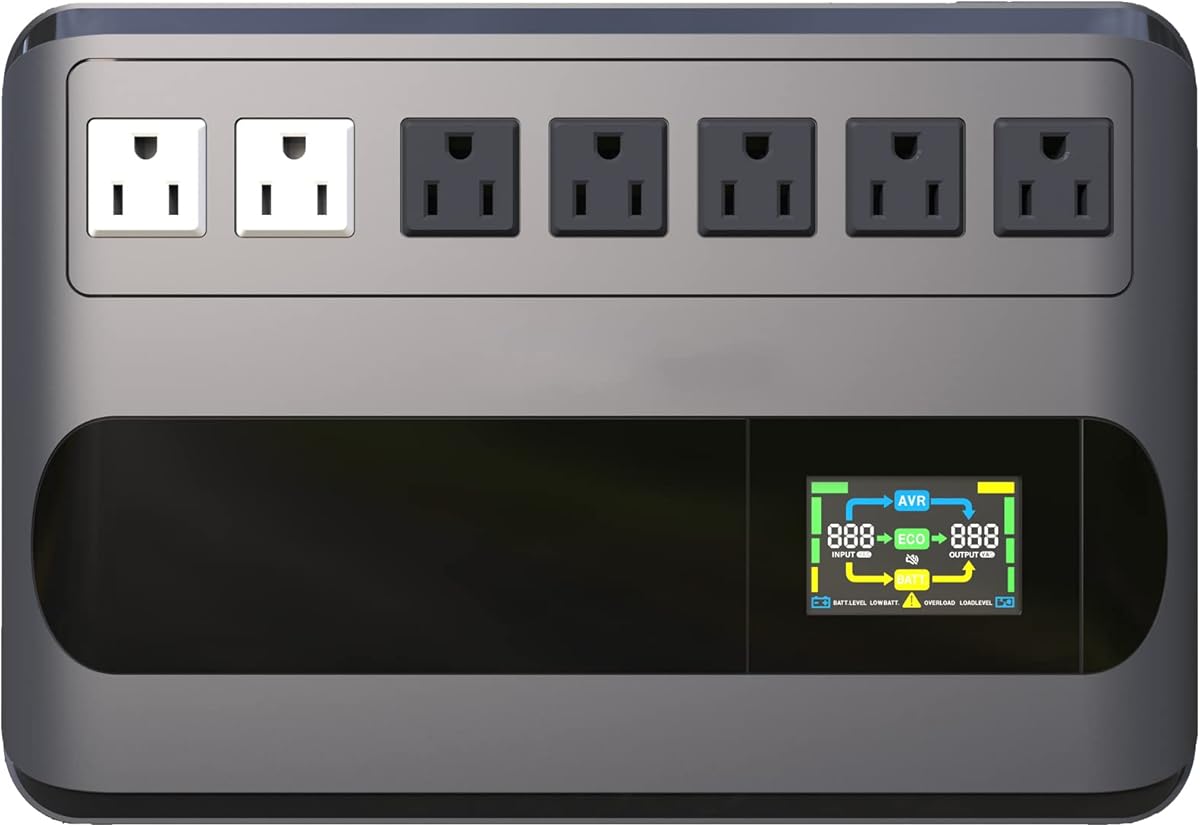
Choosing a 1000VA UPS: Balancing Runtime, Protection, and Your Computer's Needs
The GF1000's 1000VA/500W capacity and offline (standby) topology make it suitable for basic computer protection, but understanding its limitations is crucial. This unit provides battery backup during outages and surge protection, but its offline design means a brief switchover time that may not support sensitive equipment.
Key Considerations Before Buying
- Calculate your actual power draw: The 500W output limits this to protecting a desktop PC, monitor, and router—not high-draw gaming rigs or servers.
- Understand offline vs. online topology: The GF1000's 2-10ms transfer time means brief power interruption; fine for consumer electronics but problematic for medical or financial equipment.
- Evaluate runtime expectations: At full 500W load, expect 5-10 minutes—enough for safe shutdowns but not extended work during outages.
What Our Analysts Recommend
Check for USB connectivity like the GF1000's intelligent LCD, which enables software-controlled shutdowns. Quality indicators include replaceable batteries, sufficient outlets (both battery-backed and surge-only), and clear audible alerts during power events.
Uninterruptible Power Supply (UPS) Market Context
Market Overview
The 1000VA segment represents the sweet spot for home office and basic computer protection, competing directly with APC Back-UPS and CyberPower models. Recent market trends show increased demand for units with USB monitoring capabilities and LCD displays like the GF1000's interface.
Common Issues
Battery degradation after 2-3 years is inevitable across all UPS brands, requiring replacement. Consumers often misunderstand VA versus Watt ratings, leading to underpowered protection, and overlook that offline UPS units don't provide pure sine wave output.
Quality Indicators
Look for units with user-replaceable standard battery form factors (like the GF1000's internal 12V 7Ah battery), robust surge protection ratings (this unit offers 480 Joules), and clear status indicators that simplify troubleshooting during power events.
Review Authenticity Insights
Grade C Interpretation
A Grade B with 11% estimated fake reviews indicates predominantly authentic feedback with minor manipulation concerns. The 0.20-point rating drop after adjustment suggests some inflated positive reviews, but the core 3.80 rating reflects genuine user experiences.
Trust Recommendation
Focus on reviews discussing specific runtime experiences, battery replacement processes, and transfer performance during actual outages—these details indicate authentic usage. Be slightly skeptical of reviews that don't mention the LCD display's functionality or transfer time observations.
Tips for Reading Reviews
Prioritize reviews that mention the GF1000's specific behavior during brownouts versus complete outages, as offline UPS performance varies significantly between these scenarios. Look for mentions of the unit's audible alarm characteristics and software compatibility details.
Expert Perspective
The GF1000 presents a competent entry-level solution with its intelligent LCD providing valuable status information absent from basic units. The 3.80 adjusted rating suggests satisfactory performance for its intended use case, though the offline topology limits applications. The 53-review sample size provides reasonable confidence in reported performance, with authentic reviews consistently noting the unit's physical size and outlet configuration as practical considerations.
Purchase Considerations
Weigh the GF1000's LCD interface advantage against its offline topology limitations if you experience frequent brownouts or power fluctuations. Consider whether your equipment can tolerate the brief transfer interruption, and verify your actual wattage requirements don't approach the 500W ceiling during peak usage.
Comparing Alternatives
Compare runtime specifications and transfer times against similarly priced line-interactive models, which provide better voltage regulation without the premium of online UPS systems.


