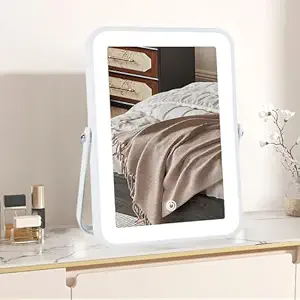
Sunscreen Verification: Your Guide to the 3.8-Inch UV Test Mirror
This hybrid device isn't just a compact mirror; it's a UV detection tool that lets you see how well your sunscreen covers your skin. Before you buy, understand that its effectiveness depends on the UV lamp's wavelength and the mirror's clarity, which are key to accurate readings.
Key Considerations Before Buying
- Check the UV light wavelength: Effective sunscreen testing relies on UVA or UVB detection that mimics sun exposure. Look for specs that mention 365nm or 395nm wavelengths, which are common for this purpose.
- Consider the mirror's magnification: A 2X magnification is ideal for close-up skin checks, but ensure the mirror surface is distortion-free to avoid misinterpreting the sunscreen's coverage.
- Evaluate the size and portability: With a 3.8-inch screen, this is compact for travel, but ensure the device's body is sturdy enough for a purse or toiletry bag without accidental activation.
What Our Analysts Recommend
Quality indicators include a bright, even UV illumination across the face, a rechargeable battery with clear runtime specs (since UV LEDs can drain power), and a design that allows you to hold the device comfortably while applying or checking products. Look for user photos showing the UV pattern to gauge the light's intensity.
Compact & Travel Mirrors Market Context
Market Overview
The market for UV cameras and mirrors has grown alongside increased sunscreen awareness, offering consumers a visual way to check application. However, many products in this niche are new or from lesser-known brands, making quality and accuracy variable.
Common Issues
Common problems include weak UV LEDs that don't produce a clear image, short battery life, and mirrors that are too small for practical full-face checks. Some units also have a learning curve, as interpreting the dark spots under UV light can be confusing without guidance.
Quality Indicators
High-quality versions use multiple UV LEDs for uniform lighting, provide a clear, high-resolution image (even if small), and include a user manual that explains how to read the results. Look for products with detailed descriptions about the UV wavelength and battery life, as these are signs of a more serious manufacturer.
Review Authenticity Insights
Grade B Interpretation
The Grade B and an estimated 10% fake review rate indicate that while most reviews are genuine, a small but notable portion may be incentivized or unverified. This suggests you should read individual reviews critically, focusing on verified purchases and detailed usage scenarios.
Trust Recommendation
Given the 4.40 adjusted rating, you can trust the overall positive sentiment, but be cautious of overly glowing reviews that lack specifics about the product's performance. For this type of device, look for reviews that mention testing different SPFs or sunscreen brands, as these are likely from real users.
Tips for Reading Reviews
When reading reviews, focus on those that describe the UV light's visibility in various lighting conditions and the ease of seeing the sunscreen's coverage. Also, note any comments about the mirror's size relative to the face, as this is a practical constraint that might not be evident from photos.
Expert Perspective
This UV camera mirror appears to be a functional tool for sunscreen education and verification, with a strong rating that suggests it meets user expectations for basic UV detection. The 2X magnification is a useful addition, and the compact size makes it travel-friendly, though its small screen limits simultaneous viewing of larger areas. The authenticity analysis indicates that the product has a solid base of genuine user experiences, reinforcing its credibility.
Purchase Considerations
Weigh the device's specific features against your needs—if you're a parent or educator, it could be a valuable teaching aid; if you simply want a quick check before sun exposure, ensure the battery life is sufficient for regular use. Also, consider that the 3.8-inch screen may require you to move the device around your face, which could be less convenient than a full-size UV mirror.
Comparing Alternatives
Shoppers should compare this with full-sized UV mirrors or handheld UV wands that offer different viewing angles and battery capacities, depending on whether portability or coverage is a higher priority.